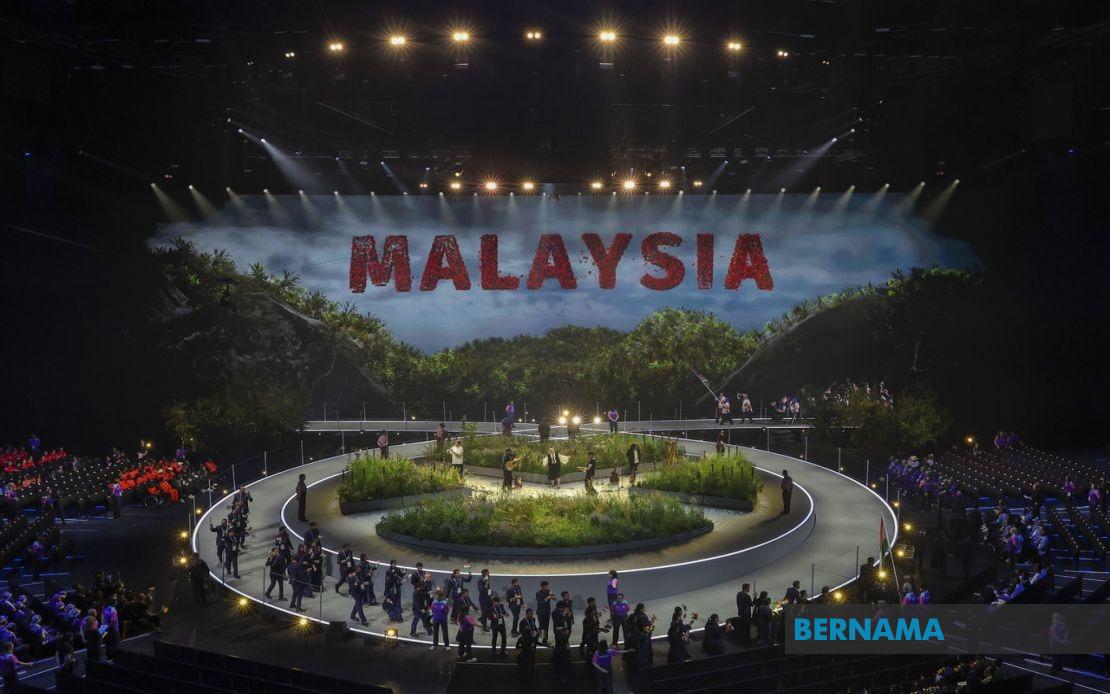
Malaysia's Cabinet has publicly commended the national contingent for delivering a stellar performance at the Glasgow 2026 Commonwealth Games, marking a significant achievement for the country on the international sporting stage. Government spokesman Datuk Seri Fahmi Fadzil, who also serves as Communications Minister, conveyed the Cabinet's appreciation during a post-Cabinet press conference in Putrajaya on August 5, emphasising that the athletes' success reflects positively on the nation and honours Malaysia's sporting credentials.
The medal haul achieved by Malaysian competitors substantially exceeded initial expectations set by the government. The contingent secured eight gold medals, three silver medals, and five bronze medals—a combined tally that surpassed the conservative target of five gold medals that officials had established prior to the Games. This performance has been lauded as a watershed moment for Malaysian athletics, demonstrating the capability of homegrown talent to compete at the highest levels of Commonwealth competition.
Fahmi underscored the broader significance of these victories beyond mere medal tallies. According to his remarks, the outstanding results are expected to galvanise other athletes within the national system, motivating them to pursue excellence and contribute to Malaysia's international sporting reputation. The Cabinet's formal recognition signals government commitment to supporting athletic development and creates a positive narrative around national sporting ambitions, potentially encouraging younger generations to pursue competitive sports careers.
In recognition of the athletes' exceptional efforts, the Malaysian government has channelled RM1.1 million through the Sports Victory Incentive Scheme, commonly known as SHAKAM, to reward competitors who contributed to the medal-winning performances. This financial recognition demonstrates the government's willingness to invest in tangible incentives that acknowledge athlete dedication and achievement, a mechanism designed to sustain momentum in the national sports system.
The Glasgow 2026 performance represents Malaysia's strongest Commonwealth Games result since the New Delhi 2010 edition, when the national team captured twelve gold medals. This interim comparison reveals both the progress made in specific sports disciplines and the competitive challenges that remain for Malaysia in broader Commonwealth competition. The 2010 benchmark had stood as a high-water mark for nearly two decades, making the recent Glasgow achievement particularly noteworthy for breaking through a extended plateau in Commonwealth Games performance.
The significance of this result extends beyond athletic achievement to encompass broader implications for Malaysian sports infrastructure and training systems. A competitive performance at a major international multi-sport event indicates that investment in talent identification programmes, coaching development, and sports science support mechanisms is yielding measurable returns. The contingent's success validates decisions made by sports administrators and policy-makers regarding resource allocation toward specific sporting disciplines.
For Southeast Asian readers, Malaysia's Commonwealth Games success carries particular resonance in regional sporting competition. As one of the most developed sporting nations in the region, Malaysia's performance sets benchmarks that influence sporting investment and strategy across neighbouring countries. The team's achievement reinforces Malaysia's position as a regional sports powerhouse and contributes to the broader narrative of Southeast Asian competitiveness in international sporting forums.
The Cabinet's public endorsement of the athletes represents an important political acknowledgement of sporting achievement within the broader MADANI Government framework. By formally recognising these accomplishments at the highest governmental level, the administration signals that athletic success forms part of its national development agenda and that sporting excellence aligns with government priorities around nation-building and international representation.
The SHAKAM incentive scheme, through which rewards have been distributed, reflects evolving approaches to athlete compensation in Malaysia. Rather than relying solely on institutional salaries or traditional sponsorship models, the scheme provides direct financial recognition contingent on competitive success, creating performance-based incentive structures that align athlete interests with national sporting objectives. This mechanism may influence how other Malaysian athletes approach training intensity and competition preparation in future events.
Looking forward, maintaining momentum from the Glasgow 2026 Games presents both opportunity and challenge for Malaysian sports authorities. The Cabinet's public commitment to celebrating these achievements establishes a political foundation for continued investment in athletic development programmes. However, sustaining such performance levels requires consistent funding, infrastructural support, and systematic talent cultivation across multiple sports disciplines—elements that demand sustained policy commitment beyond celebratory statements.
The broader context of Commonwealth Games performance also reflects Malaysia's evolving position within global sporting hierarchies. Achievement at such events influences how other nations perceive Malaysian sporting capacity and competitive standing, contributing to Malaysia's soft power narrative and international reputation. These considerations extend beyond athletics to encompass national prestige and the projected image of Malaysian competence on global platforms.

