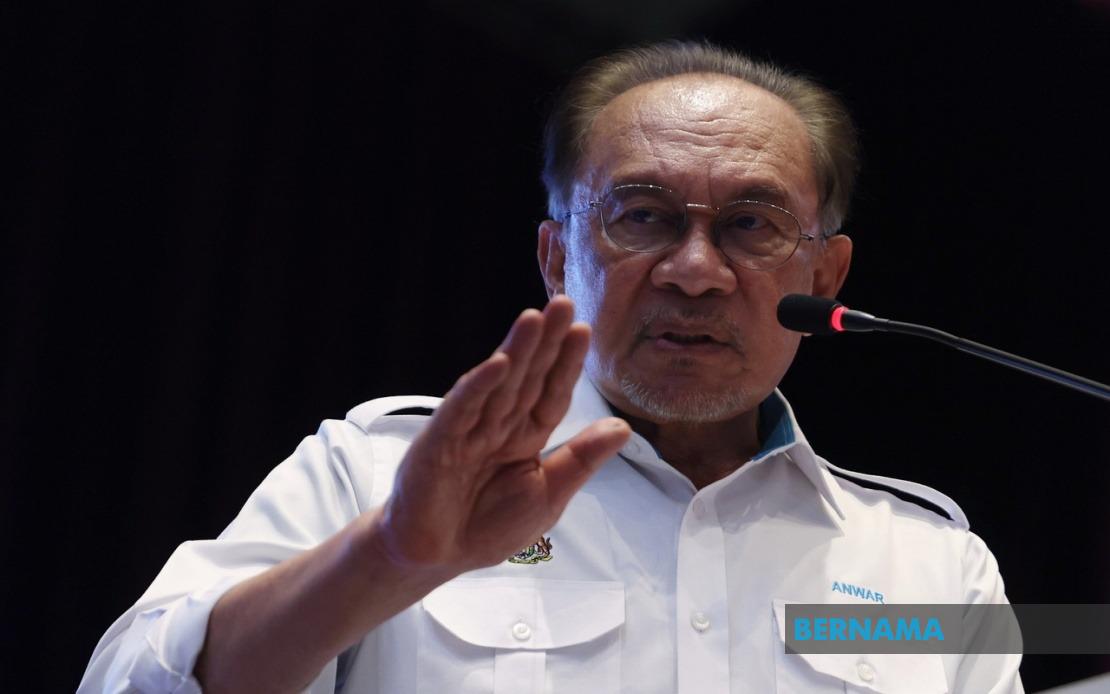
Prime Minister Datuk Seri Anwar Ibrahim has singled out Malaysia's civil service as the driving force behind the nation's significant improvement in global competitiveness rankings, marking a notable acceleration in the country's economic and administrative standing. Speaking during a regional engagement session in Alor Gajah, Anwar emphasised that Malaysia's eight-position leap in the IMD World Competitiveness Index 2026, reaching 15th place globally from 23rd the previous year, reflects the collective efforts of the bureaucratic apparatus rather than individual leadership. The acknowledgment carries particular weight given that the achievement has already begun attracting international recognition from regional leaders seeking to replicate Malaysia's success.
The Prime Minister's remarks underscore a deliberate strategic pivot towards emphasising institutional strength over personalised credit, a messaging approach that appears designed to reinforce confidence in Malaysia's governance structures. Anwar explicitly rejected the notion that his tenure alone accounts for recent economic improvements, instead framing advancement as a systemic outcome dependent on the professionalism and commitment embedded within the civil service. This positioning reflects an understanding that sustained competitiveness requires institutional resilience that transcends individual leadership cycles, a particularly relevant consideration as Malaysia navigates complex regional economic dynamics and seeks to maintain momentum in attracting foreign investment.
The competitiveness index improvement carries tangible implications for Malaysia's economic trajectory and regional standing. Rising 15 positions within a year demonstrates accelerated progress, particularly significant given that competitiveness rankings typically shift incrementally. The index evaluates nations across multiple dimensions including infrastructure quality, institutional frameworks, macroeconomic stability, and human capital development. Malaysia's advancement suggests measurable improvements across these benchmarks, reflecting recent policy initiatives and administrative reforms implemented across government agencies.
Turkmenistan President Serdar Berdimuhamedov's acknowledgment of Malaysia's progress during his recent visit demonstrates how competitiveness rankings translate into diplomatic currency and soft power recognition. The international spotlight on Malaysia's civil service efficiency has already prompted formal interest from foreign governments seeking to learn from administrative practices and institutional reforms. Berdimuhamedov reportedly expressed intention to dispatch Turkmenistan's civil service delegation to engage with Malaysian counterparts, effectively positioning Malaysia as a model for governance excellence within international circles.
This diplomatic dimension carries significant value for Malaysia's broader economic agenda. When foreign governments view Malaysian institutions as worthy of emulation, it enhances the nation's credibility in attracting partnerships, encouraging knowledge-transfer arrangements, and facilitating higher-level bilateral cooperation. For Southeast Asia specifically, Malaysia's advancement in the competitiveness index strengthens the region's overall standing, particularly as ASEAN nations compete for foreign direct investment and position themselves as attractive business destinations during periods of global economic uncertainty.
The civil service's role in driving competitiveness improvements reflects years of institutional modernisation efforts, digital transformation initiatives, and performance management reforms implemented across government agencies. These structural changes have enhanced service delivery efficiency, reduced bureaucratic bottlenecks, and improved the business environment for both domestic and foreign investors. The recognition that civil servants themselves constitute a critical asset emphasises the importance of investing in training, retention, and merit-based advancement within the public sector—elements that directly influence government effectiveness and economic competitiveness.
Anwar's public commendation of civil service leadership serves dual purposes: it acknowledges the concrete contributions of government workers while simultaneously signalling that the administration prioritises institutional development and professional excellence. This approach differs from political messaging that emphasises short-term initiatives or individual accomplishments, instead focusing on structural foundations that determine long-term economic stability. For Malaysian civil servants, the recognition validates efforts undertaken during a period of significant administrative transition and reform implementation.
The gathering at the Centre of Excellence for Engineering and Technology in Simpang Ampat, attended by senior government officials including Chief Secretary to the Government Tan Sri Shamsul Azri Abu Bakar and Public Service director-general Datuk Seri Wan Ahmad Dahlan Abdul Aziz, underscored the administrative hierarchy's collective commitment to competitiveness objectives. The southern zone engagement also reflected Anwar's strategy of maintaining direct communication with regional government structures, ensuring that competitiveness-enhancement initiatives cascade effectively through state-level administration and local governance mechanisms.
Malaysia's position at 15th globally positions the nation competitively within Southeast Asia and alongside developed economies, a distinction that carries implications for investor confidence and talent attraction. As global competition for skilled workers intensifies, rankings demonstrating governance quality and institutional stability help Malaysia retain talent and attract expertise from regional and international markets. The competitiveness index ranking thus influences decisions by multinational corporations, research institutions, and innovation hubs considering Malaysian locations for operations or expansion.
The substantial jump from 23rd to 15th within a single year, however, warrants careful contextualisation. While genuine improvements across institutional and macroeconomic indicators certainly occurred, competitiveness indices can be subject to methodology changes and shifting assessment weights that sometimes accelerate relative movements. Regardless, sustained progression requires continuous refinement of civil service capabilities, infrastructure investment, and regulatory modernisation to prevent ranking volatility and consolidate gains achieved during the current evaluation cycle.
Moving forward, maintaining Malaysia's upward trajectory will depend on institutionalising reforms that generate the improvements reflected in current rankings. The civil service must continue adapting to emerging challenges including digital transformation acceleration, climate-related economic pressures, and evolving workforce expectations. The international interest exemplified by President Berdimuhamedov's initiative represents both validation of current achievements and an opportunity for Malaysia to establish itself as a regional knowledge leader in governance excellence, potentially generating additional soft power benefits and economic opportunities.