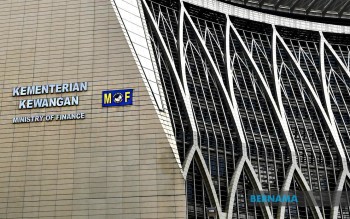
The Buy Now, Pay Later market in Malaysia has achieved significant expansion, with active account holders reaching eight million in the opening quarter of 2026, according to figures released by the Ministry of Finance. This milestone reflects the rapid embedding of the BNPL payment model into Malaysian consumer behaviour, representing a substantial increase from previous tracking periods and cementing the sector's position as a significant component of the fintech landscape across Southeast Asia's third-largest economy.
The financial scope of this growth becomes apparent when examining the aggregate credit extended through BNPL channels. The Ministry reported that total outstanding balances climbed to RM5.3 billion during the same quarter, a substantial pool of deferred consumption reflecting the popularity of installment-based purchasing among Malaysian households and small businesses. This volume demonstrates that BNPL services have transcended their initial positioning as a niche fintech innovation and now represent material credit flows that warrant close regulatory attention and ongoing monitoring of systemic implications.
Despite the sector's rapid expansion, credit quality indicators suggest that the proliferation of BNPL services has not yet triggered widespread delinquency problems. The Ministry disclosed that overdue amounts totalled RM181.0 million in the first quarter, translating to a delinquency ratio of 3.4 per cent of total outstanding balances. While this figure warrants attention from consumer protection authorities and lenders, it remains manageable and does not suggest immediate systemic stress within the BNPL ecosystem, though sustained monitoring remains essential as the market matures.
Contextualizing BNPL's role within Malaysia's broader household debt landscape provides important perspective on the sector's overall systemic importance. The Ministry emphasised that BNPL debt accounted for approximately 0.3 per cent of total household debt as of end-2025, a relatively modest proportion that indicates the sector, despite its explosive user growth, remains a peripheral component of aggregate consumer credit. This positioning suggests that macroeconomic pressures or financial distress in the BNPL segment would unlikely cascade across Malaysia's financial system, though this dormant risk could shift if the sector experiences continued rapid scaling.
Regulatory intervention has arrived at a critical juncture in the BNPL sector's development. The Consumer Credit Commission, Malaysia's dedicated regulator for consumer credit products, has established comprehensive authorisation standards and conduct standards that impose minimum requirements across all active and prospective BNPL providers. These regulatory frameworks represent a formal acknowledgement that the BNPL sector has matured sufficiently to warrant structured oversight, rather than the semi-regulated environment that previously characterised much of the industry's development across the region.
The licensing regime itself carries significant implications for market consolidation and competitive dynamics. By opening the formal application window on June 1, 2026, the Consumer Credit Commission has created a structured pathway for regulatory compliance while simultaneously establishing barriers to entry that smaller or less-organised providers may struggle to navigate. Existing BNPL operators face a November 30, 2026 deadline to submit applications meeting the regulator's governance, consumer protection, and operational standards, a timeline that simultaneously tests providers' readiness for formalised regulation while allowing for a reasonable transition period.
The substance of the Consumer Credit Commission's requirements extends beyond simple licensing formalities. By mandating that BNPL providers meet specified regulatory, governance, and consumer protection standards, Malaysian authorities are attempting to prevent a race-to-the-bottom dynamic whereby providers might compete by weakening safeguards or engaging in predatory lending practices. This preventive regulatory posture reflects lessons learned from BNPL markets in other jurisdictions, where rapid expansion without corresponding oversight occasionally produced consumer harm and elevated systemic risk.
The active engagement between the Consumer Credit Commission and existing BNPL providers during the licensing application period indicates that regulators are taking a collaborative approach to sector maturation. This engagement stance suggests authorities recognise that excessive regulatory harshness could stifle innovation or trigger market consolidation that disadvantages consumers, while insufficient oversight could enable problematic lending practices to proliferate unchecked. The ongoing dialogue between regulator and industry participants will likely shape how Malaysian BNPL services evolve during the crucial 2026-2027 period.
For Malaysian consumers and businesses, the regulatory crystallisation carries both protective and practical dimensions. Formalised licensing standards should theoretically enhance consumer protection mechanisms, clarify dispute resolution pathways, and reduce the prevalence of unscrupulous operators who exploited previous regulatory ambiguity. However, compliance costs associated with meeting Consumer Credit Commission standards may ultimately translate into higher service charges or reduced availability of BNPL credit to marginal borrowers, potentially replicating the credit exclusion dynamics observed in other regulated consumer finance segments.
The timing of Malaysia's BNPL regulatory framework assumes additional significance within the broader Southeast Asian context. As BNPL adoption accelerates across the region, with similar services expanding in Indonesia, Thailand, and the Philippines, Malaysia's structured regulatory approach may establish a template that neighbouring regulators emulate. Conversely, if Malaysian BNPL licensing requirements prove excessively burdensome, international fintech providers might prioritise expansion in less-regulated markets, potentially leaving Malaysian consumers with fewer provider options than exist in comparable regional economies.
The eight million active account holders figure also invites reflection on the underlying demographic and economic drivers propelling BNPL adoption. The combination of rising credit demand, limited banking system capacity for rapid approval decisions, and strong consumer appetite for convenience-oriented credit products has created sustained momentum for BNPL expansion. This demographic pattern likely concentrates among younger, digitally-native consumers in urban and semi-urban areas, suggesting that BNPL penetration may vary significantly across Malaysia's geographic regions and income strata.
Looking forward, the intersection of rapid user growth and formalised regulation will determine whether Malaysia's BNPL sector matures into a stable, consumer-protective industry or experiences the volatility and consolidation that has characterised BNPL markets in other jurisdictions. The November 30, 2026 licensing deadline will function as a crucial inflection point, separating providers capable of meeting regulatory standards from those unable or unwilling to comply. This sorting process, while potentially disruptive in the short term, should ultimately produce a more resilient sector better equipped to serve Malaysian consumers responsibly over the long term.

