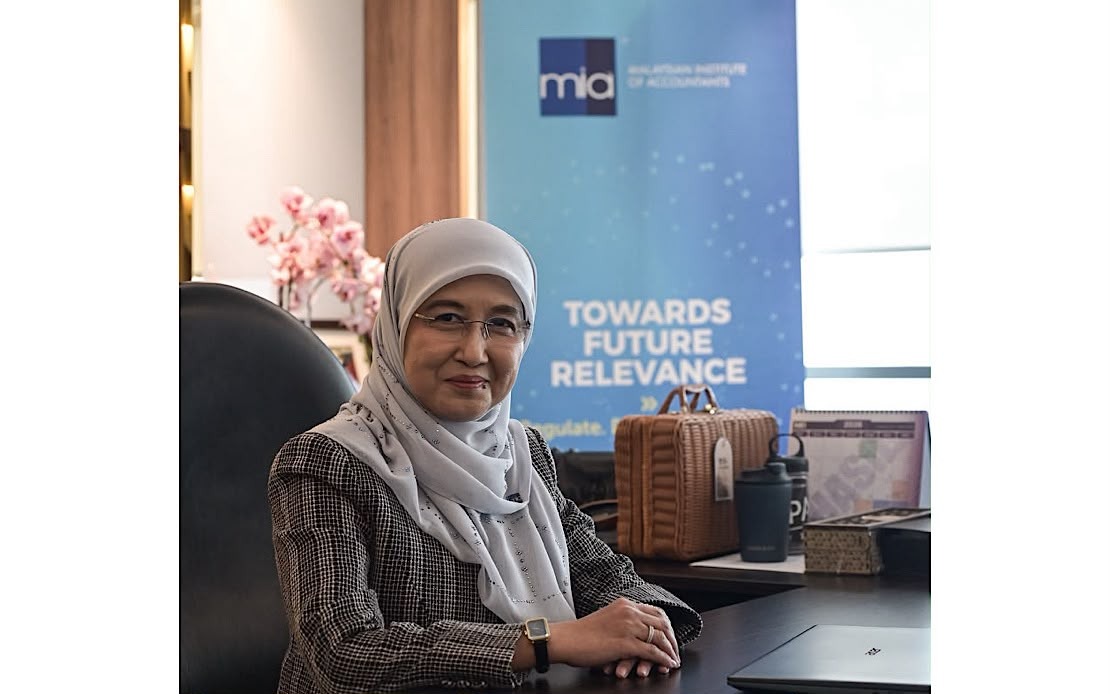
The accountancy profession in Malaysia stands at a critical juncture, requiring a fundamental shift towards a future-focused, integrity-driven model to ensure the country remains economically competitive in an era of rapid technological disruption. According to Malaysian Institute of Accountants president Datuk Saniza Said, the sector must embrace contemporary challenges while preserving the foundational principles that define professional accounting. Her assessment reflects growing recognition among business leaders that accountants are no longer confined to traditional bookkeeping roles but have become essential advisers shaping strategic corporate decisions and maintaining the confidence of investors and stakeholders alike.
The elevation of Saniza to the presidency—as MIA's first female leader since her election on December 8, 2025—signals institutional commitment to modernising the profession's outlook and governance. Her mandate carries particular significance given Malaysia's aspirations to position itself as a trustworthy financial hub within Southeast Asia and globally. The accountancy profession underpins this reputation by providing independent assurance over financial disclosures and safeguarding against the increasingly sophisticated schemes of financial misconduct that plague markets across the region. Without a profession grounded in unwavering ethical standards, Malaysia risks eroding the confidence that attracts capital and strengthens economic relationships with international partners.
Saniza's articulation of the profession's core mission centres on three interconnected pillars: promoting ethical principles, ensuring transparency at every organisational level, and maintaining accountability in all professional interactions. These values are not mere regulatory compliance checkboxes but represent the bedrock upon which stakeholder trust is constructed. As financial systems grow more complex and digital, the temptation to deprioritise ethics in favour of efficiency intensifies. Her public emphasis on this foundation suggests internal recognition that professional integrity requires continuous reinforcement, particularly as younger cohorts of accountants enter a landscape dominated by technological tools and data systems that can, if improperly applied, obscure rather than illuminate financial reality.
The role of artificial intelligence and automation in accounting presents both opportunity and existential challenge. Rather than dismissing technology as inherently threatening, MIA chief executive officer G. Shanmugam frames digital transformation as a catalyst for professional evolution. The distinction he draws between algorithmic capability and human professional judgment proves analytically crucial: while AI can efficiently process vast bookkeeping datasets and identify computational anomalies, only qualified accountants possess the contextual understanding and professional scepticism necessary to interpret findings within broader business and regulatory frameworks. This delineation establishes where human expertise remains irreplaceable, even as the technical environment shifts fundamentally.
The practical implication of technological adoption centres on occupational reorientation rather than displacement. As automation assumes responsibility for repetitive data entry and standard reconciliation procedures, accountants gain capacity to focus on higher-value functions including predictive analytics, risk assessment, and strategic advisory work. This transition proves particularly attractive to younger professionals entering the field, as Shanmugam notes, because it elevates the intellectual content of daily work and accelerates progression from entry-level technical roles toward substantive decision-influencing positions. For Malaysia specifically, this evolution enhances the sector's ability to support domestic businesses and multinational corporations navigating increasingly complex operational environments across Southeast Asia.
The expectation that accountants function as forward-looking business advisers represents perhaps the most significant conceptual shift within the profession. Stakeholders and management teams now demand more than historical financial analysis; they seek foresight capabilities that anticipate market challenges, identify emerging opportunities, and guide strategic positioning. This expectation requires accountants to develop competencies extending far beyond traditional accounting curricula, encompassing data analytics, sustainability assessment, risk management, and scenario planning. The gap between conventional training and contemporary market demands creates urgent imperative for professional development programmes that equip practitioners with these expanding skill sets.
MIA's recent initiatives, including the Sustainability Blueprint for the Accountancy Profession and the accompanying Sustainability Roadmap, directly address this capability gap by providing structured pathways for developing competencies in environmental, social and governance reporting. These frameworks acknowledge that sustainability represents not merely a corporate responsibility trend but an increasingly material factor in financial performance and stakeholder valuation. As regulatory frameworks worldwide tighten requirements for sustainability disclosure and assurance, Malaysian accountants who develop expertise in these areas position themselves and their clients advantageously within regional and global markets. The initiative also signals that professional development need not diverge from ethical foundations but can instead represent their expansion into contemporary business realities.
With approximately 42,000 members and annual growth rates between 1.5 and 2.0 percent, MIA maintains substantial influence over professional standards and practice within Malaysia. The Institute's delivery of roughly 1,000 Continuing Professional Development programmes annually, combined with conferences, online learning platforms, and networking initiatives, demonstrates institutional commitment to maintaining professional capability standards. This infrastructure becomes increasingly vital as technological change accelerates and skill requirements evolve unpredictably. However, the adequacy of these efforts ultimately depends on whether they address not only technical competencies but also ethical framework development and the cultivation of professional judgment capacities that distinguish accountants from data processors.
The Malaysian context adds particular layers of complexity to this professional transformation. As a middle-income nation aspiring toward higher-income status, Malaysia competes for both domestic investment and regional headquarters operations from multinational corporations. The credibility of the accountancy profession directly influences these competitive outcomes, as international investors require assurance that financial reporting and internal controls meet global standards. Simultaneously, Malaysia must ensure that professional evolution does not create access barriers that exclude talented individuals from less privileged backgrounds, as this would narrow the talent pool from which the profession draws its practitioners and potentially reinforce socioeconomic inequalities within financial services.
The framing of technology as transformative rather than threatening carries important psychological and practical dimensions. Accountants who view AI and automation with anxiety may resist skill development and technological adoption, paradoxically reducing their own competitiveness and professional relevance. Conversely, those who perceive technology as enabling tool can engage more constructively with digital transformation, identifying applications that enhance rather than diminish professional value. This mindset shift extends beyond individual practitioners to institutional culture; professional bodies like MIA that actively promote technological engagement while maintaining ethical guardrails create environments where innovation and integrity coexist rather than compete.
For Malaysia's broader economic competitiveness, the evolution of the accountancy profession matters considerably. Financial systems operate most efficiently when participants trust information integrity and believe that assurance mechanisms function effectively. Nations perceived as having weak professional standards or compromised assurance mechanisms face higher borrowing costs, reduced investment flows, and diminished capacity to attract regional financial services operations. Conversely, jurisdictions maintaining robust professional standards and demonstrating commitment to continuous professional development become preferred locations for sophisticated financial activities. MIA's emphasis on future-readiness and trust positioning reflects sophisticated understanding that professional credibility directly translates into economic advantage.

