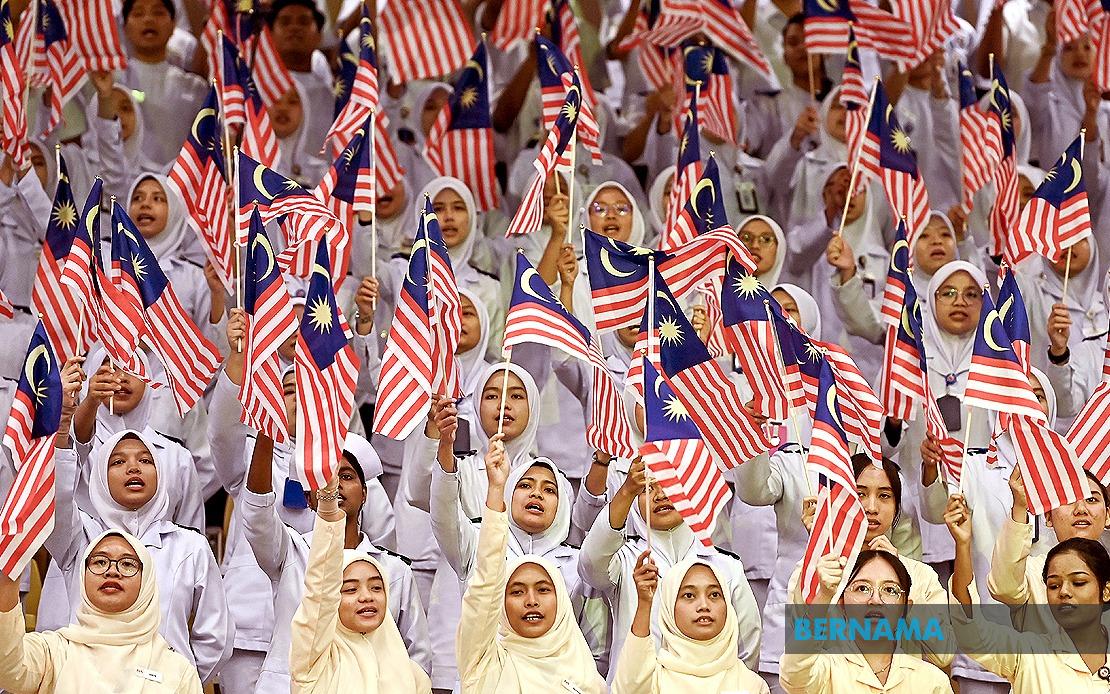
Malaysia will kick off its 2026 National Month celebrations tomorrow with a ceremonial launch in Ipoh, bringing together an estimated 3,000 citizens to commemorate the nation's independence heritage. Prime Minister Datuk Seri Anwar Ibrahim will preside over the opening of the National Day and Malaysia Day (HKHM 2026) celebrations at Dewan Sri Perdana within the Sultan Azlan Shah, Ministry of Health Training Institute complex at Tanjung Rambutan. The occasion marks a significant moment in Malaysia's calendar, as the government seeks to kindle patriotic sentiment across the diverse population heading into the crucial August 31 and September 16 commemoration dates.
A centrepiece of tomorrow's ceremony will be the resurrection of a flag-raising ritual that has been absent from the launch programme for the past two years due to logistical constraints at previous venues. The Prime Minister will ceremonially hand over the Jalur Gemilang to a nine-member Royal Malaysian Navy team, who will raise a substantial 6-by-12-foot flag while the national anthem Negaraku plays and participants recite the Rukun Negara pledge. This symbolic gesture carries particular weight, as it visually represents the unified national identity that policymakers aim to reinforce during the month-long celebration period.
The government has deliberately adopted a restrained approach to this year's launch, opting for a modest and closed-door format rather than the large-scale public spectacles of previous years. This decision reflects either budgetary considerations or a strategic pivot towards more intimate, community-focused celebrations. Nevertheless, accessibility remains central to the campaign's reach. Radio Televisyen Malaysia will broadcast the proceedings live, while the Malaysian National News Agency, the Communications Ministry, the Information Department, and Merdeka360 will stream the ceremony across their social media platforms, enabling Malaysians nationwide to participate virtually in the patriotic occasion.
Communications Minister Datuk Seri Fahmi Fadzil and Perak Menteri Besar Datuk Seri Saarani Mohamad will join the Prime Minister in attendance. The ceremonial programme will showcase cultural elements designed to stir nationalist sentiment, including the unveiling of the HKHM2026 theme song composed and performed by a prominent local artist. The ILKKM choir, comprising approximately 200 trainees, will perform a special medley of patriotic songs, contributing a grassroots musical dimension to proceedings that connects the training institute community directly to national celebration efforts.
Preceding the main launch ceremony, a Patriot Merdeka Run will take place in the morning hours, with the flag-off to be conducted by Datuk Abdul Halim Hamzah, secretary-general of the Communications Ministry. Organisers anticipate around 2,000 runners will participate, reflecting growing interest in combining sporting activities with patriotic expression. This running event exemplifies how Malaysia is integrating celebration activities across different demographics and lifestyle preferences, moving beyond purely ceremonial approaches.
The broader campaign, styled as MPBKKJG 2026, operates under the overarching theme "Malaysia MADANI: Kesejahteraan Dinikmati" (Malaysia MADANI: Prosperity Enjoyed), positioning the national celebrations within the government's wider development and welfare narrative. This thematic integration signals an attempt to link patriotism with tangible governmental promises around citizen wellbeing and economic progress, a strategy that may resonate particularly with voters evaluating government performance ahead of potential electoral cycles.
Throughout August and into September, the government will deploy an extensive network of community-based programmes under the 1Rumah 1 Jalur Gemilang initiative, which organises participation across nine clusters spanning industry, education, security, health, government agencies, higher education, community groups, places of worship, and sports organisations. This multi-sectoral approach distributes celebration responsibilities across Malaysian society, potentially deepening public investment in national observances while creating opportunities for diverse institutions to demonstrate their patriotic credentials.
Additional programming will include Kembara Bahasa Hari Kebangsaan and RIUH Merdeka activities under the Kira Detik programme, which will build anticipation towards the main National Day celebration scheduled for August 31 at Dataran Putrajaya. The national-level Malaysia Day observance will shift focus eastward, taking place in Sarawak on September 16, thereby rotating the ceremonial centrepiece between peninsular and East Malaysian locations and reinforcing national cohesion across the federation.
The government has encouraged digital participation, inviting Malaysians to declare their patriotism on social media platforms by adopting the Jalur Gemilang as profile pictures and sharing celebration-related content using designated hashtags including #HKHM2026, #MalaysiaMADANI, #KesejahteraanDinikmati, and #Merdeka360. This social media strategy represents the contemporary approach to cultivating nationalist sentiment, recognising that digital spaces now function as primary arenas where Malaysians express and negotiate national identity, particularly among younger demographics.
The Malaysia MADANI logo will serve as the official emblem for these celebrations and will remain in use through 2027, providing visual continuity to the government's branded messaging around its development agenda. This extended timeline suggests the government views these national month celebrations not as isolated annual rituals but as integrated components of a broader communications strategy spanning multiple years.
For Southeast Asian observers and international commentators, Malaysia's National Month campaigns offer insights into how a multi-ethnic, multi-religious federation negotiates national identity construction in an increasingly pluralistic context. The emphasis on inclusive participation across diverse community sectors, combined with restraint in ceremonial scale, may reflect lessons learned from previous years about balancing patriotic expression with concerns about religious or cultural sensitivities that could arise from overtly grandiose displays.

