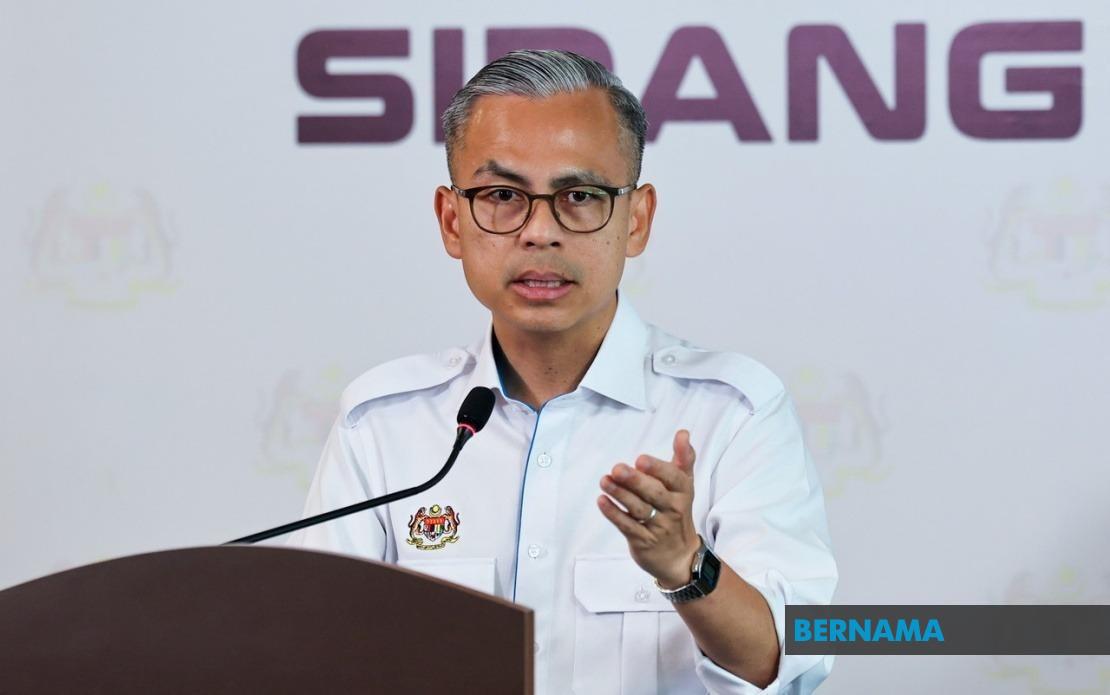
Malaysia's grand 2026 National Day and Malaysia Day celebrations are on track to reach full operational readiness after organisers completed a comprehensive dress rehearsal at Dataran Putrajaya this week. Communications Minister Datuk Seri Fahmi Fadzil declared preparations approximately 100 per cent complete ahead of tomorrow's full run-through, signalling that the elaborate spectacle is poised to deliver a polished performance when it takes place next year. The minister, who chairs the overarching 2026 National Day and Malaysia Day Main Committee, expressed confidence that the remaining work—largely technical refinements rather than structural overhauls—can be finalised within the proposed timeline.
The refinements currently occupying planners centre on choreography and spatial dynamics rather than fundamental logistical concerns. Fahmi identified gaps between successive contingent formations as the primary focus for tightening, acknowledging that some marching units currently maintain distances from their preceding groups that fall short of the parade's aesthetic and operational standards. These spacing adjustments may seem marginal to the untrained eye, but they represent the difference between a parade that merely functions and one that projects the disciplined unity and national coherence that Malaysia's premier civic pageant aims to convey. The emphasis on orderly progression reflects an understanding that how the nation presents itself—both domestically and internationally—matters as much as what it showcases.
Weather cooperation during the initial rehearsal phase proved invaluable, with favourable conditions allowing the complex choreography involving thousands of participants to proceed without the delays that tropical downpours might have imposed. Beyond logistical smoothness, Fahmi commended the demonstrable enthusiasm and commitment evident among all personnel engaged in the rehearsal, spanning security personnel, school students from three states participating in the human graphics sequence, and support staff. This morale dimension carries significance; national celebrations draw energy from the conviction of those executing them, and early enthusiasm often presages a well-coordinated final product.
The 2026 iteration introduces several novelty elements designed to elevate national pride and showcase Malaysian innovation and defence capability. The Johor Military Force marks its inaugural participation in such a national pageant, while a maritime asset—specifically the Ibrahim-class boat designed under the direction of His Majesty Sultan Ibrahim, King of Malaysia—will feature prominently. The inclusion of this vessel, reflecting both royal patronage and indigenous naval engineering, positions the celebration as a platform for demonstrating technological prowess and institutional achievement beyond the conventional military and civilian tableaus that characterise previous years.
A notable structural component of the celebrations involves an ambitious human graphics performance utilising a multi-level platform accommodating 1,500 students, who will create visual patterns and formations through coordinated movement. Safety considerations surrounding such an undertaking carry paramount importance, particularly given Malaysia's commitment to safeguarding young participants in high-profile national events. Fahmi provided detailed reassurance that Putrajaya Corporation (PPj) has conducted thorough assessments of the structure's integrity, confirming that the minor movement observed during rehearsals falls within engineered tolerance parameters designed to accommodate the rhythmic choreography required of performers. The platform has now been deployed three times without incident, providing an empirical track record supporting confidence in its continued safety.
Question has arisen regarding the structure's slightly asymmetrical positioning relative to the broader parade layout. Fahmi attributed this offset to misalignment between the parade route axis and the Putrajaya Corporation building's orientation, compounded by the decision to reduce student participation from the originally planned 2,000 to 1,500 this year. Rather than defending this aesthetic compromise as inevitable, however, Fahmi acknowledged negative perceptions among observers and directed the organising secretariat to review technical adjustments for future editions. This responsiveness suggests that while 2026 will proceed with current positioning, subsequent celebrations will benefit from refined spatial planning that eliminates such visual irregularities—a commitment to incremental improvement rather than static acceptance of shortcomings.
The scale and complexity of coordinating a national day parade in Malaysia's administrative capital reflects the ceremonial importance attached to these biennial celebrations. Putrajaya's status as the seat of government makes Dataran Putrajaya a symbolically resonant venue, and the parade's execution becomes a reflection on governmental competence and national organisation more broadly. For Malaysian audiences and international observers, the spectacle communicates messages about institutional capacity, national unity, and the vitality of Malaysia's civic institutions. The attention devoted to seemingly minor details—spacing between contingents, structural safety margins, positioning symmetry—underscores an understanding that ceremonial excellence requires meticulous planning cascading through every operational level.
The involvement of school students from three states in human graphics performances carries pedagogical and national integration dimensions that extend beyond mere visual spectacle. Such participation exposes young Malaysians to centrally coordinated national endeavours, fostering shared experience of collective purpose and pride in contributing to a defining national moment. The scale of youth involvement—whether 1,500 or the initially planned 2,000—represents a significant logistical undertaking in terms of transportation, accommodation, coordination, and safety protocols. The successful execution of such youth-inclusive programming strengthens the social fabric binding diverse regions and demographics into a cohesive national community.
As the dress rehearsal phase concludes and final preparations accelerate toward 2026, organisers face the familiar challenge of translating months of planning into flawless execution. The communications minister's declared confidence—pegged at nearly 100 per cent readiness—suggests that barring unforeseen circumstances, the celebration should proceed substantially according to design. However, the caveat that minor fine-tuning remains necessary preserves flexibility for last-minute adjustments should rehearsal feedback or changed circumstances demand responsive adaptation. For Malaysia, these national day celebrations represent quadrennial opportunities to articulate national identity, celebrate democratic governance, and demonstrate the organisational capacity that underpins modern statehood.

