Malaysia's commemoration of its 2026 National Day and Malaysia Day will unfold across a meticulously planned programme designed to deepen national pride among citizens and residents throughout the country. The Communications Ministry unveiled its strategic blueprint for the festivities following preparations for the official launch of the 2026 National Month Celebration and Jalur Gemilang Flag-Waving Campaign, which will take place in Ipoh with an elaborate ceremony and nationwide broadcast reach.
Datuk Aminurrahim Mohamed, Senior Undersecretary at the Communications Ministry and working secretary of the HKHM 2026 Main Committee, disclosed that organisers have curated a diverse portfolio of initiatives spanning the countdown period leading to the main celebrations. Among the anchor programmes are the Kembara Bahasa HKHM 2026 initiative and RIUH Merdeka, both designed to create sequential touchpoints that sustain public engagement and anticipation throughout the lead-up period. The strategic sequencing reflects ministry thinking that extended promotional campaigns generate deeper community participation than concentrated final-month efforts.
Ministry officials have intentionally withheld details of several planned elements to preserve what they characterise as a "wow factor"—a deliberate marketing choice to maintain public curiosity and encourage ongoing media coverage and word-of-mouth discussion. This approach suggests organisers view the celebrations as an extended narrative rather than a discrete event, with revelation of new elements timed to generate fresh waves of news and public conversation. The Qur'an Hour programme, a continuation from previous years, will form part of this broader patriotic calendar, acknowledging the religious and spiritual dimensions of national identity.
The ministerial push extends beyond programmatic content toward the foundational symbols of national expression. Officials have explicitly urged Malaysians to commence flying the Jalur Gemilang immediately and to integrate patriotic music into their daily lives, recognising that sustained visual and auditory reinforcement of national identity cultivates deeper patriotic sentiment. This grassroots activation strategy complements top-down ceremonial events, creating a layered approach where official celebrations are anchored in widespread community participation. The messaging carries an implicit understanding that genuine patriotism emerges from individual choice rather than state direction alone.
Aminurrahim's appeal included an invocation for collective prayer for national peace and prosperity, positioning patriotic observance within a spiritual and aspirational framework that transcends secular nationalism. This rhetorical framing acknowledges Malaysia's multicultural religious landscape while appealing to shared hopes for stability and flourishing. The inclusion of such sentiments within government communications reflects broader official recognition that sustaining national cohesion in a pluralistic society requires appeals that honour multiple traditions and worldviews.
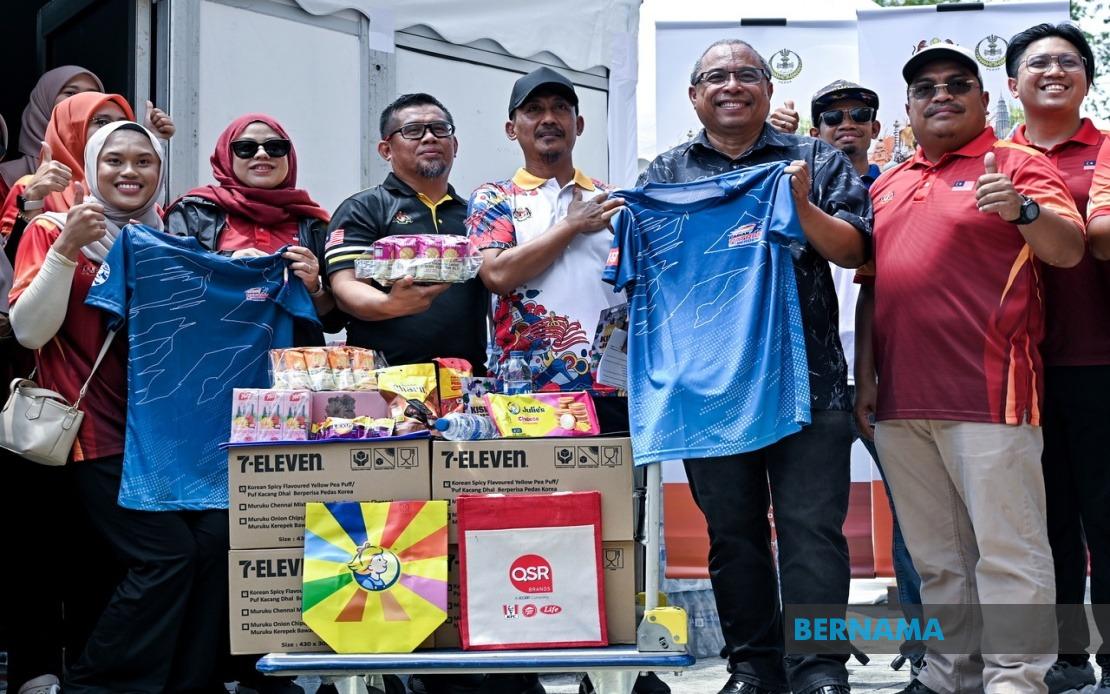
The financial dimension of these celebrations has been substantially strengthened through corporate sector engagement, with 15 companies committing sponsorship resources for the Ipoh launch ceremony alone. The roster includes prominent Malaysian businesses spanning logistics (J&T), retail convenience (7-Eleven), specialty beverages (ZUS Coffee) and quick-service restaurant operations (QSR Brands), demonstrating that national celebrations have become integrated into corporate marketing and social responsibility strategies across diverse sectors. This diversified sponsorship base indicates strong business confidence in the celebrations' relevance and reach.
Aminurrahim reported that current sponsorship commitments have already matched or potentially exceeded the previous year's levels, signalling either sustained corporate enthusiasm or alternatively reflecting inflationary cost increases that require proportionally higher monetary commitments. The ministry's public gratitude toward sponsors serves both immediate acknowledgment and forward-looking signal to other potential corporate partners that participation garners government recognition and visibility. For companies, association with state-sponsored patriotic events provides marketing credibility and demonstrates alignment with national values—considerations that may carry particular weight in sectors dependent on government contracts or operating licences.
The official launch ceremony scheduled for tomorrow will unfold as a high-profile state occasion, with Prime Minister Datuk Seri Anwar Ibrahim officiating proceedings that commence at 10 am from Dewan Sri Perdana at the Sultan Azlan Shah Institute for Health Training in Tanjung Rambutan. The venue selection—a health training facility named after the late Sultan Azlan Shah—carries symbolic resonance by locating national celebrations within spaces dedicated to professional development and wellness, suggesting connections between patriotic identity and human capital advancement.
The ceremonial centrepiece involves the Patriot Merdeka Run held during morning hours, designed to activate public participation through physical engagement with national symbolism. The subsequent launch of the HKHM2026 theme song, performed by an unspecified prominent Malaysian male vocalist before an estimated 3,000 assembled guests, will provide the occasion's emotional and cultural highpoint. Theme songs function as portable cultural artefacts that extend celebratory sentiment beyond the ceremony itself, as they circulate through media platforms and enter popular consciousness—creating continued patriotic resonance long after the official event concludes.
The broadcast strategy amplifies the ceremony's reach substantially beyond the assembled Ipoh audience. Coverage through Radio Televisyen Malaysia, the Malaysian National News Agency (Bernama), and multiple Facebook Live platforms including the Merdeka360 initiative will enable simultaneous national and regional viewership. This multimedia distribution reflects recognition that contemporary Malaysian audiences engage with official events through fragmented media consumption patterns—live television competes with social media streams and online platforms for attention. The deliberate multi-channel approach acknowledges that institutional credibility increasingly depends on meeting audiences where they naturally congregate rather than expecting them to conform to traditional broadcast schedules.
For Malaysia and the broader Southeast Asian region, these expanded 2026 celebrations represent continued investment in public patriotic expression at a moment when national cohesion remains a sustained policy concern. The diversified programming, corporate participation, and multimedia reach suggest government commitment to ensuring that independence commemorations remain culturally relevant and engaging for contemporary Malaysians navigating complex identities shaped by globalisation, digital communication, and increasing pluralism. The ceremonial apparatus—from flag-flying campaigns to theme song launches—functions as periodic reaffirmation of shared national belonging, particularly important in multiethnic and multireligious societies where competing loyalties and identities require periodic integration into overarching national frameworks. The 2026 calendar thus occupies considerable space in official priorities, reflecting understanding that patriotic observance, though ceremonial, carries substantial implications for social stability and national cohesion.

