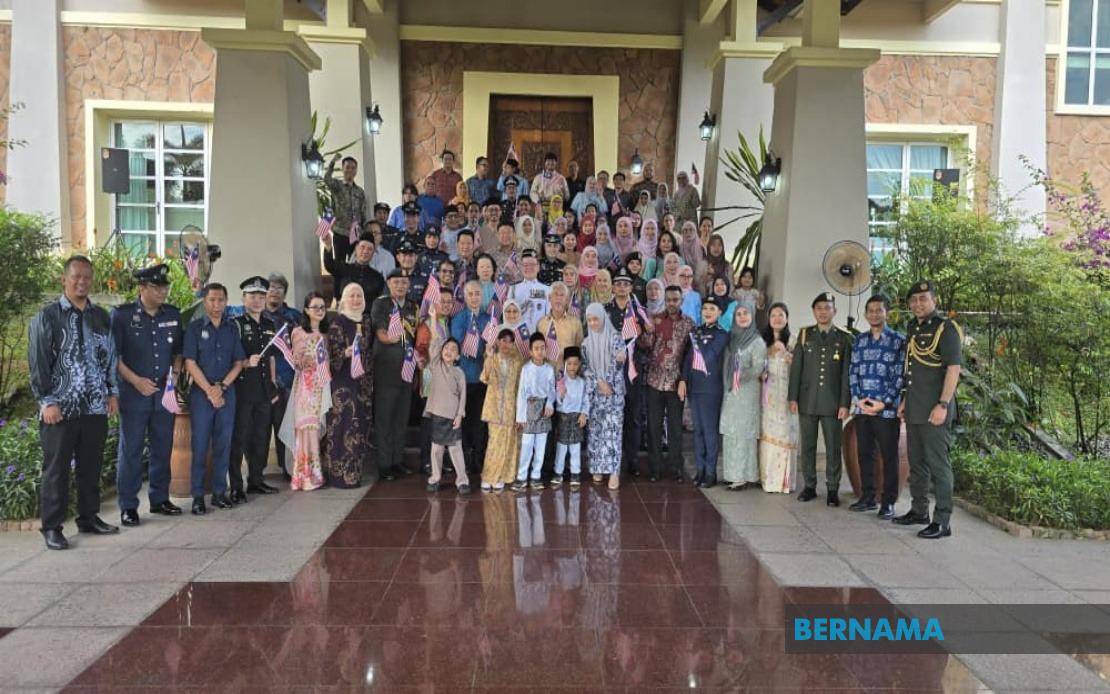
The Malaysian diaspora in Singapore represents far more than a migrant workforce crossing borders for employment opportunities. According to Datin Paduka Anizan Siti Hajjar Adnin, Malaysia's High Commissioner to Singapore, these individuals and families occupy a uniquely important position in the region's geopolitical landscape, functioning as informal channels through which the two nations reinforce their extensive interconnected relationship. Speaking during the Malaysian High Commission's 2026 National Day celebration held at Rumah Malaysia, she articulated a vision of Malaysians abroad as custodians of national values who actively contribute to strengthening the bonds between Kuala Lumpur and Singapore.
The context underlying this characterisation reflects the profound complexity of Malaysia-Singapore relations. Unlike many bilateral relationships between neighbouring nations, the Malaysia-Singapore partnership is layered with interwoven historical narratives, geographic interdependencies, and familial connections that span generations. Daily commuter flows across the Johor-Singapore causeway, business investments, educational exchanges, and cross-border family networks create practical foundations for what the High Commissioner describes as a relationship extending beyond conventional diplomacy. This everyday people-to-people engagement, she suggested, constitutes an underappreciated diplomatic asset that official channels alone cannot replicate.
Anian's remarks during the National Day observance emphasised that Malaysians residing in Singapore should consciously embody the nation's highest principles. She specifically identified integrity, professionalism, courtesy, mutual respect, and collaborative spirit as qualities that diaspora members should consistently demonstrate. The emphasis on individual conduct reflects a broader diplomatic philosophy: that national image and bilateral relationships are continually shaped through countless daily interactions between citizens rather than solely through formal governmental proclamations. When Malaysians in Singapore conduct themselves with distinction in their professional and social spheres, they implicitly represent Malaysia's character to their Singaporean colleagues, friends, and communities.
Particular attention was directed toward younger Malaysians residing in the republic. The High Commissioner urged this demographic to maintain active engagement with their cultural heritage and to preserve proficiency in the Malay language. This appeal carries significance beyond mere nostalgia or cultural preservation. The Malay language functions as a unifying national symbol for Malaysia, and its transmission across diaspora communities represents a mechanism through which Malaysian identity remains vital among citizens abroad. For younger generations potentially distant from homeland experiences, language becomes a tangible anchor to national identity and to the values system that constitutes modern Malaysia.
The High Commissioner articulated a vision of Malaysia as a nation confident in its distinctive identity while remaining open to global influences and opportunities. This formulation addresses a persistent tension within Malaysian society: the balance between cultural particularity and international integration. By encouraging Malaysians in Singapore to uphold this vision, she positioned diaspora members as active participants in Malaysia's ongoing nation-building project. Expatriates and cross-border commuters become stakeholders in the Malaysia that the government aspires to construct, one that maintains firm moorings in its values while engaging pragmatically with the contemporary world.
The practical dimensions of Malaysia-Singapore interdependence cannot be separated from these diplomatic expressions. Singapore hosts substantial Malaysian communities engaged in commerce, professional services, education, and skilled employment. Simultaneously, Singapore represents a crucial economic partner and regional hub for Malaysian business interests. The thousands of daily border crossers who constitute what the High Commissioner referenced as an important connecting bridge represent both economic necessity and human relationships that predate contemporary nation-states. These commuters carry with them not formal diplomatic messages but authentic representations of Malaysian society in all its complexity.
Rumah Malaysia, the venue for the National Day observance, itself symbolises the institutional infrastructure through which Malaysia maintains cultural presence and diplomatic engagement in Singapore. The over seventy Malaysian High Commission staff members and family members participating in the celebration demonstrated organisational commitment to marking national milestones and maintaining community cohesion among Malaysian expatriates. These annual observances serve multiple functions: they provide diaspora members opportunities to collectively affirm national identity, they demonstrate Malaysian institutional presence to Singaporean society, and they reinforce informal networks that sustain bilateral relationships beyond official channels.
The characterisation of Malaysians as unofficial ambassadors reflects recognition that bilateral relations operate simultaneously at multiple levels. Formal governmental diplomacy, trade agreements, and institutional partnerships constitute one dimension. Equally important are the networks of individual relationships, professional collaborations, family connections, and daily social interactions through which national images are constructed and bilateral understanding deepens. When a Malaysian professional earns respect through competent work performance in Singapore, when Malaysian families maintain cultural practices that familiarise Singaporean neighbours with Malaysian traditions, when cross-border friendships flourish, diplomatic objectives advance through mechanisms not enumerated in official agreements.
The emphasis on positive representation and cultural continuity also addresses concerns about assimilation and identity erosion among diaspora communities. By explicitly validating the importance of Malaysian cultural engagement and linguistic preservation, the High Commissioner signalled governmental support for diaspora members maintaining dual identities—fully participating in Singaporean society while remaining anchored to Malaysian heritage. This balancing act, while not without tensions, enables Malaysian communities to serve effectively as bridges rather than becoming so thoroughly integrated into host societies that they lose distinctiveness.
Looking forward, the Malaysian High Commission's approach to diaspora engagement suggests that bilateral relations between Malaysia and Singapore will increasingly depend on nurturing and sustaining these informal networks. As both nations navigate evolving regional geopolitical dynamics and economic transformations, the reservoir of goodwill, mutual understanding, and personal connections among their citizens represents strategic depth that supplements official diplomatic capacity. The High Commissioner's remarks essentially articulated a call for conscious stewardship of this resource, encouraging Malaysians abroad to recognise their potential contributions to national interests through excellence in personal conduct and commitment to cultural continuity.

