Malaysia's higher education sector is gaining firmer control over generative artificial intelligence deployment following the introduction of comprehensive guidelines by the Ministry of Higher Education in 2024. The framework, which provides a structured approach to managing AI technology across universities, has enabled institutions to establish their own protocols tailored to local contexts while maintaining consistent standards for ethical use. Deputy Minister Adam Adli Abdul Halim outlined how these ministerial guidelines have translated into practical institutional safeguards that address one of the sector's most pressing concerns: maintaining academic integrity in an era of sophisticated AI tools.
The ministry's proactive stance reflects growing international recognition that generative AI presents both opportunities and risks for educational systems. Rather than implementing blanket restrictions, the Malaysian approach encourages institutions to develop nuanced policies that acknowledge AI's legitimate role in modern learning while establishing clear boundaries against misuse. Universities have responded by crafting their own standard operating procedures and response mechanisms based on the ministry's framework, creating a layered governance structure that offers consistency without sacrificing institutional autonomy. This balance between centralized guidance and institutional flexibility has proven important in the Malaysian context, where public and private universities operate with different operational models and student demographics.
A critical component of the guidelines involves mandatory student declarations regarding AI usage in academic work. Rather than expecting lecturers to police technology secretly, the framework requires transparency—students must explicitly state when they have employed generative AI tools in completing assignments. This declarative approach serves multiple purposes: it educates students about appropriate usage from the outset, creates accountability mechanisms, and allows educators to assess the extent and nature of AI integration in submitted work. The declaration requirement transforms AI from a hidden variable into an acknowledged element of the learning process that can be evaluated against academic standards.
The guidelines establish clear consequences for violations, recognizing that awareness of penalties functions as a deterrent to misconduct. Using generative AI to produce essays, journals, or other academic submissions without adhering to established ethical protocols can constitute a breach of academic integrity, with consequences ranging from assignment cancellation to the revocation of earned qualifications. Such measures underscore that institutional tolerance for AI misuse has limits, and that technology cannot exempt students from fundamental obligations to original thinking and proper attribution. The severity of potential penalties reflects universities' commitment to preserving the value and credibility of their credentials in a competitive global marketplace.
Adam Adli emphasized that while isolated cases of AI misuse continue to occur, the guidelines have equipped universities with structured approaches to identify, investigate, and resolve such incidents. Before the guidelines, institutions often lacked consistent protocols, leading to ad-hoc responses that sometimes resulted in inconsistent application of consequences. The establishment of formal response mechanisms and SOPs has professionalized how universities handle suspected violations, improving both fairness to accused students and protection of legitimate academic standards. Clear procedures also create administrative efficiency, reducing the time and uncertainty involved in disciplinary processes.
The framework explicitly positions generative AI as a supporting tool rather than a replacement for academic discipline. This philosophical foundation reflects concern that uncontrolled AI use could erode fundamental learning objectives—the development of critical thinking, research capability, and independent analysis that higher education aims to cultivate. Students remain required to employ proper research methodologies, cite sources appropriately, and engage substantively with course material. AI becomes acceptable as an aid to writing, a source of alternative explanations, or a tool for organizing research—but not as a substitute for the intellectual work that constitutes genuine learning. This distinction matters profoundly for degree holders' actual preparedness for professional environments that will demand genuine expertise.
Implementation of these guidelines has created opportunities for educating both students and faculty about responsible AI integration. Rather than leaving academics to navigate technological change independently, universities informed by the ministry's framework can provide structured training on ethical considerations, technical capabilities and limitations, and proper disclosure practices. Faculty development programs have begun addressing how instructors should design assessments in an AI-aware environment, whether certain assignments should explicitly allow AI use while others prohibit it, and how to provide meaningful feedback when student work incorporates algorithmic assistance. This institutional learning process, still relatively nascent in 2024-2025, represents an investment in long-term capacity building across the sector.
The timing of Malaysia's guidelines positions the nation as a thoughtful actor in global discussions about AI governance in education. While some countries have pursued restrictive approaches banning AI tools outright, and others have permitted largely uncontrolled adoption, Malaysia's middle path acknowledges both the inevitability of AI integration and the non-negotiability of academic integrity. This positioning may carry soft-power implications, potentially making Malaysian institutions attractive to international students and partners who view the country as demonstrating sophisticated policy thinking about technological change. It also establishes a model that other Southeast Asian countries grappling with similar challenges might reference or adapt.
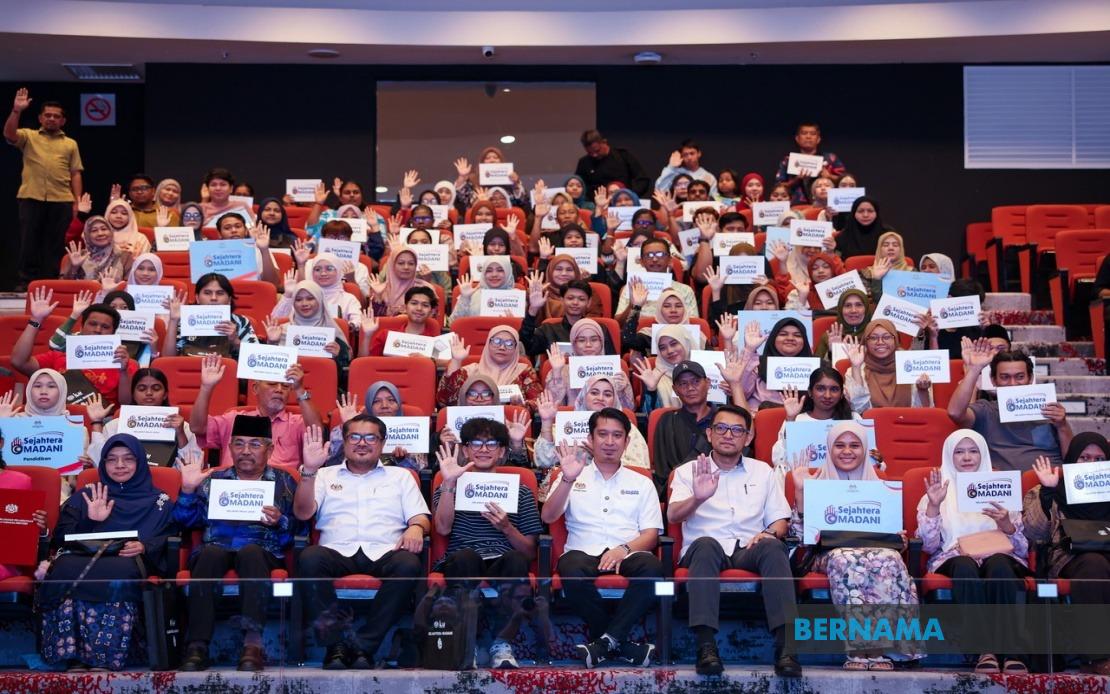
Beyond the governance framework itself, the Ministry simultaneously advanced broader support for student wellbeing through the Sejahtera MADANI initiative. The distribution of laptops to exceptional SPM students and tablets to university undergraduates represents complementary policy—ensuring that disadvantaged students from eKasih families have access to technology necessary for modern learning. This dual commitment—establishing ethical frameworks for technology use while improving equitable access to tools—reflects recognition that governance without access creates exclusion. Students without adequate devices cannot fully participate in digital learning environments, regardless of how sound the ethical guidelines. The integration of both initiatives at an awards ceremony in Melaka underscored that supporting excellence and managing technology responsibly are interconnected policy objectives within Malaysia's higher education vision.

