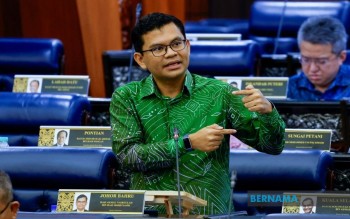
With the global supply chain in disarray and economic headwinds intensifying, Malaysia's small and medium enterprises remain under considerable pressure to maintain operations and preserve jobs. In response, the government has underscored its commitment to supporting these businesses through multiple financial mechanisms, with Economy Minister Akmal Nasrullah confirming during parliamentary question time that substantial funds remain untapped within the national crisis response framework. The announcement provides a timely reminder that help is available, though uptake appears to have lagged expectations despite the mounting challenges facing the MSME sector.
The Bank Negara Malaysia's Small and Medium Enterprise Stabilisation Relief Facility, established as part of the broader economic response package, represents one of the most direct interventions available to struggling businesses. From a total allocation of RM5 billion, more than RM4 billion remains unallocated as of mid-June 2026, according to Akmal Nasrullah's statement in the Dewan Rakyat. This substantial remaining balance suggests that while the facility exists and is operational, many MSMEs either remain unaware of its availability, face barriers in accessing the funds, or have not yet felt compelled to seek assistance despite economic headwinds. The relatively modest uptake of RM700 million across more than 1,000 enterprises in the first stages of the programme raises questions about awareness and accessibility challenges that the government may need to address.
The financing assistance operates under a streamlined approval process designed to reduce administrative friction during a period when speed matters critically for cash-strapped businesses. Financial institutions have committed to processing applications within seven working days, a timeframe significantly faster than traditional lending procedures. For MSMEs facing immediate liquidity pressures from inventory accumulation, delayed receivables, or disrupted supply chains, this accelerated processing could prove decisive in determining whether businesses survive the current turbulent period. However, the government's emphasis on these procedural improvements suggests that awareness gaps rather than administrative delays may be the primary constraint limiting uptake.
Complementing the direct financing facility, the government has mobilised an additional layer of support through the Syarikat Jaminan Pembiayaan Perniagaan Bhd, which operates a RM5 billion guarantee programme for MSME financing. This parallel mechanism effectively doubles the safety net available to small businesses by reducing the perceived risk to financial institutions when lending to enterprises facing uncertain conditions. Guarantee schemes of this type are particularly valuable during crisis periods, as they enable banks to extend credit to businesses that might otherwise fall below lending thresholds due to heightened risk assessments. The dual-track approach of direct stabilisation relief combined with guarantee-backed lending reflects a comprehensive understanding that MSMEs face different financing constraints and require solutions tailored to their specific circumstances.
Beyond immediate liquidity support, the government has launched the Progressive Acceleration for Capability and Employability, or PACE, Economic Resilience Package, allocating more than RM710 million to address the interconnected challenges of job losses and business disruptions. This broader intervention recognises that supporting businesses alone is insufficient if the workforce experiences significant attrition, as labour shortages and skills mismatches could impede recovery even after financial pressures ease. The PACE framework divides support across four strategic pillars: protecting vulnerable workers through enhanced social security, facilitating skills development and job placement, supporting the increasingly important gig economy workforce, and nurturing young talent and entrepreneurship within the MSME ecosystem.
Within the employment protection dimension, the government has channelled more than RM580 million through PERKESO to reinforce the Employment Insurance System, providing income replacement and retraining support for workers facing redundancy. This approach recognises that labour market disruptions carry long-term consequences if displaced workers lack pathways to redeployment or if skills gaps widen during periods of economic contraction. Simultaneously, the government has allocated RM100 million through HRD Corp for training and job placement initiatives, leveraging the MYFutureJobs platform to connect workers with emerging opportunities across sectors likely to experience expansion as the economy stabilises. These employment-focused interventions attempt to prevent the scarring effects associated with prolonged joblessness, which research indicates can significantly impair individual earnings trajectories and overall economic productivity.
The PACE package further recognises the structural transformation underway in Malaysia's labour market through dedicated support for gig economy workers, a workforce segment that expanded dramatically during previous disruptions but often lacks access to traditional social protection mechanisms. The Skills Education Fund Corporation has received RM20 million to develop training programmes specifically tailored to platform workers, addressing both technical capabilities and business management skills essential for sustainable livelihoods. This targeted approach reflects an acknowledgement that contemporary economic disruptions disproportionately affect non-traditional workers who lack the institutional protections available to formal employees, yet who constitute an increasingly significant portion of the workforce across Southeast Asian economies.
Young talent and MSME development receives an additional RM10 million through TalentCorp for industrial training initiatives, reflecting government recognition that current disruptions should not be allowed to derail long-term productivity improvements and workforce development. By investing in human capital formation during periods of economic weakness, when opportunity costs for training participation are relatively low, the government creates conditions for faster productivity growth during the subsequent recovery phase. This countercyclical approach to skills development contrasts with crisis-driven labour market adjustments that often involve permanent skill deterioration and underutilisation of human potential.
The stabilisation efforts extend beyond financial and employment measures into the critical realm of supply chain management and price stability. The government has intensified monitoring of essential commodities, raw materials, and key inputs across manufacturing, food production, agriculture, and services sectors. This surveillance function serves multiple purposes: identifying emerging bottlenecks that could cascade through the economy, detecting speculative behaviour or hoarding that artificially inflates prices, and providing early warning signals for targeted interventions. For Malaysian businesses operating in global value chains, the ability of domestic authorities to address input cost inflation and supply disruptions can mean the difference between maintaining competitiveness and losing market share to international competitors operating under more favourable conditions.
The parliamentary statement also flagged an upcoming ministerial explanation regarding the global supply crisis, scheduled for the following Monday pending parliamentary approval, suggesting that government understanding of the crisis dimensions and mitigation strategies continues to evolve. This indication of ongoing policy development is significant for MSMEs trying to anticipate regulatory changes or additional support measures, as crisis responses often introduce successive waves of assistance as initial measures prove insufficient or as new challenges emerge. For business planners attempting to construct scenarios and determine financing needs, the indication that further policy announcements are pending introduces both uncertainty and potential opportunity.
Access to these support mechanisms requires MSMEs to initiate contact with their respective financial institutions rather than wait passively for outreach, placing the burden of information acquisition and application initiation on often resource-constrained business owners. The substantial undeployed balance of over RM4 billion suggests that many eligible enterprises either lack awareness of available assistance or face practical barriers in navigating application processes despite government efforts to streamline procedures. Businesses struggling with cash flow management, inventory accumulation related to supply disruptions, or operational continuity challenges would benefit from immediate engagement with their banking partners to explore tailored solutions from the stabilisation facility and guarantee programmes.
The layered approach to crisis response—combining direct financing relief, lending guarantees, employment protection, skills development, and supply chain management—demonstrates an attempt to address the multifaceted nature of contemporary economic disruptions. However, the significant underdeploy of available funds suggests that awareness campaigns and enhanced outreach may be necessary to ensure that the resources allocated for business stabilisation actually reach the enterprises most in need. For Malaysian MSMEs and the broader Southeast Asian business community, the availability of these programmes represents a significant backstop against the more severe consequences of prolonged supply chain disruption and economic uncertainty.

