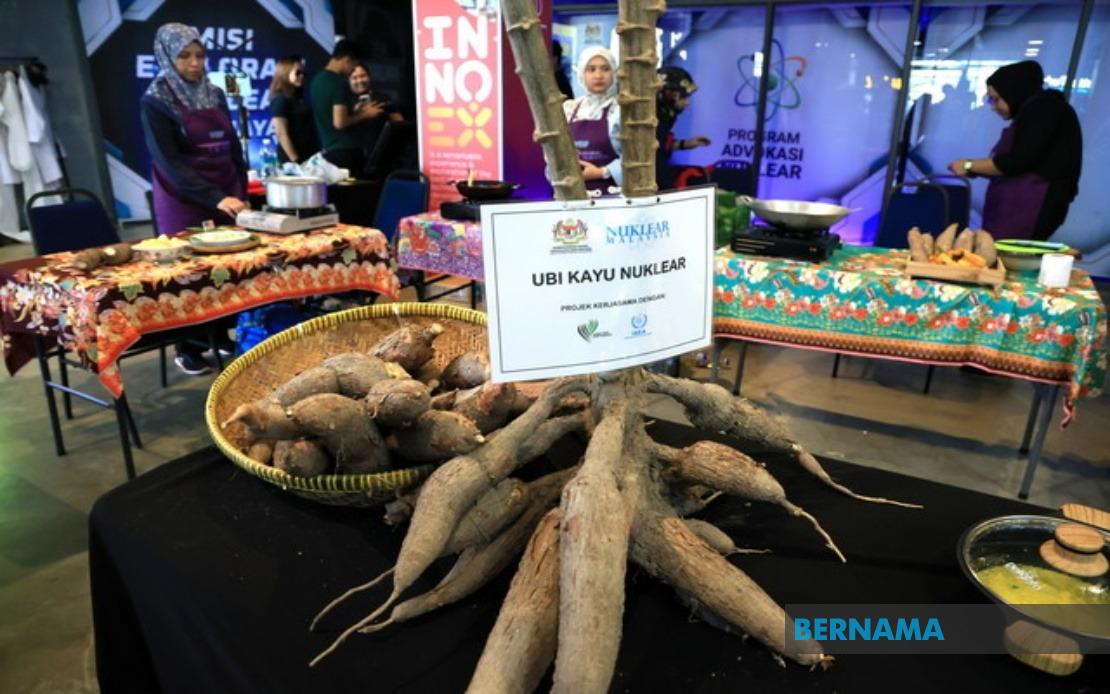
The Malaysian Nuclear Agency has made significant progress in developing cassava varieties that mature in approximately six months, a breakthrough that could reshape the nation's agricultural landscape and strengthen regional food production capacity. This achievement represents the culmination of intensive research efforts launched in 2021, conducted by the Agrotechnology and Biosciences Division in collaboration with the Department of Agriculture and supported by the International Atomic Energy Agency. The new varieties not only slash harvesting time by nearly fifty percent compared to the eleven to twelve months required for local cultivars but also deliver improved yields, creating a compelling case for rapid commercialisation within the next two years.
The significance of this development lies in its potential to transform cassava farming economics for Malaysian growers. By compressing the production cycle from just over a year to half that duration, farmers gain the capacity to plant and harvest multiple crops annually from the same land, fundamentally altering the return-on-investment calculation for cassava cultivation. This acceleration comes without sacrificing productivity—a critical consideration that distinguishes this innovation from simple yield-for-speed tradeoffs. For a nation seeking to enhance agricultural resilience and independence, particularly in the face of global supply chain disruptions and climatic unpredictability, such advances address fundamental vulnerabilities in the food system.
The research methodology employed by the Malaysian Nuclear Agency demonstrates the sophisticated application of radiation technology in plant breeding. Cassava stem cuttings undergo controlled exposure to gamma radiation, which triggers random genetic mutations in the plant material. Contrary to public misconceptions that might associate nuclear technology with contamination, the process involves no residual radioactivity—gamma rays pass through the biological material much like X-rays penetrate human tissue during medical imaging, leaving no trace of radiation behind. This clarification proves essential for building farmer and consumer confidence as the technology moves toward widespread adoption across Malaysian agricultural communities.
Identifying viable mutations among thousands of candidates represents one of the most labour-intensive aspects of the research programme. Scientists must screen approximately one thousand plants per crop variety, observing each through multiple generations to confirm that desirable traits—early maturity, elevated yields, disease resistance—remain stable and heritable. This multi-generational observation requirement explains why developing novel crop varieties through induced mutation typically demands six to seven years of rigorous testing before researchers can confidently release them to farming communities. The screening burden reflects the randomness of genetic change; researchers cannot predict precisely which mutations will produce beneficial characteristics, necessitating exhaustive evaluation of large plant populations.
Beyond cassava, the Malaysian Nuclear Agency has extended this nuclear technology platform to multiple crops of strategic importance to the nation's agricultural sector and regional food systems. Ongoing projects encompass banana varieties engineered for superior productivity and disease resistance, sweet potatoes and taro selected for enhanced nutritional value and climatic adaptability, and kenaf developed for industrial biomass applications. Additionally, researchers are working on Napier grass improvements targeting livestock feed quality and quantity, recognising that animal agriculture underpins protein security throughout Southeast Asia. This diversified portfolio approach ensures that the agency's nuclear technology expertise generates benefits across multiple segments of primary production.
The role of the International Atomic Energy Agency in this Malaysian research initiative underscores the collaborative nature of advanced agricultural science in the twenty-first century. With a research grant of approximately RM100,000 distributed over five years, the IAEA has enabled Malaysian scientists to access technical expertise and resources that might otherwise exceed the capacity of national institutions. This partnership model reflects how developing nations can leverage international scientific networks to accelerate agricultural innovation, a particularly valuable approach for Southeast Asian economies seeking competitive advantages in food production amid growing regional competition for export markets.
Food security considerations permeate the rationale for this research programme, addressing a concern that resonates throughout Southeast Asia as populations grow and arable land becomes increasingly constrained. Cassava represents a critical crop for the region—it tolerates poor soil conditions, requires minimal inputs compared to grains, and provides reliable carbohydrate yields even in marginal growing environments. Varieties that mature twice as quickly multiply the productive capacity of existing farmland without requiring land-use expansion, a crucial advantage given competing demands for terrain from urbanisation and industrial development. For Malaysia specifically, accelerating cassava maturity reduces import dependency and strengthens the nation's capacity to supply domestic markets and potentially export processed cassava products throughout Southeast Asia.
The anticipated commercialisation timeline of two years reflects confidence among the research team that the new varieties have achieved sufficient stability and demonstrated sufficient agronomic advantage to justify transition from experimental protocols to farming practice. This relatively near-term horizon contrasts with the multi-year development phase, suggesting that field validation has advanced substantially and that regulatory pathways for crop release are aligned with the research schedule. For Malaysian farmers, this means practical access to high-performing varieties lies within the immediate future rather than remaining a distant prospect, enabling forward planning and investment decisions in cassava cultivation infrastructure.
The disease and pest resistance characteristics embedded in several of the experimental varieties address vulnerabilities in cassava cultivation that extend beyond simple productivity metrics. Cassava brown streak virus, cassava mosaic virus, and various fungal pathogens present persistent threats to yields across tropical and subtropical growing regions, including Southeast Asia. Varieties engineered to resist these biological challenges reduce farmer dependence on chemical inputs, lowering production costs while simultaneously improving environmental sustainability. Climate-resilient characteristics incorporated into some varieties address the reality that Southeast Asian agriculture increasingly faces erratic rainfall patterns, temperature extremes, and seasonal disruptions linked to climate variability—adaptive crop traits thus represent prudent insurance against future agricultural shocks.
The broader institutional significance of this research initiative extends beyond cassava to demonstrate Malaysia's capacity to conduct world-class nuclear science with practical applications in the primary sector. As regional competition intensifies for agricultural innovation leadership, Malaysia's investments in nuclear technology for crop improvement position the nation as a credible research hub for Southeast Asia. The technology platform developed through cassava research creates transferable expertise applicable to numerous other crops of regional importance, potentially enabling Malaysia to serve as a technical resource and knowledge partner for neighbouring countries seeking to enhance their own agricultural productivity through nuclear technology applications.
Implementation of these new cassava varieties across Malaysian farming regions will require coordinated extension efforts to educate growers on cultivation protocols, optimal planting density, and harvesting techniques adapted to the accelerated maturity schedule. The Department of Agriculture's ongoing partnership ensures that extension services can incorporate practical farming knowledge into government advisory programmes, facilitating smooth technology adoption. Early adopter farmers who transition to the new varieties will likely achieve competitive advantages during the initial commercialisation phase, creating positive demonstration effects that encourage broader uptake throughout the cassava-growing regions concentrated in Peninsular Malaysia and Sabah.
The economic implications for smallholder farmers merit particular emphasis, as cassava cultivation represents a significant income source for rural communities throughout Malaysia's agricultural heartland. The ability to double harvest frequency from the same planted area translates directly into doubled annual income potential, assuming stable market prices and reliable access to agricultural credit for expanded production inputs. This income expansion capacity could strengthen rural household resilience, reduce youth out-migration from farming communities, and support broader rural development objectives that have long challenged Malaysian policymakers seeking to maintain viable agricultural livelihoods as urbanisation accelerates.
Looking forward, the successful commercialisation of these nuclear-technology-developed cassava varieties will provide Malaysia with a compelling case study for discussing the role of advanced scientific innovation in addressing food security challenges that confront the entire Southeast Asian region. As climate change impacts intensify, population pressures mount, and agricultural land becomes scarcer, crop varieties that produce more food per hectare in less time represent a critical component of regional resilience strategy. Malaysia's work in this domain thus extends beyond national interest to encompass the broader development aspirations of Southeast Asia, potentially inspiring and informing similar research initiatives throughout the region aimed at accelerating agricultural productivity growth in sustainable ways.

