A Malaysian man who joined a sprawling fraud operation based in Cambodia has received a 16-month jail sentence for his involvement in a criminal enterprise that systematically targeted Singaporeans. Yip Chee Ming, 30, was convicted on June 26 after admitting to membership in an organised crime syndicate. His downfall came not from successful criminal activity, but rather from his spectacular incompetence at the very task he was recruited to perform.
Yip's entry into the scam world was arranged through a personal connection in October 2024, when his friend Jason approached him with what seemed like a lucrative job opportunity. The friend had learned about openings with a fraud operation running out of Phnom Penh and, unwilling to relocate alone, convinced Yip to join him. Their recruitment was handled by Tang Soon Wah, identified by authorities as one of the syndicate's senior leaders, who went so far as to arrange a trip for both men to tour the operation's sprawling compound—a five-storey building fortified with security personnel. The pair returned to Malaysia to deliberate on the offer before committing to the venture, eventually boarding a flight to Cambodia on November 21, 2024.
The structure of this fraud network reveals the sophisticated operations that have plagued the region. The syndicate, headquartered in the Cambodian capital, maintained a rigid hierarchical system with distinct roles and responsibilities. Leadership managed criminal strategy and distributed commissions to frontline workers. Directly beneath them sat supervisors and trainers tasked with oversight of the actual scammers. These trainers provided crucial operational support, furnishing callers with carefully crafted scripts and coaching techniques designed to enhance their persuasiveness. They taught operatives to adopt Singaporean accents and mannerisms to make their impersonations more credible when posing as government officials. Underlying this entire operation was a sophisticated money-laundering apparatus that converted illicit proceeds into cryptocurrency, moving funds through digital channels to obscure their origins.
The scale of the criminal enterprise was staggering. Between September 2024 and September 2025, authorities linked the group to at least 528 documented scam incidents, representing losses totalling approximately S$52.5 million. Law enforcement identified roughly 78 suspected members operating across various roles within the organisation. The operation demonstrated the hallmarks of a transnational crime network, drawing members from multiple countries and utilising different jurisdictions to shield operations from law enforcement scrutiny.
Yip's employment contract promised substantial compensation by regional standards. He was offered US$1,800 (approximately S$2,333) monthly in cryptocurrency alongside a one per cent commission from each victim he successfully defrauded. The terms reflected the syndicate's confidence in the profitability of its operations. However, the plan unravelled almost immediately when Yip actually began work on November 22, 2024. His role required him to impersonate a bank officer in calls to Singaporean victims, following a prepared script designed to convince people to transfer funds or disclose sensitive financial information.
Despite meticulous training and carefully prepared dialogue, Yip proved wholly incapable of closing a single fraudulent transaction. His attempts on the first day yielded no victims. Undeterred, he tried again on November 23, 2024, only to fail once more. The syndicate, operating a results-oriented business with little tolerance for underperformance, made a swift decision. Tang fired Yip after just three days, even deleting their messaging records in an apparent effort to sever ties. Court documents provided no information about how Yip returned to Malaysia or his movements during the following months.
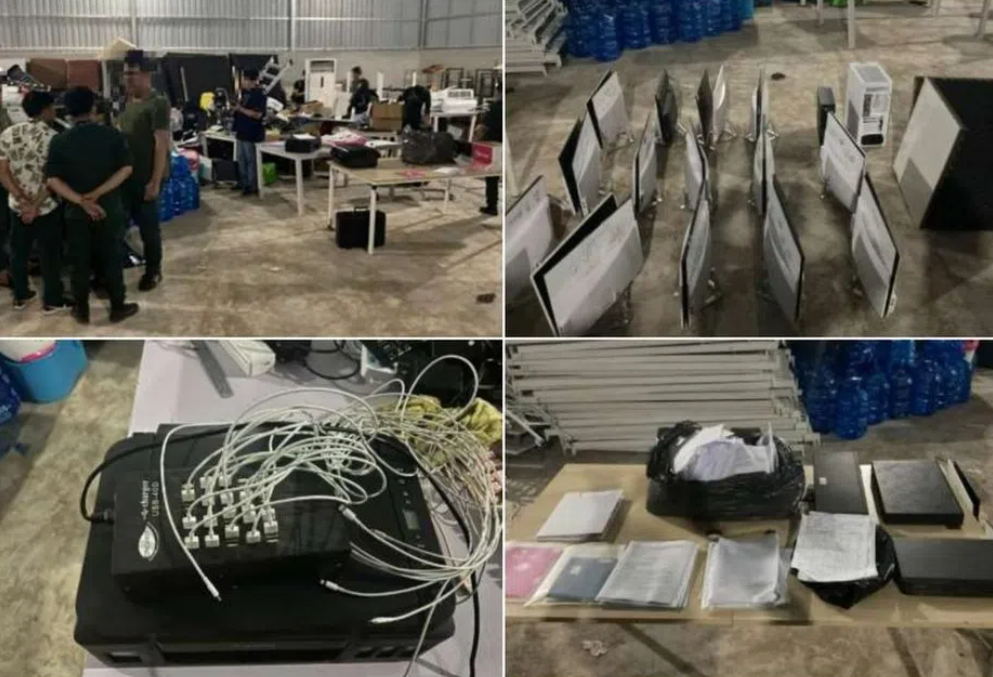
Yip's arrest came roughly ten months later, on September 9, 2025, when Singapore's police force conducted coordinated operations with Cambodian authorities to dismantle the network. He became one of twelve people charged with alleged syndicate membership. Nine of the defendants were Singaporean citizens: Deon Tan Ke Yuan, 25; Lester Ng Jing Hai, 29; Christy Neo Wei En, 29; Heiqal Lee, 30; Tay Jun Xiang, 32; Ng Wei Kang, 33; Zachary Lee Jia An, 35; Melvin Tan Wenzheng, 35; and Lau Haoxiang, 39. Alongside Yip, two other foreign nationals faced charges—Malaysian Muhamad Asyraf Anuar, 29, and Filipina De Villar Rizalyn Panganiban, 34.
The sentencing of Yip reflects judicial concern about transnational organised crime targeting the region's citizens. Under Singapore law, membership in such criminal organisations carries maximum penalties of five years' imprisonment and fines reaching S$100,000. The court took into consideration an additional charge related to cheating during sentencing, though the primary conviction rested on his association with the criminal network.
The broader context surrounding this case illustrates escalating vulnerabilities within the region. While overall scam incidents in Singapore declined during 2025, one particular variant surged dramatically. Government official impersonation scams—the precise method deployed by this Cambodian syndicate—more than doubled in frequency, jumping from 1,504 cases in 2024 to 3,363 in 2025. Despite being the fifth most prevalent scam category in 2025, the explosive growth suggests that criminal networks have identified and refined a particularly effective exploitation technique. The sophistication displayed by organisations like the one targeting Yip demonstrates that Southeast Asian law enforcement agencies face increasingly organised and coordinated threats requiring sustained international cooperation to contain.

