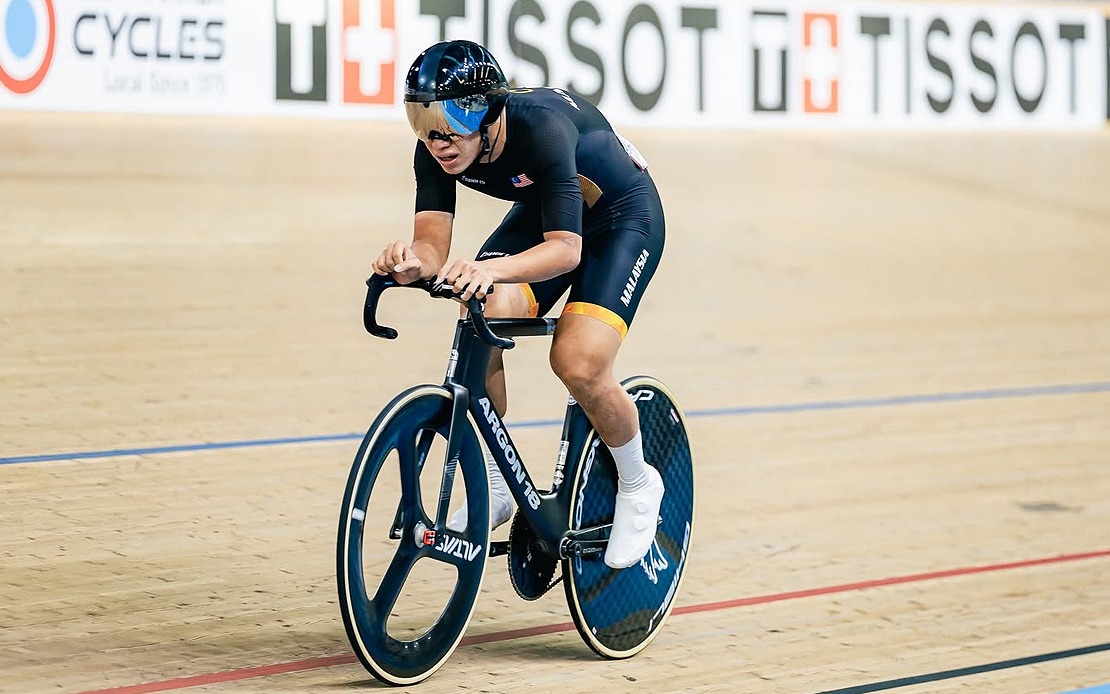
Malaysian track cyclist Lau New Joe has been declared fit to travel and will return to Malaysia with the national contingent following a significant crash during the men's 10-kilometre scratch race final at the 2026 Glasgow Commonwealth Games on Saturday. The incident, which involved nine riders competing at the Sir Chris Hoy Velodrome, left New Joe requiring immediate hospitalisation and extensive medical evaluation, though subsequent assessments have provided encouraging signs for his recovery trajectory.
Dr Kamarul Hashimy Hussein, the Malaysian delegation's chief medical officer, confirmed that New Joe was transported to the emergency department at Queen Elizabeth University Hospital where he underwent comprehensive diagnostic procedures. The medical team conducted both computed tomography scanning and full-body X-rays to assess the extent of his injuries following the high-speed collision that occurred shortly before the final lap as competitors were entering their closing sprint.
While the news carries an undoubtedly positive dimension, New Joe's injuries remain more than superficial. Despite the absence of internal bleeding in the brain—a finding that prompted considerable relief among medical staff and team officials—the cyclist sustained multiple facial bone fractures requiring specialist intervention. The nature and location of these injuries necessitated consultation with maxillofacial specialists, who treated him through the night from approximately 9 pm until 1 am with immediate stabilisation procedures.
The dental and maxillofacial damage extends beyond simple fractures to bone structure. New Joe has also suffered tooth fractures that will demand an extended course of restorative treatment involving multiple specialist appointments. This aspect of his injury profile suggests that his return to competitive cycling, while feasible, cannot proceed until comprehensive dental rehabilitation has been completed. The recovery timeline for such injuries typically spans several weeks to months, depending on the complexity of the dental reconstruction required.
The National Sports Institute will assume responsibility for New Joe's ongoing medical management upon his arrival in Malaysia. This institutional commitment reflects the seriousness with which Malaysian sporting authorities are treating his rehabilitation, with NSI specialists expected to coordinate care across physiotherapy, dental work, and medical monitoring. The institute's involvement signals that recovery will be structured and professionally supervised rather than left to chance or informal arrangements.
Beyond the physical dimensions of his injury, medical personnel recognise the psychological dimension of competitive trauma. Dr Kamarul noted that psychological support forms part of the comprehensive recovery strategy, acknowledging that New Joe's mental resilience and competitive motivation represent assets in his rehabilitation journey. The athlete's documented determination and winning mentality have been factors in the medical team's confidence regarding his psychological recuperation, though formalised mental health support remains part of the protocol.
The path to New Joe's return to competition involves systematic monitoring of his physical conditioning. Medical staff will need to carefully track his cardiovascular endurance, muscular strength, and overall stamina before clearing him to resume training at competitive intensity. This graduated approach reflects the complexity of returning track cyclists to their sport following significant facial trauma, as even minor complications during this monitoring phase could necessitate extended recovery periods.
The timing considerations surrounding New Joe's potential return become particularly salient given the proximity of the Asian Games. The continental championship, scheduled to commence on 19 September and conclude on 4 October, represents the next major competitive opportunity for Malaysian cyclists. Dr Kamarul's cautious optimism regarding possible participation in this competition acknowledges both the athlete's competitive aspirations and the realistic constraints imposed by his injury recovery profile. Any decision regarding Asian Games participation will ultimately depend on how rapidly his dental and facial injuries respond to treatment and whether his physical conditioning can reach requisite standards.
New Joe's Commonwealth Games debut has thus been marked by adversity, yet the immediate medical response and current prognosis suggest the incident, while serious, need not prove career-altering. The multi-rider nature of the crash—involving nine competitors—underscores how track cycling's close-quarters racing dynamics create inherent collision risks despite rigorous safety protocols at venues like the Sir Chris Hoy Velodrome. His status as a first-time Commonwealth Games participant adds another dimension to his experience, as managing injury and recovery early in one's international cycling career presents distinctive psychological and logistical challenges.
For Malaysian cycling and the broader sports ecosystem, New Joe's accident and recovery process will likely prompt renewed examination of safety measures and crash protocols at international velodromes. The efficiency with which medical teams responded and the availability of specialist maxillofacial care at Queen Elizabeth University Hospital demonstrated the importance of hosting major sporting events in centres with comprehensive medical infrastructure. As New Joe commences his recovery journey in Malaysia, his experience will contribute to ongoing discussions about athlete welfare and medical preparedness across Southeast Asian sporting competitions.

