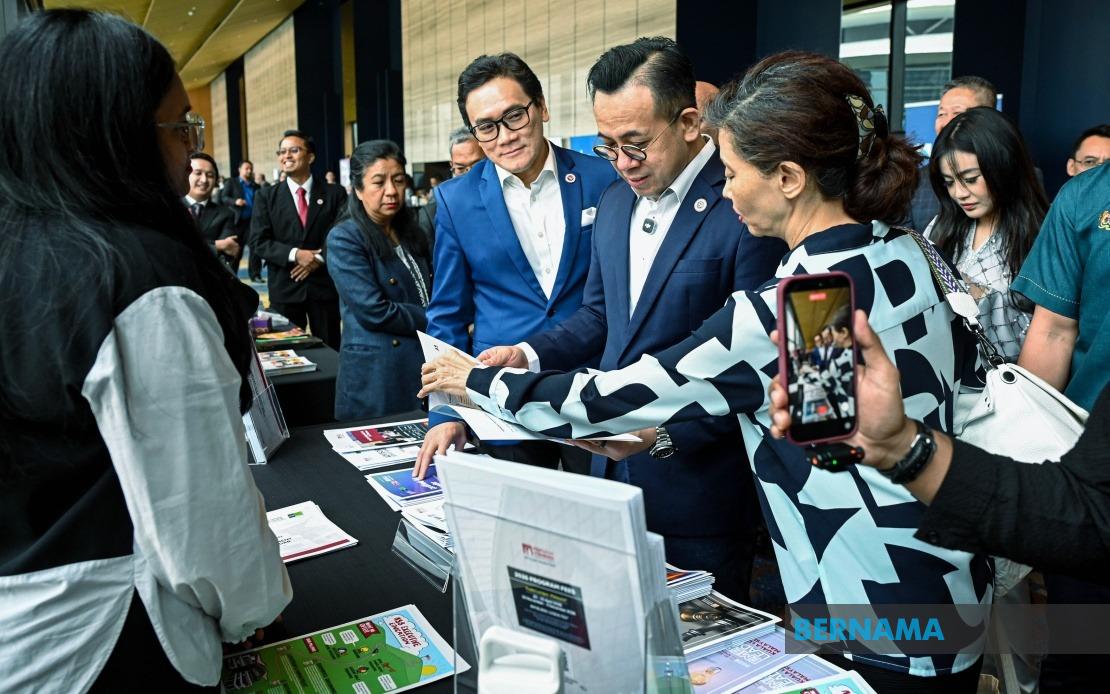
The Malaysian government is pushing its domestic business sector to fundamentally reshape how it competes internationally, moving beyond low-cost manufacturing toward innovation-driven production that genuinely reflects Malaysian ingenuity. Entrepreneur and Cooperatives Development Minister Steven Sim articulated this vision while officiating the BrandQuest 2026 programme and National Mark of Malaysian Brand Appreciation Ceremony in Kuala Lumpur, emphasizing that local companies must anchor their competitive strategy on value creation rather than undercutting rivals on price alone.
This policy pivot represents a deliberate departure from the traditional "Made in Malaysia" positioning that characterized the country's industrial development for decades. Under the established framework, Malaysia functioned primarily as a manufacturing hub where multinational corporations and international brands produced goods within Malaysian borders for global distribution. Sim's articulation of a "Made by Malaysia" paradigm signals a maturation of the nation's economic ambitions, one that seeks to position Malaysian entrepreneurs and innovators as the originators of products rather than merely their producers. The distinction carries significant implications for how Malaysian brands are perceived in international markets and the value chains in which they participate.
The minister stressed that companies must embed safety, health, and quality standards as foundational pillars of their brand identity. This emphasis addresses a persistent perception challenge that Malaysian products sometimes face in developed markets, where purchasing decisions rest heavily on assurances of rigorous quality control and consumer protection. By making these attributes non-negotiable components of the Malaysian brand promise, the government seeks to elevate local products into premium market segments where they can command higher margins and attract more sophisticated international buyers.
To support this transition, the government has deployed targeted financial mechanisms. SME Corp allocated RM230,000 that benefited approximately 40 micro, small and medium enterprises in securing National Mark of Malaysian Brand certification during 2025 and 2026. While this sum may appear modest relative to the broader manufacturing sector, it represents seed funding designed to incentivize quality improvement investments among enterprises that might otherwise lack resources to pursue international certification standards. Sim indicated the ministry would reassess allocation levels periodically, signaling openness to scaling financial support if uptake and impact justify expansion.
The broader financing landscape for Malaysian entrepreneurs reflects more substantial government commitment. Through the Power Up 10K programme, the ministry channelled RM9 billion in financing to 250,000 entrepreneurs nationwide as of July, working toward a RM15 billion target for the year. This lending initiative reaches beyond brand development to address the fundamental capital constraints that prevent many Malaysian businesses from investing in innovation, technology adoption, and market development. For a nation seeking to transition from assembly-based manufacturing to design-led production, adequate access to patient capital remains essential.
Sim's framing of entrepreneurial support as a personal mission underscores the political salience of business competitiveness within Malaysia's policy landscape. The minister positioned the government's role not as market participant but as enabler, ensuring sufficient resources flow to companies that demonstrate commitment to building competitive advantage through quality and innovation. This approach recognizes that government cannot dictate which products succeed but can remove financial barriers that prevent capable entrepreneurs from pursuing competitive strategies.
The Malaysian Brand Heritage Award recipients announced during the ceremony illustrated the diversity of sectors participating in this brand-building initiative. Seasonings Specialties Sdn Bhd, Passive Fire Protection Sdn Bhd, Goodnite Sdn Bhd, Halagel (M) Sdn Bhd and Sydney Cake House Sdn Bhd span food ingredients, industrial safety, consumer goods, and hospitality sectors. This cross-sectoral recognition suggests the brand-building agenda operates across the economy rather than concentrating on particular industries, reflecting a conviction that innovation and quality represent universal competitive requirements.
For Malaysian companies operating in Southeast Asian and global markets, this policy shift carries practical implications. Customers in developed economies increasingly scrutinize supply chain ethics, environmental impact, and product safety, factors where Malaysian producers can differentiate themselves through credible, certified standards. The emphasis on "Made by Malaysia" also positions local companies to capture value typically retained by multinational design houses and brand owners. Instead of remaining contract manufacturers earning thin margins, Malaysian firms pursuing innovation-driven models can own intellectual property and build direct customer relationships.
The transition from price-based to value-based competition also addresses sustainability challenges inherent in low-cost manufacturing. Factories competing primarily on wage advantages face continuous pressure to reduce labor costs and manufacturing expenses, often creating downward pressure on working conditions and environmental standards. The government's pivot toward quality and innovation-led strategy implicitly endorses a higher-road industrial model where companies compete through superior products, processes, and customer experience rather than minimizing costs.
Regionally, this Malaysian initiative carries significance as other Southeast Asian nations pursue similar transitions. Vietnam, Thailand, and Indonesia pursue manufacturing advancement, but Malaysia's explicit emphasis on design and innovation ownership rather than assembly capacity suggests a maturer stage of industrial development. The framework Sim articulated could serve as a template for how middle-income manufacturing economies can escape commoditization pressures that constrain long-term prosperity and job quality.
Successfully executing this transition requires sustained commitment beyond government funding and awards ceremonies. Malaysian companies must invest in research and development, attract and retain engineering talent, build brand awareness internationally, and establish distribution networks that value quality over volume. These remain considerable challenges for entrepreneurs accustomed to competing in cost-sensitive segments. Yet the government's explicit policy endorsement and financial support create conditions where ambitious Malaysian businesses can pursue such strategies with greater confidence.
The vision Sim presented ultimately reflects a conviction that Malaysia possesses the talent, resources, and market position to compete on innovation and quality globally, moving beyond the low-cost manufacturing identity that defined much of its industrial history. Whether local companies embrace this opportunity and whether international customers embrace products marketed under the "Made by Malaysia" banner remains to be determined, but the policy framework now explicitly encourages such ambitions.

