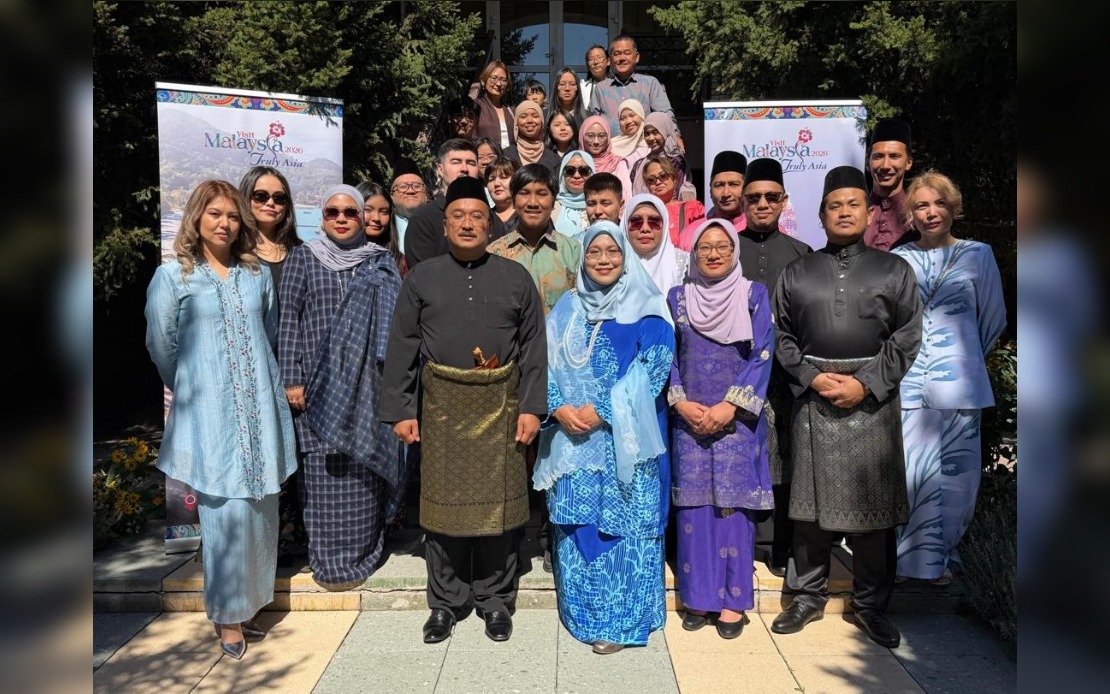
Thousands of kilometres from home, the Malaysian community in Kazakhstan demonstrated their deep connection to their nation by marking the country's 69th National Day through a solemn flag-raising ceremony and cultural reception at Malaysia House in Astana on Saturday. The occasion provided an opportunity for diplomats, students, professionals and long-term residents to reflect on shared national values whilst maintaining Malaysia's diplomatic presence in Central Asia.
The Embassy of Malaysia in Astana orchestrated the event as part of broader celebrations of Malaysia Day and National Day, with ceremonial proceedings including the hoisting of the Jalur Gemilang, followed by the national anthem Negaraku and a recitation of the Rukun Negara. These traditional elements underscore how Malaysian diplomatic missions worldwide preserve national identity and foster cohesion among dispersed communities, reinforcing the emotional and cultural bonds that tie expatriates to their homeland regardless of geographic distance.
Malaysian Ambassador to Kazakhstan Mohd Adli Abdullah used the platform to articulate the philosophical underpinnings of this year's celebration theme, Malaysia MADANI: Prosperity Enjoyed. His remarks shifted focus away from conventional measures of national success, challenging the notion that development should be gauged primarily through economic indicators or infrastructure expansion. Instead, Adli emphasised that meaningful progress must be evaluated by how equitably and comprehensively the fruits of development are distributed across all societal segments—a principle particularly resonant in diverse, multicultural Malaysia.
The ambassador's framing of Malaysia MADANI reflects broader conversations within Malaysian governance about inclusive growth and social cohesion. For the expatriate audience, this messaging carries particular significance as many maintain stakes in Malaysia's development trajectory through family connections, property ownership and long-term career planning. The emphasis on fairness and inclusivity serves as a reminder that national progress transcends individual wealth accumulation, addressing concerns about inequality that resonate across Malaysia's stratified society.
Beyond ceremonial observances, Adli appealed directly to Malaysian citizens abroad to function as informal diplomatic ambassadors, leveraging their presence in Kazakhstan to strengthen the nation's international reputation. He highlighted five foundational values—hard work, integrity, discipline, courtesy and mutual assistance—as essential characteristics for Malaysians operating in foreign contexts. This exhortation acknowledges the dual role expatriates play: maintaining their own professional advancement whilst simultaneously serving as cultural representatives who shape international perceptions of Malaysia through their conduct and achievements.
The gathering encompassed diverse segments of Malaysia's overseas population, including students pursuing tertiary education, programme alumni from various cooperation frameworks, and long-standing community members. This heterogeneity reflects the varied pathways through which Malaysians establish themselves abroad, from government-sponsored educational schemes to private professional migration. The inclusive nature of the reception reinforces institutional recognition that Malaysians abroad constitute an asset rather than a demographic loss, warranting continued engagement and support from home country institutions.
The ceremony doubled as a reunion for beneficiaries of the Malaysia Technical Cooperation Programme, an initiative dating back to 1980 through which Malaysia channels development expertise toward fellow Global South nations. The MTCP represents Malaysia's commitment to South-South cooperation, offering capacity-building courses, training modules and postgraduate educational opportunities to officials and professionals from developing economies. For Kazakhstan specifically, the programme has trained 196 government officials as of 2025, creating networks of practitioners familiar with Malaysian institutional approaches and developmental models.
The MTCP functions as a soft power instrument through which Malaysia cultivates diplomatic goodwill whilst simultaneously promoting its own development philosophy internationally. By training Kazakh officials in Malaysian systems and practices, the programme creates alumni networks predisposed toward Malaysia-friendly policies and deeper bilateral cooperation. These human-to-human connections often prove more durable and politically valuable than formal diplomatic arrangements, as they generate mutual professional respect and shared understanding across bureaucratic hierarchies.
For Malaysia-Kazakhstan relations specifically, the MTCP represents a concrete mechanism for translating historical diplomatic recognition into sustained institutional cooperation. Malaysia's early establishment of technical cooperation frameworks positioned it as a credible development partner within the Global South, distinguishing Malaysian aid and capacity-building initiatives from those offered by traditional Western powers. The programme's longevity and consistent expansion demonstrate that Malaysia has successfully maintained relevance in development circles despite competing priorities and resource constraints.
The MTCP Alumni Get-Together held during the National Day reception facilitated relationship maintenance and professional networking among programme graduates, reinforcing the continuing relevance of Malaysian expertise and institutional memory within Kazakh administrative structures. Such gatherings remind alumni of their Malaysian connections whilst potentially generating future collaboration opportunities, whether through bilateral government projects, commercial partnerships or educational exchanges. The informal reunion format contrasts with formal diplomatic engagement, creating space for authentic relationship-building and candid professional discussions.
The broader significance of this National Day celebration extends beyond ceremonial patriotism to encompass strategic relationship maintenance in an increasingly multipolar international environment. Kazakhstan's geographic position as a Central Asian bridge between Asia and Europe renders it strategically important for Malaysia's outward-looking foreign policy. The embassy's deliberate cultivation of Malaysian community cohesion and consistent commemoration of national occasions demonstrates institutional commitment to maintaining Malaysia's diplomatic footprint in regions where economic competition and geopolitical attention increasingly concentrate.
For Malaysian observers, the event illustrates how national identity persists across spatial separation, maintained through institutional frameworks, ceremonial practices and deliberate community engagement initiatives. The expatriate experience of nationalism often differs from domestic manifestations, incorporating elements of nostalgia, selective memory and idealised national representation. By providing structured opportunities for patriotic expression, diplomatic missions enable overseas Malaysians to participate in shared national rituals, addressing psychological needs for belonging whilst simultaneously advancing governmental diplomatic objectives.
Looking forward, such gatherings will likely intensify as Malaysia seeks to deepen engagement with Central Asian nations across commercial, educational and developmental domains. The recognition of Malaysian community contributions to bilateral relations suggests that policymakers increasingly appreciate the instrumental value of diaspora communities in advancing national interests abroad. Future commemorations may expand to encompass broader partnership initiatives, cultural exchanges and economic collaboration frameworks that leverage Malaysian expatriate networks for mutual benefit.

