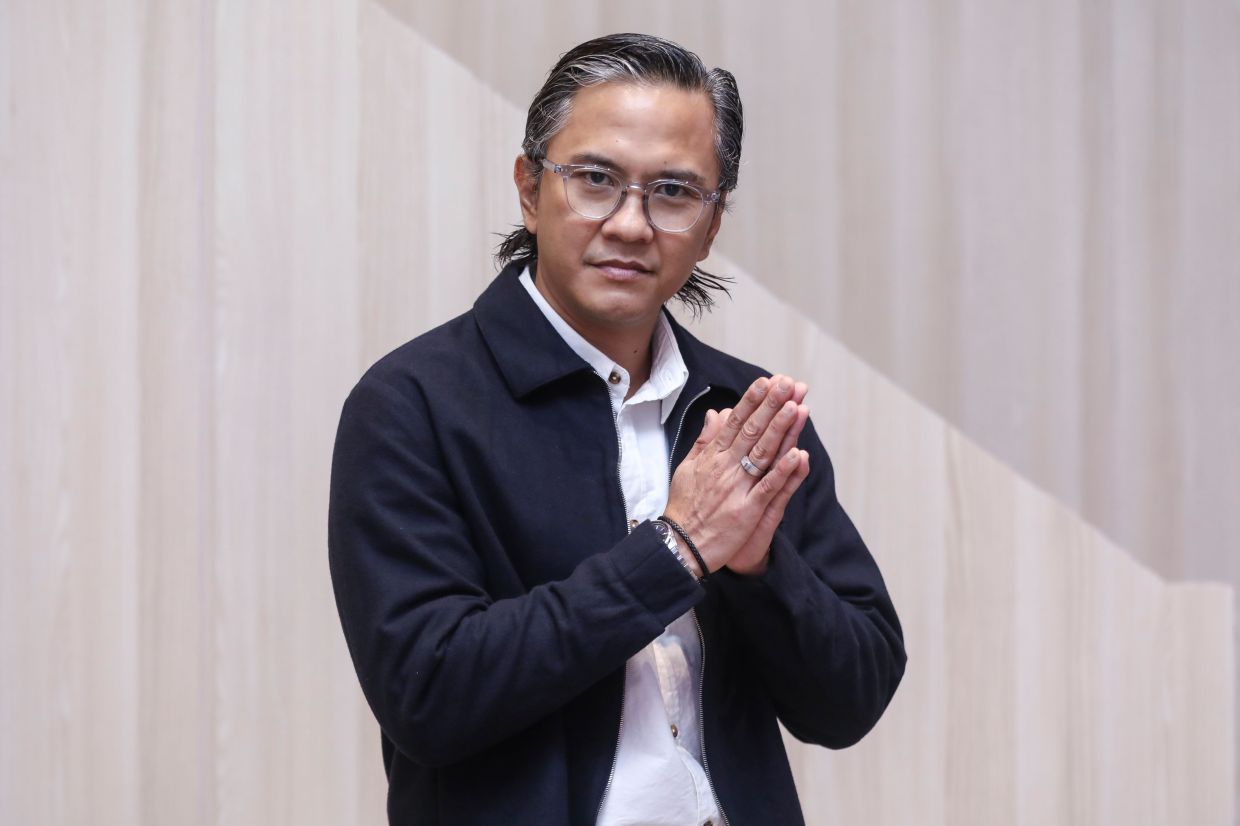
At 46, actor Beto Kusyairy has deliberately stepped away from the pursuit of celebrity status, redirecting his energy instead toward projects that offer genuine creative satisfaction and meaningful contribution to the industry. The Malaysia Film Festival Best Actor recipient has deliberately refused to confine his work to any single medium, viewing film, television, radio drama and other formats as equally valid platforms for storytelling when the foundational elements align properly. His approach reflects a maturing philosophy within the entertainment sector where substance and artistic integrity take precedence over commercial reach alone.
The actor's current focus on meaningful projects finds clear expression in his involvement with GBGTH, an Astro Originals production that explores the investigation into a murdered eight-year-old boy through the lens of a deeply traumatised father. Kusyairy's character inhabits a morally complex position – loving yet plagued by memory gaps that render him a prime suspect in his own son's death. The narrative framework allows the series to weave together multiple challenging themes including childhood trauma, sexual abuse and child exploitation with sufficient nuance to avoid sensationalism whilst maintaining dramatic tension.
The series has achieved remarkable commercial and cultural penetration across Malaysian media landscapes. Beyond accumulating more than 58 million video views and reaching 9.5 million social media users, GBGTH secured a Top 10 position on Netflix's global platform for six consecutive weeks, a milestone that underscores its ability to resonate internationally whilst maintaining local authenticity. This success validates the hypothesis that regional audiences possess both appetite and capacity for sophisticated storytelling that addresses previously marginalised narratives. The figures suggest a fundamental shift in viewer preferences, particularly among younger demographics increasingly comfortable with narratively complex content.
Kusyairy observed that viewer engagement evolved markedly throughout the series' broadcast cycle. Initial reactions centred on participatory entertainment value, with audiences constructing elaborate theories and competing to solve the central mystery before narrative revelation. This phase of engagement, whilst perhaps superficially casual, nonetheless indicated genuine investment in the material. However, as episodes progressed and thematic complexity deepened, viewer interactions matured correspondingly, transitioning from speculative entertainment toward substantive reflection on the psychological and social dimensions underlying the narrative.
The shift proved transformative for many viewers. Kusyairy revealed receiving communications from audiences who recognised their own experiences in storyline developments, with some individuals sharing previously unexpressed personal trauma regarding abuse or exploitation they had witnessed or endured. The series functioned inadvertently as a catalyst for individual introspection and collective dialogue around experiences that traditionally remained sequestered within private shame or family silence. For Kusyairy, this unsolicited emotional response from viewers represented perhaps the most affirming validation of the project's artistic integrity and social utility.
The actor articulates a discernible generational shift in Malaysian society's willingness to publicly acknowledge and discuss abuse, exploitation and related trauma. Whilst previous generations typically prioritised family honour and reputation preservation over victim advocacy or perpetrator accountability, contemporary Malaysian society increasingly embraces transparency and justice-seeking as socially legitimised responses. This evolution reflects broader demographic changes, educational advancement and exposure to international discourse around victim rights and trauma-informed justice approaches. Kusyairy identifies this opening as creating productive space for artistic exploration of previously forbidden narrative terrain.
Crucially, Kusyairy emphasises that GBGTH's production team approached storytelling with modest intentions, aspiring primarily toward honest narrative representation rather than didactic intervention. The unexpected consequence—catalysing genuine social conversation about previously taboo subjects—exceeded initial project parameters. He stresses that effective exploration of sensitive material depends fundamentally on narrative craft and thematic subtlety rather than explicit instruction or moralising commentary. When stories addressing difficult subjects employ restraint and psychological authenticity, audiences respond with engagement rather than dismissal or defensive rejection.
This realisation carries significant implications for the Malaysian creative industry moving forward. Kusyairy advocates for continued artistic experimentation and boundary-extension in storytelling, positioning GBGTH as evidence that audiences possess sufficient sophistication to navigate morally ambiguous narratives and psychologically complex characters. He observes concurrent improvements in production values, genre diversification and technical execution across Malaysian film and television, suggesting industry-wide maturation and increasing international competitiveness. These developments collectively create favourable conditions for continued creative ambition.
The actor's articulation of aspirational creative philosophy—to inspire rather than merely entertain—reflects conscious alignment with broader industry evolution. He envisions subsequent productions building upon GBGTH's demonstrated capacity to address complex subject matter whilst maintaining narrative sophistication and emotional authenticity. The series effectively proves that Malaysian audiences neither require nor desire perpetually sanitised entertainment; rather, they seek stories that grapple honestly with human experience in its full psychological and moral complexity. This recognition should encourage Malaysian writers, directors and producers to pursue projects addressing previously marginalised narratives and challenging thematic terrain with confidence that audience receptivity has fundamentally transformed. The commercial and critical success of projects willing to engage such material suggests that artistic courage aligns with market viability, a realignment that should accelerate creative progress throughout the regional entertainment ecosystem.

