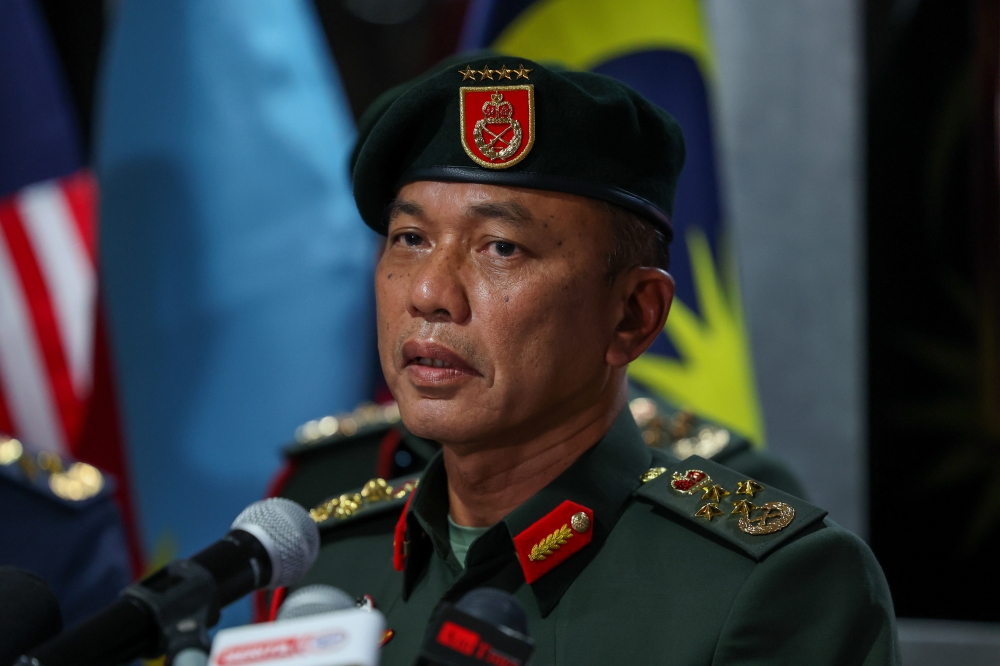
The Malaysian Army (TDM) has moved to counter viral allegations of rape involving one of its members, declaring on July 15 that findings from its internal investigation fundamentally contradict the claims spreading across social media platforms. The statement represents an unusually direct public intervention by the military establishment in a matter that has drawn significant online attention and raised broader questions about accountability within the armed forces.
The emergence of such allegations through viral channels rather than formal complaint mechanisms reflects a broader pattern in Southeast Asia, where social media has become a primary vehicle for airing grievances against institutions—particularly those traditionally shielded from public scrutiny. The Malaysian public's engagement with the allegations suggests deepening distrust in official channels and a preference for crowd-sourced justice, a phenomenon that has complicated the institutional response strategies of government bodies across the region.
The TDM's decision to publicly release its investigation findings, rather than maintaining institutional silence, indicates an evolving approach to reputation management in the digital age. Military establishments in Malaysia have historically maintained opacity around internal matters, particularly those involving disciplinary action or personnel conduct. This departure suggests the army recognises that silence in an era of viral allegations can be more damaging than transparency, even when that transparency involves refutation rather than acknowledgment.
Internal military investigations operate within structures designed to protect institutional interests, raising inherent questions about their independence and credibility. Such inquiries typically involve military personnel investigating their peers, creating potential conflicts of interest that independent observers and civil rights advocates have long flagged. The public's skepticism toward official findings—evident in the persistence of online allegations despite the army's denial—underscores a credibility deficit that extends beyond this particular case to military accountability mechanisms more broadly.
The incident occurs against a backdrop of increasing scrutiny of sexual misconduct within Malaysia's security forces. Over the past decade, several high-profile cases involving police and military personnel have tested public confidence in institutional responses, with survivors and advocacy groups frequently criticising investigations as cursory or biased. This historical context heavily influences how the current allegations are received, with public perception shaped as much by past patterns as by facts specific to this case.
The viral nature of the allegations has created a complex evidentiary landscape where social media claims, lacking traditional verification mechanisms, coexist with official denials. Neither source provides the public with certainty, yet both generate real consequences—reputational damage for the accused and institutional credibility challenges for the army. This dynamic has proven particularly challenging for Malaysian institutions, where traditional deference to authority structures has eroded faster than alternative accountability mechanisms have matured.
For Malaysia's civil society and women's rights organisations, such cases crystallise longstanding concerns about access to justice outside military hierarchies. Allegations involving armed forces personnel are particularly fraught because victims often fear institutional retaliation and believe internal mechanisms will protect perpetrators over complainants. The preference for viral disclosure suggests some complainants view public pressure as more likely to generate accountability than formal channels, a troubling indictment of institutional legitimacy.
The army's public response, while more forthright than historical practice, has not included disclosure of investigation methodologies, evidence considered, or specific findings beyond the blanket contradiction. This selective transparency creates space for interpretation, allowing both supporters and critics of the statement to find confirmation of their prior positions. Greater detail would strengthen institutional credibility but might expose investigation processes to legitimate critique, creating a dilemma the TDM has evidently resolved in favour of minimal disclosure.
Beyond the immediate case, the incident highlights a critical governance gap affecting Malaysia and other Southeast Asian militaries: the absence of independent, credible mechanisms for investigating misconduct allegations within the armed forces. Several regional peers, including Australia and New Zealand, have established civilian-led or hybrid accountability structures specifically to address this legitimacy challenge. Malaysia's reliance on purely internal mechanisms appears increasingly untenable given public expectation for oversight.
The long-term implications extend to military recruitment and public-civil military relations more broadly. If Malaysian society increasingly perceives the armed forces as protecting predatory behaviour, institutional reputation suffers and recruitment from backgrounds where trust in military institutions remains strong may narrow. This calculus suggests the army's interest in managing the immediate reputational challenge aligns, for once, with broader institutional health and public interest in accountability.
For Malaysian policymakers, the episode underscores why establishing independent military ombudsperson offices or civilian complaint commissions should become priority reforms. Several Southeast Asian nations have recognised that investing in credible accountability infrastructure—rather than defending internal processes—ultimately serves institutional interests by rebuilding public confidence. Malaysia's current approach, while defensible from a disciplinary standpoint, may inadvertently accelerate the erosion of public trust that independent mechanisms might reverse.
Resolution of this particular case matters less to Malaysia's institutional future than does reform of the systems within which such allegations arise and are addressed. The TDM's statement represents a tactical concession to digital-age realities, but strategy requires moving beyond reactive denial to proactive institutional redesign that commands public confidence independent of specific verdicts.

