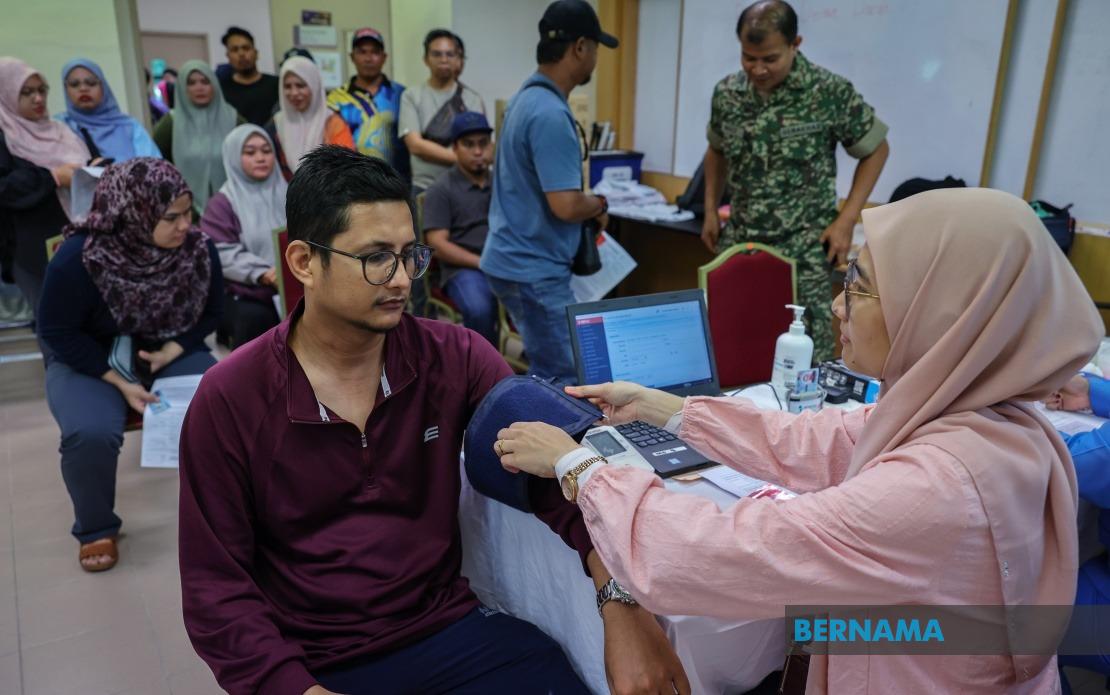
The Royal Malaysian Armed Forces and the Ministry of Health collaborated to bring comprehensive medical services directly to residents of Baling through the Civil-Military Cooperation (CIMIC) programme, held at Sultan Abdul Halim Mu'adzam Shah International Islamic University (UniSHAMS) in Kuala Ketil from July 9–11. Branded as the "Military with the People" initiative and coinciding with the completion of the Basic Commando Course (Series AK/1/26), the effort demonstrated how defence institutions can extend their operational capabilities to serve public health needs beyond their core mandate.
The programme operated two principal medical streams—the Medical Community Assistance Programme (MEDCAP) and Dental Community Assistance Programme (DENCAP)—each staffed by military healthcare personnel and supported by the Baling District Health Office. Rather than a one-off public relations exercise, this represented a structured partnership between the Ministry of Health and the armed forces, with the Baling District Health Office providing health screening services and mental health awareness education. The coordination reflected a broader strategic intent to use military infrastructure and personnel to reach populations who may otherwise face barriers to accessing basic healthcare services, whether due to distance, cost, or scheduling constraints.
Dental services formed the backbone of the community engagement component. Capt. Dr Muhammad Afiq Ishak, a dental officer from the 2nd Medical Battalion, explained that practitioners focused on essential procedures including fillings, scaling, and tooth extractions, while simultaneously educating attendees on proper oral hygiene practices. Beyond treating immediate dental needs, military medical staff conducted risk assessments to identify individuals at potential risk of hypertension and diabetes, particularly among elderly visitors. Patients requiring more complex or specialised treatment were referred to nearby civilian dental clinics, creating a logical referral pathway that prevented the programme from overstretching its resources or attempting procedures beyond field medical capacity.
Response from the community proved substantial and varied across age groups and occupational backgrounds. Factory worker Siti Salmiah Said, 28, took her scheduled day off to participate, bringing her entire family for treatment. She received dental scaling while her husband underwent the same procedure and her six-year-old child received a filling—services that would normally require multiple clinic appointments booked in advance. For working-class residents juggling employment schedules with healthcare needs, the convenience factor represented a genuine advantage. Legal assistant Adam Ruzlan, 26, similarly benefited from immediate dental work coupled with professional advice on oral health maintenance and identification of decay or tartar buildup, eliminating the typical delays associated with civilian appointment systems.
The programme's responsiveness extended beyond routine preventive care. When 12-year-old patient experienced dizziness and nausea during the event, Civil Defence Force (APM) personnel swiftly transferred him to the MEDCAP tent, where military medical staff conducted comprehensive vital sign monitoring—temperature, blood pressure, and oxygen saturation—before administering appropriate medication. His mother, housewife Norhasliza Nayan, 44, praised the efficiency of the response and advocated for similar health initiatives to become standard features at large-scale community gatherings, signalling appreciation for the combination of speed and professionalism that military medical deployment could deliver.
For some attendees, the experience carried deeper resonance. G. Devindran, 37, a factory worker whose father served as a retired commando, attended since the programme's first day and completed both dental examination and comprehensive health screening including blood pressure, blood sugar, and Body Mass Index assessments. His perspective—comparing the current initiative favourably against a similar experience 28 years earlier—highlighted how advances in medical equipment, staff training, and logistical coordination had improved the quality of field medical services over time. This multi-generational observation suggested that civil-military cooperation in healthcare had evolved beyond ad-hoc emergency relief into a more sophisticated and capable operational model.
The health screening component complemented the dental services by addressing non-dental medical concerns. Lt Dr Atiff Abdul Aziz, Medical Officer at the Special Warfare Training Centre and coordinator of both MEDCAP and DENCAP, emphasised that the Baling District Health Office contributed general health assessments and mental health awareness programming designed to reduce social stigma around psychological well-being. By positioning mental health education alongside physical health screening, the programme attempted to address a frequently overlooked dimension of public health—one where cultural sensitivities and limited healthcare infrastructure in semi-rural areas like Baling could otherwise leave residents underserved.
A blood donation drive, managed by Sultan Abdul Halim Hospital (HSAH) in Sungai Petani, operated concurrently from July 10–11, aiming to collect approximately 100 bags of blood daily. This initiative connected the community engagement dimension to a critical, ongoing healthcare need. Blood supply shortages remain a persistent challenge across Malaysian healthcare facilities, and leveraging civil-military cooperation events to simultaneously support donation campaigns represents efficient resource allocation—combining community outreach with tangible contribution to the national blood supply network.
The CIMIC framework underlying this initiative reflects Malaysian defence policy's commitment to positioning the armed forces as constructive partners in national development rather than merely security-focused institutions. By deploying medical personnel, equipment, and logistical capacity to address civilian healthcare access, the programme strengthened the perceived legitimacy and public goodwill toward defence organisations. For residents in less-densely-served areas, direct access to military medical professionals—individuals trained to operate effectively in austere conditions—offered capabilities sometimes superior to what chronically underfunded district clinics could provide.
For the Baling district specifically, a semi-rural area in Kedah, the concentration of healthcare resources typically remains concentrated in larger urban centres. The UniSHAMS-based programme temporarily redistributed medical expertise and capacity directly to the community, addressing a structural imbalance in healthcare geography that affects thousands of Malaysians living outside major metropolitan regions. This approach offered a pragmatic response to persistent spatial inequities in healthcare access without requiring massive new investments in permanent infrastructure.
The testimonials gathered during the three-day programme highlighted that civil-military cooperation in healthcare is not merely symbolic or goodwill-based but operationally substantive. Participants received measurable health benefits—completed dental procedures, comprehensive health assessments, emergency care—that would otherwise require navigating civilian healthcare systems characterised by appointment delays, transportation costs, and opportunity costs from time away from work. The efficiency and immediacy of military medical delivery, combined with professional competence, appeared to exceed attendees' baseline expectations.
Looking forward, the success of this model in Baling suggests potential for replication across other semi-rural Malaysian districts facing healthcare access challenges. The strategic partnership framework—coordinating Ministry of Health district offices with armed forces medical units and supporting blood collection—created a replicable template requiring no new institutional infrastructure. For Malaysian defence policymakers seeking to enhance civil-military relations while addressing demonstrable public health gaps, the Baling initiative provides a tested operational and administrative model. As healthcare demand grows and budgetary pressures on civilian systems intensify, leveraging military medical capacity through structured CIMIC programmes may increasingly feature as a component of integrated national health service delivery, particularly in geographically peripheral communities.

