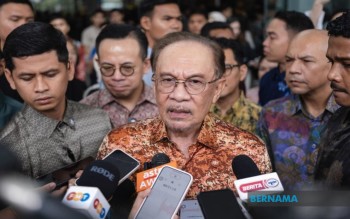
Prime Minister Datuk Seri Anwar Ibrahim has drawn a clear line against any revival of the Goods and Services Tax's fundamental architecture, even as his administration considers selective refinements to Malaysia's existing consumption tax framework. Speaking after officiating the TikTok Shop Summit 2026 in Kuala Lumpur, Anwar—who also holds the Finance portfolio—distinguished between wholesale tax reform and targeted adjustments designed to improve the current system's efficiency and progressivity.
The distinction carries significant weight given the political sensitivity surrounding consumption taxation in Malaysia. The country abandoned GST in 2018 following sustained public pressure over living cost increases, a shift that reflected broader concerns about regressive taxation affecting households already struggling with inflation and wage stagnation. Anwar's pronouncement essentially signals that despite internal government discussions about broadening the tax base to meet fiscal targets, any overhaul will preserve the principle of protecting lower-income Malaysians from additional levies.
What distinguishes the government's current position from previous positions is its acknowledgment that the Sales and Service Tax framework—implemented in 2018 as GST's replacement—requires modernisation. Rather than viewing SST as sacrosanct, Anwar indicated flexibility around specific mechanisms and rate structures that could enhance both revenue collection and administration. This opens space for technical reforms that might include adjustments to exemption categories, rate harmonisation across sectors, or improved compliance mechanisms without fundamentally shifting the tax's burden distribution.
The prospect of importing "some components" of GST into the SST framework represents an important nuance in the government's thinking. Rather than wholesale reversion to a broad-based consumption tax—where virtually every economic transaction faces taxation—policymakers appear interested in selective elements that could improve collection efficiency. Potential mechanisms under discussion include levies on electronic payment transactions, which would broaden the tax net while targeting economic activity that currently escapes conventional SST collection.
Anwar's emphasis on the MADANI government's core principle—protecting the poorest segments of society from tax increases—reflects political calculation beyond mere welfare concern. Low-income households spend proportionally more of their earnings on taxable goods and services, making them disproportionately burdened by consumption taxes regardless of structure. A genuine commitment to regressivity avoidance therefore requires careful calibration of any tax reform, ensuring that base-broadening measures do not inadvertently shift burden downward across income distribution.
The broader fiscal context motivates this discussion despite political sensitivities. Malaysia faces structural budget deficits requiring sustainable revenue enhancement without compromising economic competitiveness or social stability. The government's fiscal consolidation targets depend partly on consumption tax optimisation, particularly as GST's theoretical advantages—broader base, reduced rates, simplified compliance—remain economically compelling despite its political unpopularity. Yet Anwar's rhetorical framing prioritises social protection over technocratic efficiency, suggesting that any tax reform will require political cover through progressive design features.
Regional comparisons offer useful perspective. Singapore's GST operates as a broad-based consumption tax but incorporates mechanisms to mitigate regressivity, including zero-rating of essential food items and exemptions for basic services. Thailand's experience with value-added tax reforms illustrates how targeted adjustments can improve revenue without wholesale regime change. These examples suggest that Malaysia's path forward likely involves incremental refinement rather than dramatic structural overhaul, preserving SST's essential character while addressing its documented implementation challenges.
The government's openness to discussing GST components rather than wholesale reintroduction also reflects recognition of administrative lessons learned since 2018. The original GST implementation encountered compliance difficulties, taxpayer confusion, and business disruption that contributed to its political vulnerability. Any future tax system modification will presumably incorporate safeguards designed to prevent similar friction, with emphasis on simplified compliance procedures and clearer exemption frameworks.
International tax developments will also shape Malaysia's calculus. OECD minimum tax initiatives and global efforts to address base erosion create pressure for consumption tax modernisation across jurisdictions. Malaysia's policymakers recognise that SST's limitations in an increasingly digital economy require attention, particularly regarding e-commerce transactions and cross-border service provisions that currently escape effective taxation. Progressive reform addressing these gaps without reverting to a regressive broad-based model represents the government's apparent strategic objective.
For Malaysian businesses and consumers, Anwar's position offers both reassurance and uncertainty. The rejection of GST-style taxation provides confidence that the government will not impose sweeping new levies on essential goods and services. However, the openness to SST adjustments signals that incremental changes—potentially affecting specific sectors or transaction types—remain probable. Industries relying on consumption taxation, from retail to hospitality, should prepare for potential refinements to rate structures or compliance requirements.
The political dynamics surrounding this issue extend beyond immediate fiscal considerations. Public sentiment against consumption tax increases remains potent, particularly among lower and middle-income voters whose support proved decisive in recent electoral outcomes. Any government attempting significant consumption tax expansion risks activating the same coalition opposition that eliminated GST six years ago. Anwar's carefully calibrated messaging attempts to balance fiscal necessity with political sustainability, presenting reform as technical optimisation rather than burden-shifting.
Looking forward, the government's approach suggests a pragmatic incrementalism likely to characterise the coming years of tax policy. Rather than comprehensive restructuring, expect targeted modifications addressing specific inefficiencies or revenue shortfalls. These might include refined exemption regimes, enhanced digital compliance mechanisms, or selective expansion of taxable transaction categories. Such an approach avoids the political hazards of broad-based reform while allowing the government to pursue fiscal consolidation objectives through less contentious technical means. For investors and businesses, this predictability offers value even as specific policy details remain subject to ongoing internal debate.

