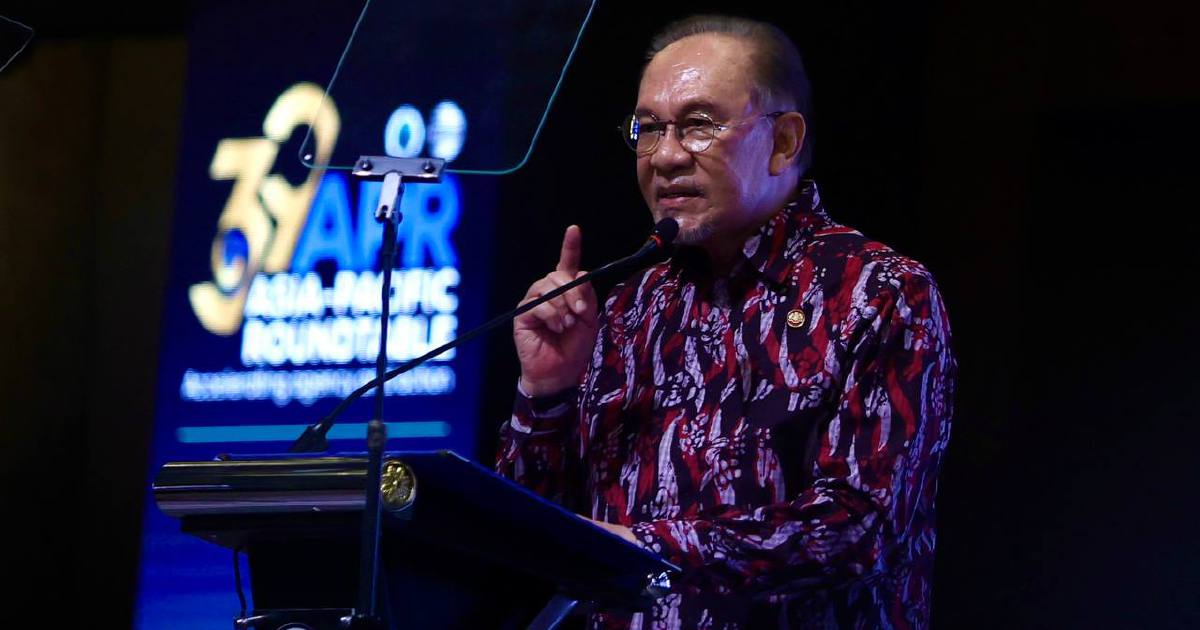
Prime Minister Datuk Seri Anwar Ibrahim has underscored that Malaysia intends to preserve its independent standing on the international stage, maintaining a non-aligned approach that has characterised the nation's diplomacy for decades. Speaking to the matter of Malaysia's broader strategic orientation, Anwar stressed that the country will continue to chart its own course rather than aligning with any single power bloc or geopolitical bloc, a principle that has defined Malaysian foreign relations since independence.
The Prime Minister's restatement comes at a time when Southeast Asian nations face mounting pressure from competing global powers seeking greater influence in the region. Malaysia, as a middle power with substantial economic and strategic importance, finds itself navigating an increasingly complex international landscape where pressure to choose sides has intensified. Anwar's emphasis on non-alignment signals Malaysia's determination to avoid being drawn into zero-sum competitions between major powers, a position consistent with the founding principles of Malaysian foreign policy established by early leaders.
Non-alignment, as a foreign policy doctrine, has allowed Malaysia to maintain pragmatic relations with diverse partners—from Western nations and their allies to China, Russia, and other non-Western powers. This approach has proven advantageous for a nation that depends on free trade, secure maritime passages, and stable regional relationships for its economic prosperity. By refusing to commit exclusively to any single great power, Malaysia has preserved its flexibility to pursue bilateral relations that serve national interests without sacrificing strategic autonomy.
The doctrine also reflects Malaysia's commitment to multilateralism and regional cooperation through institutions such as the Association of Southeast Asian Nations (ASEAN), which itself operates on principles of non-interference and consensus. Within this framework, Malaysia has often played a moderating role, attempting to bridge differences among ASEAN members and between Southeast Asia and external powers. Anwar's affirmation suggests this moderating approach will persist as a cornerstone of Malaysia's diplomatic engagement.
For Malaysian business and investment communities, an independent foreign policy translates into continued access to multiple markets and partnerships. Malaysia's role as a middle power with strong economic ties across the Pacific, Indian Ocean, and Eurasian regions depends on maintaining good standing with various trading blocs and economic partners. Any shift toward explicit alignment could potentially alienate trading partners and constrain the nation's economic flexibility, a consequence Malaysian policymakers clearly wish to avoid.
Regionally, Malaysia's non-aligned stance contributes to stability in Southeast Asia at a time when territorial disputes, great power competition, and ideological differences create potential flashpoints. By maintaining independence, Malaysia can engage constructively with all parties in regional disputes—including those between China and its neighbours, or between major powers and ASEAN members—without being perceived as hostile to any particular side. This positioning has allowed Malaysia to serve as an interlocutor in regional tensions.
The reaffirmation also comes as ASEAN navigates its own challenges in maintaining unity and non-alignment in the face of external pressure. As the bloc seeks consensus on critical regional issues, individual members like Malaysia emphasizing non-aligned principles reinforce the collective commitment to ASEAN centrality and the primacy of regional decision-making over external dictates. Malaysia's statement sends a signal to both its neighbours and external powers that regional affairs should be determined by Southeast Asians themselves.
However, maintaining genuine non-alignment requires careful calibration. In practice, nations pursue non-aligned policies while establishing pragmatic security arrangements and partnerships that often favour particular relationships. Malaysia's defence partnerships, intelligence sharing agreements, and participation in regional security dialogues reflect strategic preferences that, while falling short of formal alliance commitments, demonstrate clear inclinations. Anwar's statement should be understood as an expression of intent to avoid explicit bloc membership rather than a claim of complete equidistance from all powers.
Looking forward, Malaysia's commitment to independent foreign policy will be tested by several emerging challenges. Regional economic integration, potential climate-related disputes, cyber security threats, and the shifting balance of power in the Indo-Pacific all present scenarios where non-alignment could face practical constraints. Nevertheless, Anwar's affirmation suggests that Malaysia intends to defend this principle as a core element of its national identity and strategic autonomy, recognising that in an increasingly multipolar world, maintaining independence offers distinct advantages for a nation of Malaysia's size and position.

