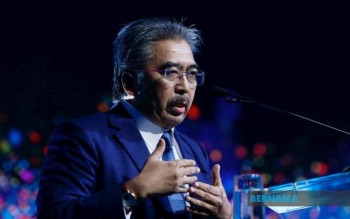
The Malaysian government is navigating a delicate balancing act between accelerating electric vehicle adoption and ensuring the infrastructure to support it, with the Ministry of Investment, Trade and Industry indicating that multiple funding mechanisms remain under consideration. Speaking during a parliamentary session, MITI Minister Datuk Seri Johari Abdul Ghani clarified that while a proposed levy on EV sales is one option being explored, no final decision has been made on implementation. The government is still assessing the most appropriate approach to fund the development of a nationwide public charging network without unduly burdening consumers or the national budget.
The core challenge facing Malaysia's EV transition is fundamentally one of infrastructure financing. Currently, the government provides substantial subsidies to support EV adoption while simultaneously bearing responsibility for building public charging infrastructure at a scale comparable to more economically advanced nations. This dual obligation creates significant budgetary pressure, particularly given Malaysia's existing fiscal deficit. Unlike China, which has mobilised massive state resources and private investment in charging networks, Malaysia must find creative funding solutions that don't rely solely on government expenditure or place the entire burden on vehicle manufacturers and distributors.
Johari highlighted the interconnected nature of these policy challenges, emphasising that the public discourse around EV levies often overlooks the broader economic context. The government cannot simply absorb the costs of nationwide charging infrastructure without making difficult choices about resource allocation across healthcare, education, and other priorities. Any mechanism imposed on manufacturers will inevitably be passed through to consumers in the form of higher vehicle prices—a reality that critics of the levy proposal sometimes downplay. The minister stressed that understanding this trade-off is essential for informed public debate.
The proposed levy structure being considered would create a dedicated fund specifically for building public charging stations across Malaysia. This targeted approach addresses a critical gap in the current ecosystem, where private sector investment in charging infrastructure has been uneven and geographically concentrated. Manufacturers and vehicle distributors have made some investments in charging networks, but their primary incentive remains vehicle sales rather than comprehensive infrastructure development. A dedicated fund would allow the government to pursue a more systematic, nationwide rollout that prioritises underserved regions and high-traffic corridors.
Malaysia's electricity generation profile adds another layer of complexity to the EV policy equation. The country remains substantially dependent on gas, coal, and other fossil fuels for power generation, meaning that the electricity used to charge vehicles carries an embedded carbon cost that differs significantly from nations relying on renewable or nuclear sources. This reality constrains the environmental argument for aggressive EV promotion without corresponding investments in grid decarbonisation. The government must therefore consider not just charging infrastructure, but also the future composition of Malaysia's energy mix when designing long-term EV policy.
The fiscal deficit constraint that Johari repeatedly mentioned reflects Malaysia's broader macroeconomic situation. Government revenues are finite, and spending must be prioritised across competing needs. Adding EV charging infrastructure to the list of government-funded projects without corresponding revenue sources would worsen fiscal imbalances. A levy on EV sales offers a way to internalise the infrastructure costs within the EV ecosystem itself, ensuring that those who benefit most from the transition contribute proportionally to its funding. This aligns with user-pays principles that are increasingly accepted in transport policy.
However, the government must also ensure that a levy does not undermine EV adoption among price-sensitive consumers, particularly in a middle-income country like Malaysia where vehicle affordability remains a key concern. If levies push EV prices too high relative to comparable petrol vehicles, uptake could stall, undermining the broader transition goals and leaving charging infrastructure investments underutilised. The optimal levy level must therefore balance revenue generation with market demand preservation—a calculation that requires detailed modelling and stakeholder consultation.
The policy also reflects a recognition that Malaysia's EV transition must accommodate a long co-existence period between electric and internal combustion engine vehicles. The government is not attempting to rapidly phase out petrol cars but rather to gradually shift the market composition toward cleaner technologies. This pragmatic approach reflects Malaysia's current technological capabilities, manufacturing base, and consumer preferences. Rather than forcing an abrupt transition, the strategy allows time for consumer behaviour change, infrastructure development, and industrial adaptation.
The minister's emphasis on the government's provision of existing subsidies underscores that EV policy already involves significant public expenditure. These subsidies reduce the purchase price differential between EVs and conventional vehicles, making electric cars more competitive in the marketplace. Combined with infrastructure support, the cumulative public investment in EV transition is already substantial. A levy would represent a shift toward cost recovery rather than an entirely new burden, though the distinction may not be apparent to consumers who perceive only the additional charge.
Looking forward, Malaysia's approach must account for regional dynamics and international competitiveness. Neighbouring countries are pursuing their own EV strategies, and Malaysia's relative attractiveness as a vehicle market and manufacturing hub depends partly on policy predictability and cost structures. If levies make Malaysia significantly more expensive for EV buyers compared to Thailand or Indonesia, consumers and manufacturers may be incentivised to seek alternatives. Conversely, countries that fail to invest in charging infrastructure will ultimately hamper EV adoption regardless of vehicle availability.
The consultation process around the levy design will be crucial in determining public acceptance and policy effectiveness. Transparent communication about why additional funding is necessary, how revenue will be allocated, and what charging network expansion is expected to deliver will help build constituency support. The government must also consider exemptions or graduated structures that account for different consumer segments and vehicle types, potentially protecting affordability for lower-income buyers while ensuring adequate infrastructure funding.
Ultimately, Malaysia's EV infrastructure challenge cannot be divorced from broader questions about energy security, fiscal sustainability, and transport equity. The proposed levy represents an attempt to tackle infrastructure financing in a fiscally constrained environment, but it must be coupled with continued investment in renewable energy, grid modernisation, and targeted subsidies for mass-market adoption. The government's willingness to explore multiple options rather than rush to a hasty decision suggests a more thoughtful approach to this complex policy domain, though finalisation and implementation timelines remain critical for planning purposes.

