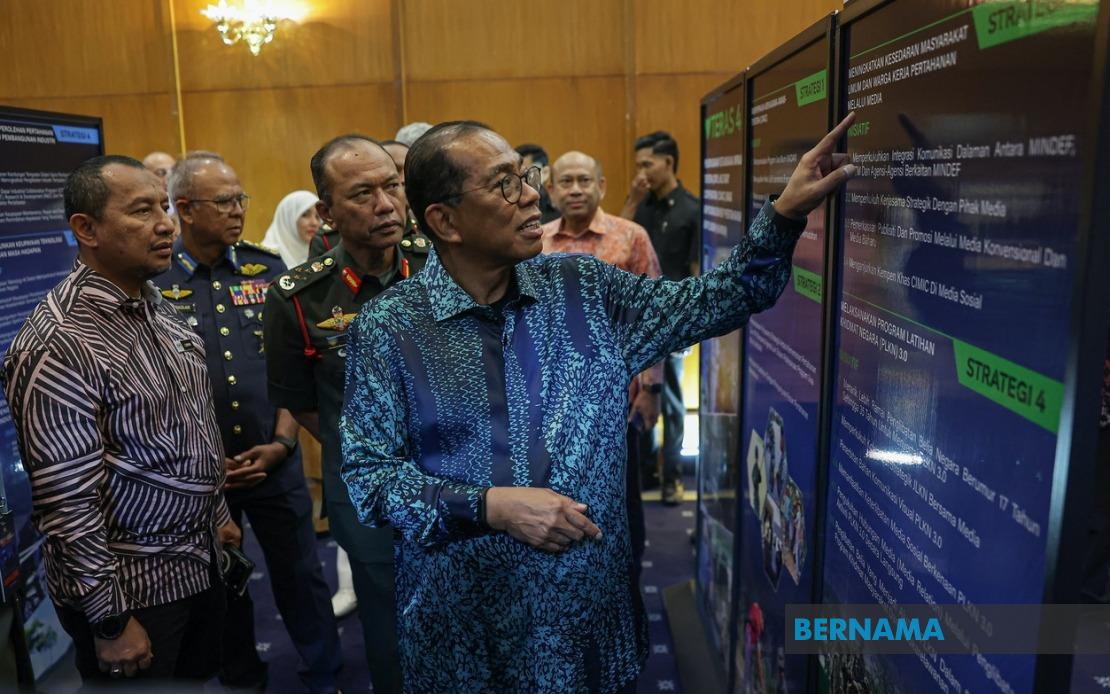
Malaysia's Defence Ministry has taken a major step in fortifying the nation's security architecture by launching two pivotal planning documents aimed at navigating an increasingly complex security environment. The National Defence Strategic Plan (PSPN) and the Defence Capacity Blueprint (RTKP) 2026-2030, unveiled by Defence Minister Datuk Seri Mohamed Khaled Nordin, represent the government's systematic response to mounting geopolitical uncertainty and rapid technological change that threaten regional stability. These frameworks complement the existing Defence White Paper and signal Malaysia's determination to maintain strategic relevance as security dynamics in Southeast Asia continue to shift.
The minister articulated a sobering assessment of the contemporary global landscape, pointing to escalating geopolitical rivalry, disruptive innovations including artificial intelligence and automation, and the proliferation of unconventional security threats that defy traditional military responses. This candid recognition reflects Kuala Lumpur's awareness that the country sits at the intersection of major power competition, with implications for regional maritime security, cyber threats, and transnational challenges. The identification of these evolving threats underscores why static defence planning is insufficient; Malaysia must adopt frameworks capable of responding to threats that may not yet have fully materialised.
The PSPN operates along seven strategic pillars that collectively aim to transform Malaysia's defence posture. Operational readiness of the Malaysian Armed Forces remains foundational, ensuring that troops, equipment, and logistics systems can respond rapidly to contingencies. Enhancement of defence capabilities addresses the technological gap that can arise between aspirations and actual military capacity. The ministry's explicit focus on personnel welfare and veterans' support acknowledges that sustainable defence depends on retaining experienced personnel and maintaining morale within the services. The emphasis on defence technology and innovation signals that Malaysia recognises it cannot match larger neighbours through sheer numbers but must instead pursue qualitative advantages through strategic investments in emerging technologies.
Crucially, the Defence Capacity Blueprint functions as the operational engine translating strategic ambitions into concrete reality. While the PSPN articulates where Malaysia's defence apparatus should heading, the RTKP provides the roadmap for actually reaching those destinations. This distinction matters enormously because many countries develop aspirational strategic documents that founder on implementation. The blueprint identifies four critical capacity areas: financial resources, human capital, technological expertise, and inter-agency coordination. Each element requires sustained attention and investment. Financial sustainability is particularly vital given Malaysia's fiscal constraints and competing development priorities. Human capital development recognises that modern defence operations demand specialised expertise in cyber warfare, intelligence analysis, and systems integration that cannot be acquired overnight.
A particularly significant dimension of these documents is their embrace of a whole-of-government and whole-of-society approach to national defence. This represents a philosophical shift acknowledging that security threats originating outside Malaysia's borders—whether cyber attacks, disinformation campaigns, or maritime incursions—require responses extending far beyond military hardware. Universities, technology companies, research institutions, and civil society all become stakeholders in national defence. For Malaysia, a multiethnic, multicultural nation with significant Chinese and Indian populations that maintain diaspora networks across the region, this broader framing of defence has particular relevance. It positions security as a collective responsibility rather than a narrowly military concern.
The recent acquisition of three ANKA Medium Altitude Long Endurance unmanned aircraft systems, now operational at Labuan Air Base, demonstrates that strategic planning is translating into tangible capability enhancements. These systems provide Malaysia with enhanced surveillance and reconnaissance capabilities across the South China Sea and Sulu-Celebes Sea, regions where maritime boundary disputes and transnational criminal networks pose constant challenges. Unmanned systems offer significant advantages over piloted aircraft in terms of endurance, cost-effectiveness, and risk mitigation, making them particularly suitable for the extended surveillance requirements of maritime Southeast Asia.
The promised acquisition of FA-50M light combat aircraft, maritime patrol aircraft, and additional Littoral Mission Ships according to schedule indicates a balanced modernisation strategy. The FA-50M platforms provide air defence and strike capabilities at a cost level Malaysia can sustain, addressing the reality that acquiring high-end aircraft like the F-35 remains economically unfeasible. Maritime patrol aircraft directly support Malaysia's responsibilities under the United Nations Convention on the Law of the Sea to exercise surveillance and enforcement across its exclusive economic zone. The Littoral Mission Ships, vessels specifically designed for operations in Southeast Asian coastal waters, offer appropriate platforms for the region's particular maritime security challenges, from counter-piracy to humanitarian assistance and disaster relief operations.
For Malaysian readers and policymakers, these strategic documents signal that defence planning is entering a more rigorous, structured phase. The government appears to be moving beyond episodic procurement decisions toward coherent, multi-year programming aligned with identifiable strategic objectives. This shift should enhance predictability for defence contractors, foster better coordination among military services, and create clearer benchmarks for assessing whether defence spending generates intended security outcomes. The emphasis on inter-agency coordination also suggests recognition that silos between the Defence Ministry, police, maritime agencies, and intelligence services have sometimes hindered Malaysia's security response.
The RTKP's specific attention to research, innovation, and technological expertise reflects understanding that Malaysia's comparative advantage in defence lies not in matching the military expenditures of larger neighbours but in intelligent adaptation and targeted innovation. The country's technology sector, particularly in telecommunications and information technology, possesses capabilities that could support defence applications if properly directed. Similarly, Malaysia's universities generate research in relevant fields including cyber security, materials science, and systems engineering that could be better leveraged for defence applications through public-private partnerships.
The implications for Southeast Asian regional security are substantial. A more systematically prepared Malaysian military enhances the region's overall defence posture at a time when security cooperation among ASEAN members remains inconsistent. Malaysia's strong defence capabilities underpin its ability to participate credibly in regional security initiatives, maintain freedom of navigation in contested waters, and respond to humanitarian crises affecting neighbouring countries. These strategic documents also signal to regional partners and major powers that Malaysia is seriously investing in capacity, which could influence calculations regarding the costs of regional destabilisation.
Implementation challenges will inevitably emerge. Budgetary constraints mean that not all aspirations outlined in these strategic documents can be simultaneously pursued. Interagency coordination, particularly between defence and civilian agencies, requires sustained political will and clear institutional incentives. Technological acquisition and integration demand expertise that Malaysia must either develop domestically or access through international partnerships, both paths presenting challenges. The documents' emphasis on human capital development requires education and training systems that cultivate the sophisticated skill sets modern defence demands.
Looking forward, the PSPN and RTKP represent Malaysia's commitment to systematic, forward-looking defence planning in an era of accelerating change. Success will depend on sustained political leadership, adequate resource allocation, and honest assessment of progress against defined metrics. These documents provide the framework; translating framework into reality remains the ongoing challenge for Malaysia's defence establishment across the coming half-decade.

