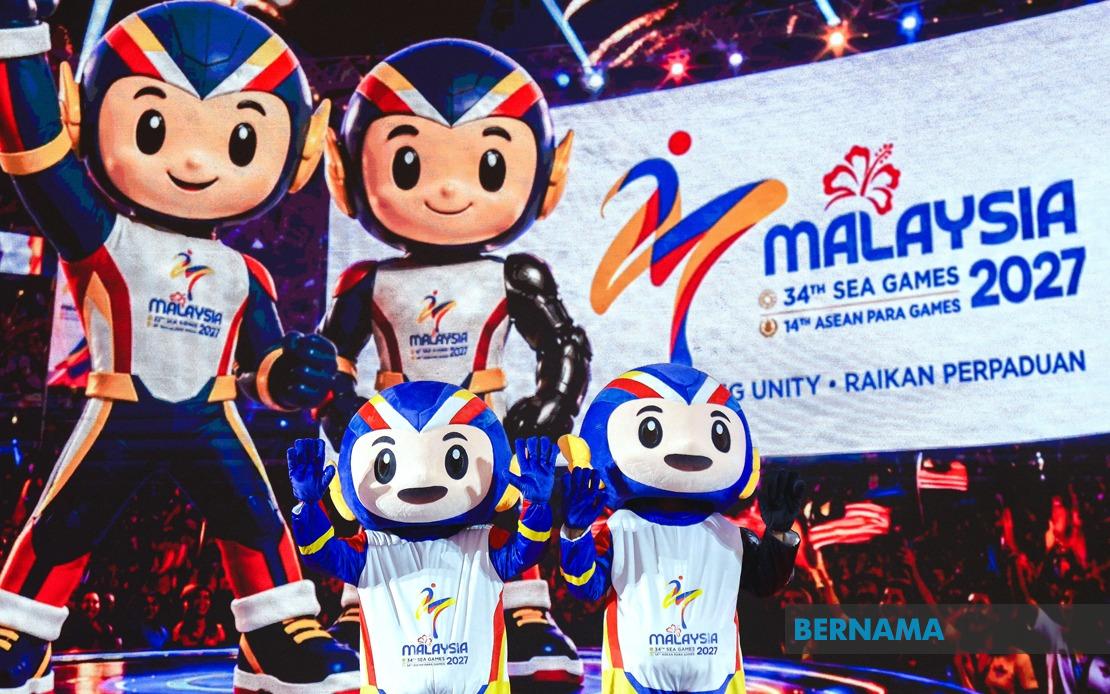
Malaysia has officially unveiled its thematic vision and symbolic representation for the 2027 SEA Games and ASEAN Para Games, with Youth and Sports Minister Dr Mohammed Taufiq Johari announcing that "Celebrating Unity" will guide the regional sporting extravaganza scheduled to take place across Malaysian soil. The announcement, made during a ceremony in Putrajaya on July 13, marks a significant milestone in the nation's preparations as host to two of Southeast Asia's most prestigious sporting events.
The choice of theme carries particular weight given Malaysia's role in bridging ASEAN nations through sport. Dr Mohammed Taufiq emphasised that "Celebrating Unity" transcends mere ceremonial language, instead encapsulating a substantive commitment to fostering regional cohesion through athletic competition. The minister described the theme as embodying an enduring aspiration for unity that will simultaneously chart a course for the future development of sports infrastructure and competition standards across Southeast Asia. By grounding the Games in this unifying principle, Malaysia positions itself not simply as a venue for medal tallies but as a catalyst for deeper regional integration.
Central to the Games' visual identity is TUAH, a departure from the animal mascots that have traditionally characterised preceding SEA Games editions. Rather than drawing from fauna, TUAH represents a humanised contemporary hero figure, intentionally crafted to project dynamism, confidence, and approachability. This shift in mascot philosophy suggests a deliberate move towards creating a character that Malaysian and regional audiences can more directly identify with—a living embodiment of sporting aspiration rather than an abstract symbol. The design reflects contemporary branding sensibilities while maintaining cultural resonance.
The mascot's colour palette draws explicitly from Malaysia's national flag, the Jalur Gemilang, thereby weaving national pride into the Games' visual grammar. Dr Mohammed Taufiq highlighted this symbolic choice as instrumental in reinforcing unity and cultivating pride among both competing athletes and the broader public. This fusion of national symbolism with international sporting identity serves to anchor the Games firmly within Malaysian national consciousness while simultaneously projecting outward to regional audiences. The Jalur Gemilang's presence on TUAH transforms the mascot into a portable representation of Malaysian hospitality and national commitment to sporting excellence.
The minister expressed hopes that TUAH would function as a fortunate talisman as Malaysia pursues its objective of claiming the overall championship title on home soil. This aspirational language reflects the competitive stakes underpinning the Games, where hosting advantage has historically translated into medal performance. Malaysia's ambition to emerge as overall champions is neither unprecedented nor insignificant—hosting nations frequently leverage home advantage to bolster their competitive standing. The framing of TUAH as a luck-bearing symbol taps into deeper cultural resonances around mascots as auspicious figures, extending beyond mere marketing functionality.
Dr Mohammed Taufiq expressed confidence that Malaysia's extensive preparatory work is proceeding without significant impediment. The Games will be distributed across four distinct geographical clusters—Sarawak, Penang, Johor, and Kuala Lumpur—a dispersed model that reflects Malaysia's geographic diversity while testing the nation's capacity to coordinate large-scale sporting infrastructure across multiple states. The minister noted that facility-related challenges have not materialised thus far, with current focus having shifted toward the granular technical specifications required to ensure seamless execution. This progression from infrastructure concerns toward operational refinement suggests advanced preparedness relative to typical Games timelines.
The National Sports Council has established an ambitious performance target: ensuring that 70 per cent of Malaysian athletes finish on the Games' podium by year's end, according to NSC director-general Jefri Ngadirin. This metric serves as the Council's diagnostic tool for assessing Malaysia's realistic prospects of overall championship success in 2027. The ambitious threshold suggests confidence in current athlete development trajectories while simultaneously establishing a clear quantifiable benchmark against which the nation's competitive trajectory can be measured. Whether Malaysia achieves this intermediate goal will provide meaningful insight into medal projections for the actual Games competition.
The 2027 SEA Games will unfold over a twelve-day period beginning September 18 and concluding September 29, immediately followed by the ASEAN Para Games, which will run from October 17 through October 23. This scheduling framework ensures continuity of global sporting attention while providing Malaysia with an extended showcase of regional athletic achievement. The back-to-back scheduling of both Games within a compressed timeframe underscores Malaysia's logistical undertaking and the resource mobilisation required to sustain championship-calibre venues and services across six consecutive weeks.
For Malaysian readers, the unveiling carries implications extending beyond ceremonial significance. The Games represent a substantial capital investment in sporting infrastructure and international visibility, with potential economic benefits through tourism, hospitality, and global media exposure. The distributed cluster model offers opportunities for regional development and sporting infrastructure improvements across multiple Malaysian states, potentially creating lasting legacies beyond the Games' conclusion. Additionally, the emphasis on unity through sport arrives at a moment when Southeast Asian nations face geopolitical and economic headwinds, lending the Games' thematic emphasis added resonance.
The selection of TUAH as a human rather than animal mascot may also signal Malaysia's evolving approach to international sporting symbolism, moving away from traditional representations toward more universal, contemporary imagery. This modernisation reflects changing attitudes about how nations present themselves on global stages and what symbols resonate with increasingly diverse, digitally-connected audiences across the region. The mascot's design will undoubtedly feature prominently across marketing, merchandise, and media coverage for the next two and a half years, shaping how both Malaysians and regional audiences conceptualise the Games.

