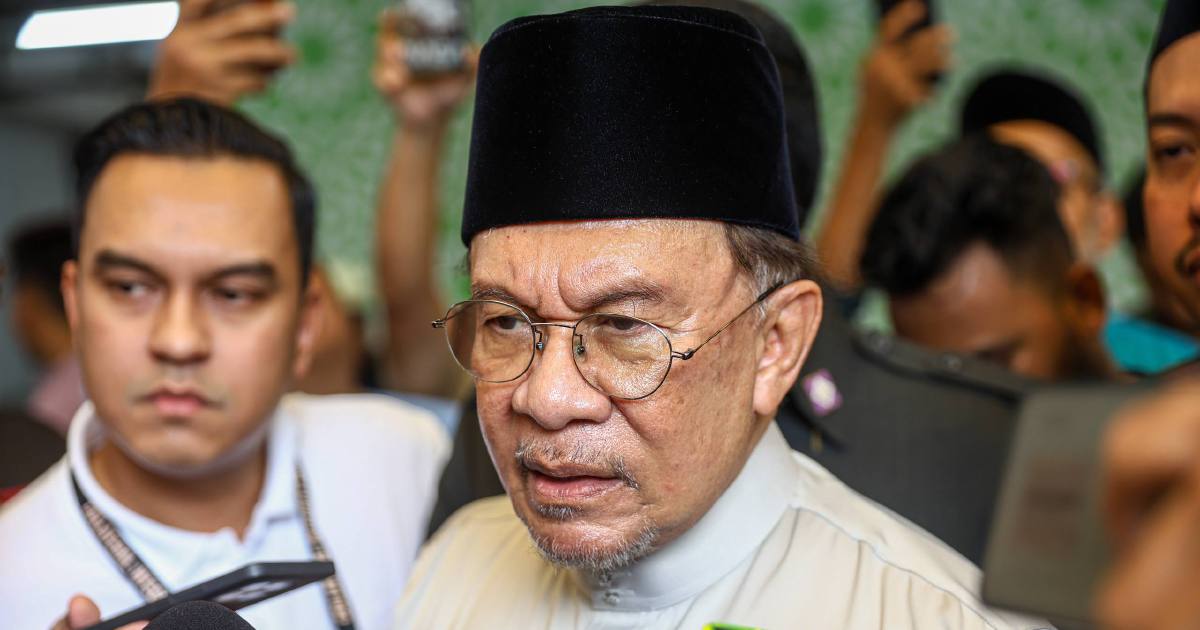
Prime Minister Datuk Seri Anwar Ibrahim has made clear that Malaysia's approach to fugitive businessman Jho Low will not be swayed by developments in United States legal proceedings, underlining the government's determination to pursue its own investigations and legal actions independent of foreign pardon decisions.
Anwar's statement represents a firm reassertion of Malaysia's sovereign position in the high-profile case involving the low-profile financier whose name has become synonymous with one of the world's largest financial scandals. The Prime Minister's declaration comes amid speculation about potential clemency measures that could emerge from the incoming US administration, raising questions about the future trajectory of investigations spanning multiple jurisdictions.
The distinction Malaysia is making between its own legal framework and that of the United States carries significant weight, particularly given the interconnected nature of the case across different countries. While American authorities have pursued their own charges and investigations into Low's alleged misconduct, Malaysia has undertaken separate proceedings rooted in domestic law and national interests affected by the fugitive's activities. This multi-jurisdictional approach means that a pardon in Washington would fundamentally alter only the US dimension of the case, leaving Malaysia's legal and investigative machinery unaffected.
Low's fugitive status has defined much of his existence in recent years, as he has evaded capture across multiple continents whilst facing allegations stemming from his alleged involvement in the 1Malaysia Development Berhad scandal. The complexity of the case has required coordination between enforcement agencies in different nations, yet each country maintains its own prosecutorial independence and sovereign rights to pursue justice according to its laws and national priorities.
Anwar's positioning suggests Malaysia is not prepared to accept external developments as justification for abandoning or diminishing its legal pursuit of the businessman. This stance reflects both the gravity of allegations involving Malaysian financial institutions and state assets, and the government's commitment to demonstrating that no individual—regardless of wealth or international connections—can evade accountability through foreign clemency mechanisms.
The potential for a US pardon raises broader questions about the limits of presidential clemency in international criminal and civil matters. Whilst a presidential pardon would effectively shield Low from US prosecution and potentially complicate extradition arrangements, it would create no legal impediment to Malaysia's own courts and enforcement agencies. The fugitive would remain subject to any Malaysian warrants, sentences, or civil judgments, and any attempt to access assets located in Malaysian jurisdiction could still trigger legal enforcement action.
For Malaysia's recovery efforts, the implications are particularly pointed. The government has pursued civil cases seeking return of assets and damages related to the 1MDB affair, and these proceedings exist independently of criminal prosecution. A US pardon affecting criminal matters would be unlikely to alter Malaysia's capacity to recover funds or assets through civil litigation frameworks, which operate under different legal standards and burdens of proof.
The Prime Minister's statement also carries diplomatic undertones, signalling to Washington that Malaysia views its sovereign legal interests as non-negotiable, even when considerable international pressure might be applied. In an era of complex transnational crime and financial misconduct, the preservation of each nation's right to pursue justice according to its own laws has become an increasingly important principle to maintain.
Regionally, Anwar's declaration may reassure other Southeast Asian nations that Malaysia will not allow external clemency decisions to compromise its commitment to accountability and the rule of law. Such consistency matters for the credibility of the regional legal order and for public confidence that significant financial crimes will not go unpunished merely because perpetrators manage to secure political protection elsewhere.
The fugitive businessman's case has attracted international attention not merely for the scale of alleged misconduct but for the questions it raises about financial transparency, asset recovery, and the ability of governments to hold powerful individuals accountable. By maintaining its independent position, Malaysia demonstrates that these questions remain live within its borders regardless of how events unfold in other jurisdictions.
Moving forward, Malaysia's investigative and prosecutorial institutions can be expected to continue their work without pause, following the trajectory established by the courts and law enforcement agencies. The Prime Minister's assurance provides both a legal foundation and a political mandate for these efforts to proceed uninterrupted by developments abroad.

