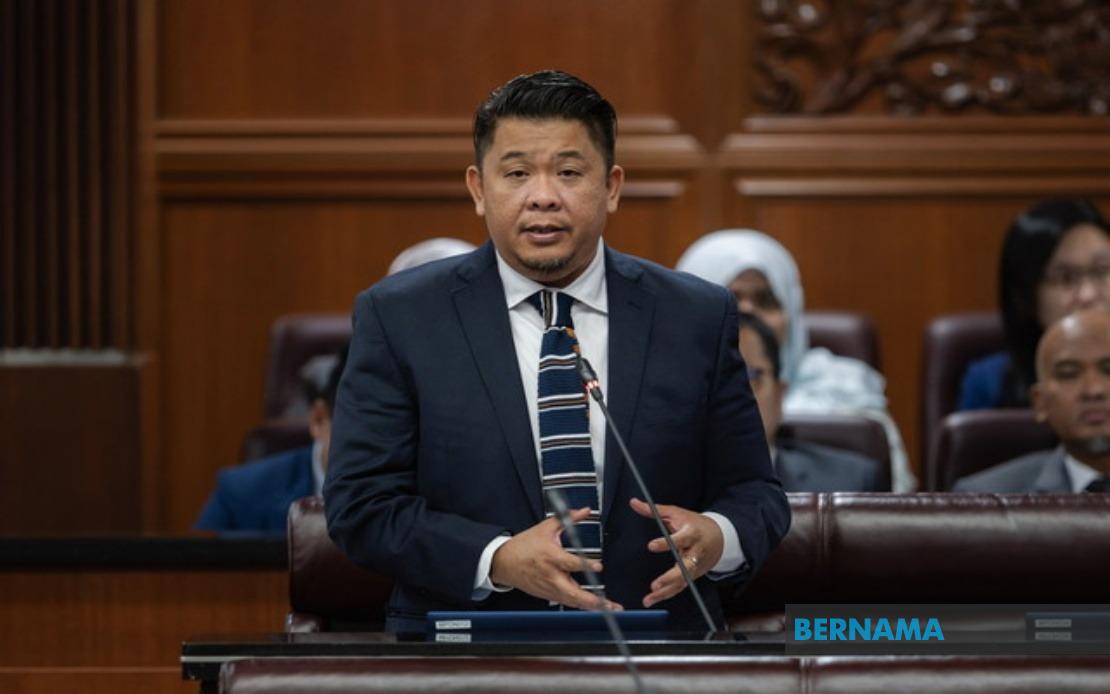
The Malaysian government maintains active oversight of more than 21,000 of its citizens dispersed across 14 countries experiencing armed conflict, demonstrating heightened vigilance in safeguarding nationals amid volatile geopolitical circumstances. Deputy Foreign Minister Datuk Lukanisman Awang Sauni disclosed this monitoring operation during parliamentary proceedings at Dewan Negara, emphasizing that Wisma Putra has invested significant resources into real-time tracking mechanisms capable of rapidly mobilizing assistance when necessary.
Drawing upon institutional memory from previous international crises, Malaysian authorities have constructed a multi-layered response framework that extends well beyond conventional diplomatic channels. Lukanisman articulated that this preparedness infrastructure incorporates coordination with the Defence Ministry, civil aviation authorities, private-sector partners including the Royal Malaysian Air Force, and commercial carriers capable of deploying charter aircraft on short notice. The sophistication of this apparatus reflects recognition that modern evacuation operations demand seamless integration across government departments, private enterprise, and humanitarian organizations working toward unified objectives.
The Foreign Ministry's approach emphasizes preventive documentation and real-time communication channels with its dispersed population. All Malaysian diplomatic missions maintain updated registers of national whereabouts obtained through multiple entry points including email notification, telephone contact, and the e-Consular digital system. These mechanisms enable officials to rapidly assess population density within danger zones and allocate resources proportionally. The MyWorldAlert application serves as a critical information vector, allowing Malaysians abroad to receive security updates and contact emergency services instantaneously regardless of local telecommunications infrastructure reliability.
Lukanisman noted that Petronas, Malaysia's national oil corporation with significant workforce deployments throughout the Middle East region, operates autonomous evacuation protocols coordinated with but distinct from broader government frameworks. This corporate preparedness underscores how private multinational operations maintain their own crisis-response capabilities while remaining integrated within national emergency architectures. Such arrangements reflect the reality that Malaysia's overseas population encompasses not merely students and pilgrims but also skilled professionals managing critical energy infrastructure and commercial operations.
The escalation in evacuation planning reflects genuine concern regarding Malaysians undertaking religious pilgrimage to the Middle East, a population segment that fluctuates considerably with seasonal patterns. Umrah operators and travel agencies have been incorporated into contingency structures, recognizing that religious tourism represents a significant but unpredictable component of Malaysia's presence in the region. The government's inclusion of these private actors within formal planning matrices demonstrates understanding that evacuation effectiveness depends upon coordinating across traditional bureaucratic silos.
Operational activation of evacuation protocols remains tiered according to evolving threat assessment rather than predetermined thresholds. Lukanisman explained that migration from peacetime diplomatic operations to emergency procedures proceeds incrementally, calibrated against current risk evaluations, observable security developments, and the scale of affected populations. This graduated approach permits resource conservation during periods of elevated but manageable tension while enabling rapid escalation should circumstances deteriorate unexpectedly. The framework thus prioritizes flexibility and proportional response over rigid automaticity.
The genesis of enhanced vigilance traces partly to West Asian developments earlier in 2024, prompting Wisma Putra to issue three separate travel advisories as tensions mounted. The subsequent gradual restoration of regional airspace following the April 8 ceasefire announcement provided practical validation of contingency planning while simultaneously demonstrating the volatility of conditions in which Malaysian nationals operate. This trajectory illustrates how theoretical preparedness transitions into practical necessity when geopolitical circumstances shift abruptly.
For Malaysian citizens residing or traveling abroad, Wisma Putra encourages proactive registration regardless of intended visit duration, positioning voluntary notification as foundational to effective crisis response. The Foreign Ministry's messaging emphasizes that registration constitutes not bureaucratic requirement but practical insurance enabling rapid contact when emergencies materialize. This framing seeks to overcome natural reticence toward government registration while establishing communication channels antecedent to actual crisis emergence.
The monitoring operation reveals deeper Malaysian strategic calculations regarding regional stability and citizens' vulnerability to external shocks. With significant populations engaged in professional, educational, and religious activities across conflict zones, Malaysia recognizes that its prosperity and stability intersect with capacity to protect nationals abroad. The comprehensiveness of evacuation planning signals determination to prevent citizens from becoming casualties of regional instability, particularly given Malaysia's multicultural composition and diverse diaspora interests throughout the Middle East.
Practical implementation of these frameworks faces inherent complexities stemming from limited control over regional security environments and host-nation cooperation requirements. Yet by establishing coordination mechanisms in advance rather than improvising during emergencies, Malaysian authorities substantially improve response effectiveness. The integration of military transport capabilities, commercial aviation, humanitarian organizations, and corporate evacuation resources creates redundancy and flexibility while distributing operational burden across multiple institutions.
For Southeast Asian observers, Malaysia's evacuation preparedness offers instructive example of how middle-power nations navigate risks inherent to maintaining substantial overseas populations without possessing military capacity for unilateral intervention. The emphasis upon diplomatic coordination, private-sector integration, and multilayered communication reflects pragmatic adaptation to genuine constraints. As conflicts persist throughout the Middle East and North Africa, other regional governments may examine Malaysia's frameworks as models for protecting increasingly mobile populations engaging across conflict-affected territories for economic, educational, and spiritual purposes.

