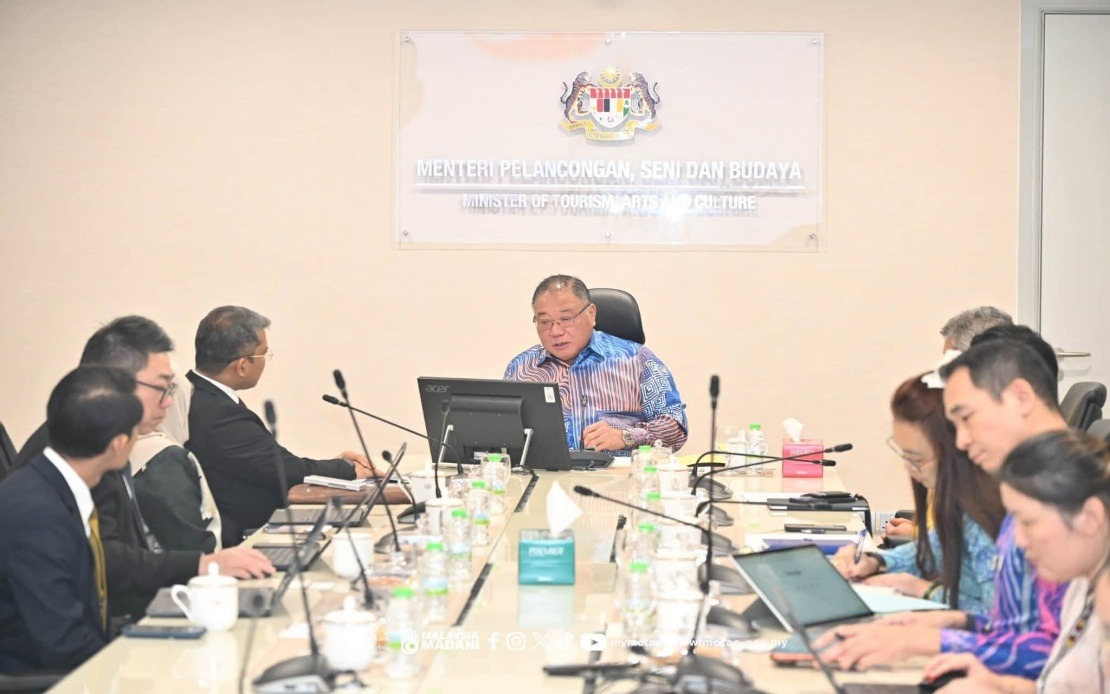
Malaysia's push to cement itself as a premier regional tourism destination has intensified with a strengthened alliance between the Ministry of Tourism, Arts and Culture (MOTAC) and Malaysia Aviation Group (MAG), the country's state-owned airline operator. The partnership, forged through discussions between Tourism Minister Datuk Seri Tiong King Sing and MAG Group president and chief executive officer Captain Nasaruddin A Bakar, underscores the government's commitment to leveraging its aviation infrastructure as a cornerstone of the Visit Malaysia Year 2026 (VM2026) campaign, which has been extended into next year to maximise its impact.
The collaboration addresses a fundamental challenge facing Malaysia's tourism sector: the need to bolster international arrivals through improved connectivity and market penetration. Rather than treating tourism and aviation as separate policy domains, MOTAC and MAG are aligning their strategic objectives to create a cohesive ecosystem that addresses both supply-side capacity and demand-side marketing. This integrated approach reflects a recognition that modern tourism competitiveness depends critically on seamless travel options and coordinated promotion across source markets.
A central pillar of the renewed partnership involves geographic expansion of MAG's international flight networks. The airline intends to deepen its presence in three critical long-haul markets: India, China, and Europe. These regions represent substantial untapped or underexploited sources of tourist traffic to Malaysia. India, with its growing middle class and rising disposable incomes, presents particular promise for mid-to-premium leisure travel. Chinese tourists, who have historically contributed significantly to Malaysia's visitor numbers, remain a strategic priority. European markets offer opportunities to diversify Malaysia's tourism portfolio beyond Asia, attracting visitors with higher average spending power and longer stay durations.
Beyond conventional gateway cities, the partnership also contemplates service expansion to emerging leisure destinations. Fukuoka, Japan's sixth-largest city and gateway to Kyushu, represents a strategically chosen secondary market where direct or enhanced connectivity could unlock incremental demand. Such route diversification serves dual purposes: it spreads tourism benefits across Malaysia's tourism infrastructure rather than concentrating traffic at a handful of hubs, and it positions Malaysia competitively against rival Southeast Asian destinations vying for the same source markets.
The collaboration extends into the critical challenge of demand stimulation during off-peak seasons. By synchronising joint marketing campaigns with promotional flight pricing strategies, MOTAC and MAG aim to flatten seasonal demand curves and improve aircraft utilisation during traditionally weaker months. This approach has clear economic logic: aviation represents a high fixed-cost operation where load factors—the proportion of available seats filled—directly determine profitability. Coordinated promotions that shift leisure travel from peak to shoulder seasons generate mutual benefits: airlines achieve better financial performance, hotels and tourism operators experience more stable revenue streams, and tourists may obtain better value propositions.
Enhancing the passenger experience constitutes another substantive dimension of the partnership. MOTAC and MAG have committed to upgrading cabin facilities, refining in-flight catering standards, and accelerating crew training programmes. These incremental improvements matter considerably in a competitive market where perception and repeat visitation drive long-term tourism growth. Particularly for full-service carriers competing against low-cost regional alternatives, service quality differentiation becomes a primary competitive lever. Visitors who experience superior comfort and service during their journey to Malaysia begin their visit with positive sentiment, potentially extending their stay duration and generating higher expenditure across accommodation, dining, and attractions.
The domestic tourism ecosystem stands to gain significant secondary benefits from this partnership architecture. By improving international connectivity and passenger volume, MOTAC and MAG effectively expand the addressable market for Malaysian hospitality businesses, food and beverage operators, tour guides, and cultural attractions. The multiplier effects of increased international tourism cascade through regional economies and employment. Local industry players benefit not merely from additional visitor traffic but from enhanced operational capabilities—better-trained personnel, improved facilities—required to service international clientele.
The strategic imperative underlying this partnership reflects Malaysia's ambition to compete more effectively in Asia-Pacific tourism. Regional competitors including Thailand, Indonesia, and Vietnam have pursued similarly aggressive tourism expansion strategies, leveraging national carriers to secure market access and build destination awareness. Malaysia's tourism sector has historically demonstrated resilience and dynamism, but sustained growth requires continuous investment in accessibility and value proposition enhancement. Direct government-to-private sector collaboration at the ministry level signals political commitment to removing administrative barriers and aligning incentive structures.
The VM2026 campaign extension through 2026 provides temporal scaffolding for the partnership's execution. Extended promotional campaigns allow time for route development, marketing penetration, and behavioural shift among potential tourists. Unlike one-year initiatives that rely on concentrated marketing spend, multi-year campaigns enable sustained brand building and conviction development in source markets. The extended timeline also accommodates airline capacity expansion—new aircraft acquisition, crew recruitment, scheduling optimisation—which operates on longer lead times than marketing activations.
From a macroeconomic perspective, this partnership aligns with Malaysia's diversification objectives. Tourism represents a non-commodity source of foreign exchange earnings and employment generation, particularly valuable given global commodity price volatility. Sustained growth in international visitor numbers strengthens the tourism sector's contribution to gross domestic product and provides economic resilience through revenue diversification. Government investment in enabling infrastructure—through MOTAC's policy framework and MAG's operational capabilities—generates multiplicative returns across the broader economy.

