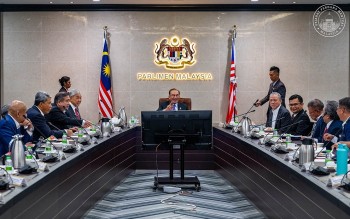
Prime Minister Datuk Seri Anwar Ibrahim has moved to address mounting cost pressures affecting Malaysia's manufacturing base by ordering targeted engagement between government agencies and industry stakeholders grappling with global supply chain disruptions. The directive came following a meeting of the National Economic Action Council, which Anwar chairs in his capacity as finance minister, where officials reviewed strategies to fortify the country's manufacturing sector against ongoing headwinds.
The focus on manufacturing resilience reflects growing anxiety within key industrial segments facing a cascade of challenges rooted in international supply complications. The government's response signals recognition that Malaysia's export-dependent economy requires proactive intervention to prevent cost escalation from undermining competitiveness. By channelling efforts through the Ministry of Investment, Trade and Industry alongside the Economy Ministry, the administration is positioning itself to develop coordinated policy responses that address both immediate relief and long-term structural concerns.
The plastics industry emerged as a particular priority within the council's deliberations, a designation underscoring its critical position as an enabler across Malaysia's industrial landscape. This sector operates as an essential supplier to food packaging manufacturers, electronics and electrical producers, automotive suppliers, and medical device makers—industries that collectively form the backbone of the country's manufacturing exports and employment. The interconnected nature of these supply chains means disruptions ripple outward, affecting competitiveness in downstream sectors that depend on reliable, affordable plastic inputs.
Economy Minister Akmal Nasrullah Mohd Nasir provided context for the concern, noting that the plastics industry's sales value contracted to RM62.69 billion in 2025 from RM64.78 billion in 2024. This decline suggests the sector is already absorbing pressures from the supply crisis rather than passing them fully to customers, potentially squeezing margins and limiting investment capacity. The breakdown of market composition reveals why this matters: packaging accounts for 45 per cent of sales, with the electronics and electrical sector consuming 29 per cent. Such concentration means volatility in these segments carries outsized consequences for overall industry health.
The ripple effects of plastics sector stress extend far beyond a single industry, as Nasir outlined during a public briefing. When input costs rise or supply becomes constrained, the impact reverberates through food packaging, electronics component manufacturing, automotive production, medical device assembly, construction materials, agricultural inputs, and manufactured exports. For a trading nation like Malaysia, where manufacturing represents a significant source of foreign exchange and employment, such disruption threatens both economic growth and job creation. The government's recognition of this interconnectedness suggests policymakers understand that addressing the plastics industry's challenges offers multiplier benefits across the economy.
The directive to conduct further engagements with industry signals a shift toward consultative policymaking on supply chain matters. Rather than imposing top-down solutions, the government is explicitly inviting manufacturers to articulate their specific pain points and collaborate on remedies. This approach acknowledges that officials in Putrajaya, however well-intentioned, cannot fully comprehend the operational complexities facing factories and producers across multiple sectors. Meaningful solutions likely require input from companies managing real-time supply challenges, managing cost allocations, and navigating contractual relationships with international partners.
For Malaysian manufacturers competing in regional and global markets, the timing of this intervention carries significance. Southeast Asian competitors, particularly Vietnam, Thailand, and Indonesia, are similarly navigating supply chain disruptions, but government support mechanisms vary considerably across the region. Countries offering more substantial or rapid assistance to core industries may gain competitive advantage. Malaysia's engagement-focused strategy positions the country to develop targeted, efficient responses that do not necessarily require massive government expenditure but rather smart coordination and policy adjustment.
The emphasis on long-term ecosystem resilience rather than temporary band-aids reflects strategic thinking about Malaysia's position in global manufacturing networks. Supply chains evolve constantly, with companies continuously seeking cost advantages and risk mitigation. Governments that help their manufacturing base adapt successfully tend to retain investment and employment. Those that merely react to crises often find that production migrates to jurisdictions perceived as more stable or supportive. By framing the intervention around resilience and long-term solutions, Anwar's administration is signalling commitment to preserving Malaysia's attractiveness as a manufacturing destination.
The involvement of both MITI and the Economy Ministry underscores the cross-cutting nature of supply chain challenges. Trade and investment promotion typically falls under MITI's purview, while broader economic coordination resides with the Economy Ministry. Their joint engagement suggests the government recognises that resolving supply pressures requires both sectoral support and macro-economic coordination. This coordination mirrors approaches taken by other Southeast Asian governments when addressing systemic challenges, though the specific mechanisms and extent of support remain to be detailed through forthcoming dialogues.
The government's acknowledgment that industry concerns are serious enough to warrant prime ministerial attention and ministerial action provides some reassurance to manufacturers about official receptiveness. However, the effectiveness of this initiative ultimately depends on the concrete measures emerging from the promised engagements. Manufacturers will be watching for signals regarding potential tariff adjustments, import facilitation, export incentives, or credit facilities designed to ease cash flow pressures. The coming weeks will clarify whether this represents substantive policy recalibration or primarily a communication exercise designed to demonstrate government attentiveness.

