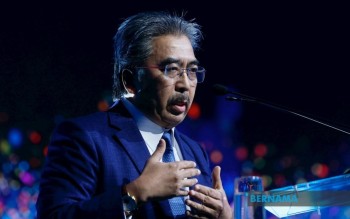
The Malaysian government is embarking on a comprehensive review of the nation's import strategy, signalling a shift towards greater self-sufficiency in key sectors and reduced dependence on external supply chains. Speaking at a conference in Kuala Lumpur on August 5, Minister of Investment, Trade and Industry Datuk Seri Johari Abdul Ghani outlined plans to assess the country's import requirements across all categories, particularly capital goods, while simultaneously crafting new policy frameworks designed to fortify domestic manufacturing capacity. The initiative reflects a broader recognition that sustainable economic growth requires moving beyond reliance on cheaper foreign products towards developing home-grown technological capabilities and value-added production.
Johari emphasized that Malaysia's ability to climb the income ladder hinges on genuine value creation rather than simply processing or importing goods. He stressed the importance of nurturing locally-developed innovations and ensuring that the substantial flow of trade and investment generates meaningful benefits for Malaysian workers, entrepreneurs and consumers. This philosophy suggests a departure from purely labour-cost-driven competitiveness towards a model emphasizing technological sophistication and productivity improvements—a transition becoming increasingly urgent as competing nations advance their own capabilities.
Last year marked a historic achievement for Malaysia's external sector, with total trade eclipsing the RM3 trillion mark for the first time. Exports expanded by 6.5 per cent to reach RM1.61 trillion, while imports grew at a slightly slower pace of 6.2 per cent to RM1.45 trillion. The resulting trade surplus of RM151.8 billion underscores Malaysia's strong external position, yet government officials view these figures not as grounds for complacency but as a platform from which more sophisticated economic participation can be launched. The challenge, according to Johari, lies in transforming raw trade volume into sustainable income growth across the entire population.
Malaysia's aspiration to achieve high-income nation status faces a quantifiable but surmountable gap. According to World Bank thresholds, high-income economies require a gross national income per capita of at least US$14,375. Malaysia currently stands at US$12,380, representing approximately 16 per cent below the target. However, this benchmark is not fixed—the threshold itself rises annually as global development progresses. Closing this distance therefore demands not incremental improvement but sustained, structural enhancements in productivity, innovation intensity and the complexity of Malaysia's economic output. The window for achieving this transition may be narrowing as regional peers accelerate their own development trajectories.
The minister cautioned against continuing with conventional approaches to economic management, arguing that the rapidly shifting global environment demands strategic flexibility and the willingness to reshape decades-old patterns of engagement and production. Malaysia must develop the institutional capacity to reassess partnerships, diversify economic relationships and make investment decisions that prioritize long-term national prosperity over short-term gains. This reorientation carries implications for the country's relationship with multinational corporations, its technology transfer commitments and the regulatory frameworks governing foreign direct investment.
A cornerstone of the new approach involves selective import management tied to strategic industrial development. Rather than maintaining blanket openness to all imports regardless of domestic alternatives, Malaysia will carefully evaluate which products and capital goods warrant continued importation and which sectors possess sufficient local capabilities to expand domestic production. This distinction matters considerably: indiscriminate reliance on cheaper foreign products can gradually erode domestic industrial capacity, stranding workers and rendering local firms uncompetitive even in their home market. Conversely, thoughtful policies that nurture local manufacturing and technological advancement can create positive feedback loops where growing domestic expertise generates cost competitiveness while retaining profits and employment within Malaysia.
Johari illustrated this principle through Malaysia's iron and steel sector, a cautionary tale of industrial decline. Once self-sufficient and competitive, this industry contracted substantially after larger foreign producers entered the Malaysian market, offering lower prices and established global supply chains. Rather than simply welcoming all foreign investment, Malaysia should encourage multinational firms to bring genuinely novel products and technologies not yet available locally—thereby expanding the entire ecosystem rather than displacing existing firms. This selective approach creates space for both foreign and domestic companies to grow without one sector cannibalizing another.
The broader policy direction suggests Malaysia is reconsidering its historic position as an open, import-dependent economy. While remaining fundamentally committed to global trade, the government appears intent on shifting the composition of imports towards advanced capital goods and specialized inputs that enable local value creation, while simultaneously nurturing domestic capacity in areas where Malaysia possesses technological potential or comparative advantage. This recalibration parallels similar movements across Southeast Asia and reflects lessons learned from competitor economies that have successfully upgraded their industrial structures.
Complementing these policy discussions, RHB Bank unveiled RHB Pay, positioning itself as Malaysia's first bank-owned unified payment gateway designed to modernize the country's digital transaction infrastructure. The platform consolidates multiple payment methods—card transactions, FPX, DuitNow Pay and others—through a single integration point, serving mid-sized enterprises, commercial businesses and government institutions. By engineering this solution entirely in-house, RHB maintains control over security, data flows and reconciliation processes, offering businesses faster fund access and enhanced cash flow visibility. The planned expansion in late 2026 to include e-wallet and QR payment capabilities signals the banking sector's commitment to supporting digital commerce growth.
These banking infrastructure developments represent precisely the type of domestically-developed capability that government policy aims to nurture. Rather than relying on foreign payment processors, Malaysian banks are building competitive alternatives that retain transaction data and revenue within the country while improving service quality for local businesses. This parallel development—strengthening both industrial policy and supporting financial infrastructure—reflects a coherent national strategy to upgrade Malaysia's economic complexity and self-sufficiency. The initiatives collectively position Malaysia to extract greater value from its trade and investment flows while developing the technological and institutional foundations for sustained income growth in an increasingly competitive regional and global environment.

