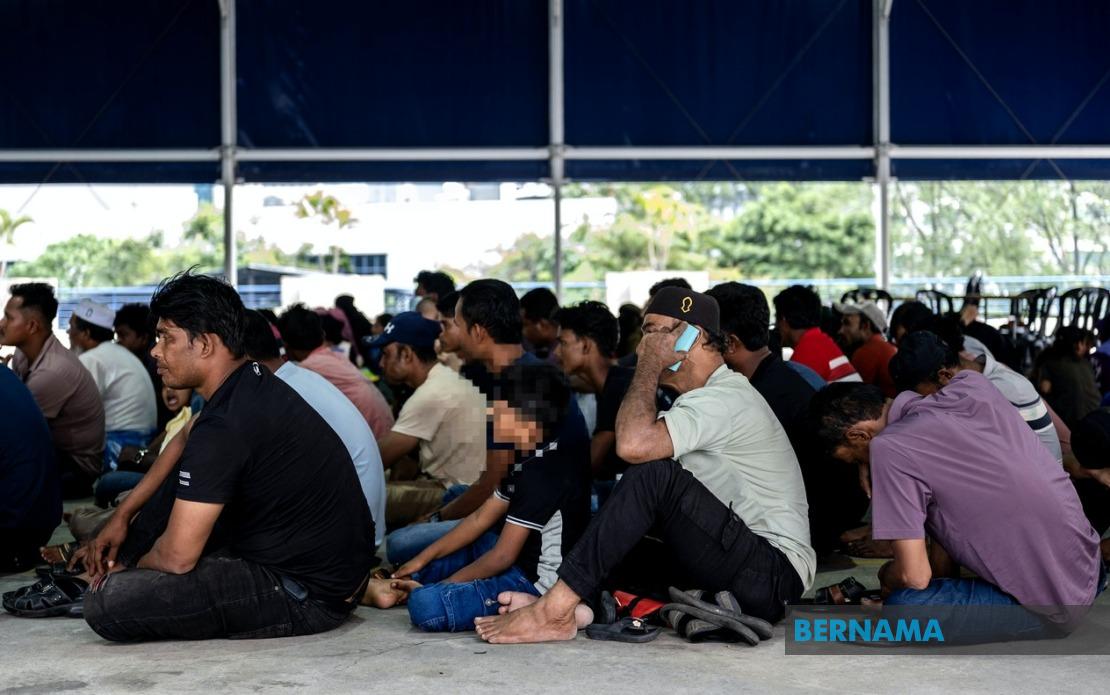
Malaysia's government is on track to release initial data on Myanmar refugees by the final quarter of this year, according to Home Minister Datuk Seri Saifuddin Nasution Ismail, signalling progress in a comprehensive registration effort that has become central to the country's refugee management strategy. Speaking at a public event in Putrajaya on August 9, Saifuddin Nasution indicated that the Immigration Department has been gathering information through the Refugee Registration Document (DPP) programme and that compilation of the first batch of findings would be available within months. The minister pledged transparency in sharing whatever figures emerge once the collection phase reaches completion, underscoring government commitment to data-driven policy on a sensitive demographic issue.
The DPP initiative represents a significant shift toward systematic documentation of displaced persons from Myanmar currently residing in Malaysia. Rather than relying on ad-hoc assessments or third-party estimates, the programme aims to establish an authoritative registry with biometric and identity information that authorities can verify and rely upon for subsequent policy decisions. This technological and administrative approach reflects international best practices in refugee management, allowing Malaysian authorities to distinguish between genuine asylum seekers fleeing persecution and others who may have entered the country through irregular channels. The data collection operates under the framework of National Security Council Directive No. 23 (Revision 2023), indicating that refugee management has been elevated to a matter requiring coordinated inter-agency oversight at the highest governmental level.
The rationale behind the DPP programme extends beyond mere record-keeping. By obtaining accurate biometric data and verified identity information, the government positions itself to make informed decisions about individual cases and broader policy trajectories. Saifuddin Nasution emphasised that the exercise is not exclusively focused on Myanmar nationals but encompasses all persons identified as refugees within Malaysian territory, reflecting a comprehensive approach to irregular migration flows emanating from multiple conflict zones across Asia. This broader aperture suggests that while Myanmar has dominated headlines regarding refugee crises in recent years, Malaysia recognises that displacement pressures originate from various sources, including Afghanistan, Pakistan, and the Rohingya crisis affecting Bangladesh and Indonesia.
A critical component of the government's strategy involves prioritising verified refugees for repatriation, a task delegated to the Foreign Ministry (Wisma Putra). Once individuals have been properly documented and their refugee status confirmed through the DPP process, Saifuddin Nasution indicated they would be considered priority cases for return to their countries of origin or onward resettlement through international mechanisms. This tiered approach—registration first, verification second, then repatriation or resettlement third—represents a more orderly framework than Malaysia has historically employed, and signals an attempt to balance humanitarian obligations with domestic security and capacity concerns.
Implementing the DPP programme has required coordination between multiple governmental agencies, each bringing distinct expertise to the data collection effort. The Home Ministry's Immigration Department has taken the operational lead, but success depends on cooperation from health authorities capable of processing biometric identifiers, administrative bodies managing identity verification, and diplomatic channels through which repatriation arrangements can be negotiated. Saifuddin Nasution acknowledged that reaching and encouraging refugee populations to participate voluntarily remains a substantial challenge, requiring public communications campaigns to convince often-marginalised communities that registering with government authorities serves their interests rather than exposing them to deportation or persecution.
The expected release of preliminary data by the fourth quarter carries implications beyond Malaysia itself. Thailand and Indonesia, which host substantially larger refugee populations from Myanmar, are likely monitoring Malaysia's approach with interest. Success in registering and managing refugees could provide a model for regional burden-sharing, while difficulties might reinforce existing reluctance among neighbouring states to formalise refugee intake. For Myanmar's government, meanwhile, preliminary data released by Malaysia would provide insight into displacement patterns and the scale of population flight, information that could prove relevant to post-conflict reconstruction planning should political transitions occur.
Domestically, the availability of verified refugee data may influence public perception and political discourse. Malaysia has experienced periodic tensions between humanitarian advocates emphasising legal obligations to asylum seekers and security-focused constituencies concerned about irregular migration and resource allocation. Transparent, empirical data on the refugee population—including their origins, demographics, skills, and integration status—could help ground policy debates in facts rather than speculation or ideological positions. The fourth-quarter release timing allows six months of public awareness-building before data becomes public, providing space for the government to shape narratives around the figures.
The logistics of outreach to Myanmar refugees present practical obstacles that should not be underestimated. Many live in urban informal settlements, lack stable housing or communication infrastructure, and may harbour justified fears of official engagement given experiences in their home country or transit nations. The government's announced intention to publicise the data collection process and encourage voluntary registration acknowledges these barriers, yet actually achieving meaningful participation rates among populations accustomed to avoiding state authority will test the effectiveness of whatever communications strategy officials devise. Incomplete participation could render subsequent data less useful for policy formulation, creating a feedback loop where undocumented refugees remain outside formal systems.
The choice to release only preliminary data in the fourth quarter rather than comprehensive figures suggests that the collection process is rolling and ongoing rather than time-bound and conclusive. This reflects practical realities: refugee populations are not static, with persons continuously arriving while others depart through repatriation, family reunification, or irregular onward migration. The DPP programme appears designed to accommodate this flux, generating successive waves of data rather than a single definitive count. This iterative approach aligns with how developed nations manage refugee registration, though it also means that policy decisions cannot await comprehensive information but must proceed based on incomplete pictures updated periodically.
For Malaysian civil society and international humanitarian organisations working with displaced persons, the announced timeline and methodology raise both opportunities and concerns. Access to data collection sites, communication with beneficiary communities, and coordination with government authorities on burden-sharing responsibilities will likely feature in coming months of advocacy and negotiation. The fourth-quarter data release represents a checkpoint where external actors can assess whether the DPP programme functions equitably and transparently or whether it becomes an instrument of restriction disguised as documentation.

