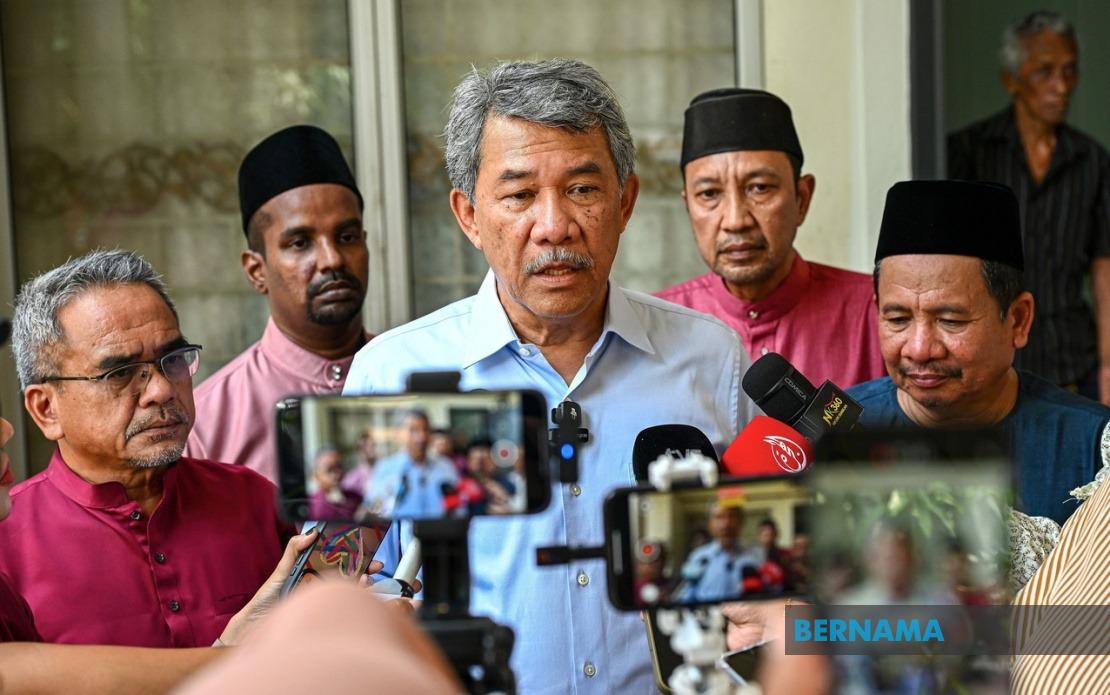
Malaysia is taking a methodical approach to repatriating Myanmar refugees, with Foreign Minister Datuk Seri Mohamad Hasan emphasizing that the safety and welfare of returnees will not be compromised in pursuit of speed. Speaking after a community engagement programme in Seremban on August 14, Mohamad Hasan outlined a phased return process that places security considerations at its centre, reflecting Kuala Lumpur's commitment to upholding international humanitarian standards even as it manages the substantial refugee population within its borders.
The careful stance adopted by Malaysia contrasts with external pressure and reports suggesting Myanmar authorities are prepared to facilitate the repatriation of 5,000 nationals currently in the country by sea. Rather than accepting a large-scale, rapid operation, Malaysia's position is to process returnees gradually, beginning with the approximately 1,000 individuals whose status has already been verified and who face no identifiable threats upon return. This incremental approach reflects the complexity of assessing genuine security risks in Myanmar's volatile environment, where ongoing civil and political instability continues to create genuine protection concerns for certain populations.
Central to Malaysia's strategy is sustained coordination between the United Nations High Commissioner for Refugees and the Home Ministry, institutions whose collaboration ensures that refugee status determinations are rigorous and that returnees will not face persecution or harm. This institutional framework provides the due diligence that such operations demand, particularly given the humanitarian stakes involved. The UNHCR's involvement lends international legitimacy to the process and helps insulate Malaysia from accusations that it is prioritizing border management over human rights obligations.
Mohamad Hasan indicated that the Ministry of Foreign Affairs has been tasked with maintaining diplomatic channels with Myanmar's government through its embassy in Malaysia, establishing the formal communications infrastructure necessary for orderly, phased transfers. This diplomatic engagement serves multiple purposes: it communicates Malaysia's willingness to facilitate returns while simultaneously imposing conditions around timing, volume, and security assurance. By working through established diplomatic machinery, Malaysia avoids appearing coercive toward either the refugees themselves or Myanmar's government, preserving relationships that may prove crucial in managing longer-term regional stability.
The emphasis on gradual repatriation carries particular significance for Malaysia's domestic political economy. With substantial refugee populations concentrated in urban areas, staged returns allow time for civil society preparation, limit short-term labour market disruptions, and reduce the risk of creating visible social tensions that might fuel anti-refugee sentiment. The political sustainability of Malaysia's humanitarian posture depends partly on managing public perception, and phased operations provide breathing room for that calibration.
Regionally, the Myanmar refugee situation exemplifies broader Southeast Asian governance challenges. The crisis stems from Myanmar's internal political breakdown, yet its externalities are borne primarily by neighboring states including Malaysia, Thailand, and Bangladesh, which host the vast majority of those displaced. Mohamad Hasan's reference to ASEAN collectively addressing the issue reflects growing recognition within the bloc that Myanmar's instability cannot be quarantined within its borders, despite the organization's traditional reluctance to intervene in members' internal affairs.
The invocation of ASEAN's Five-Point Consensus on Myanmar, formulated in April 2021, indicates that Malaysia continues viewing the framework as central to regional diplomatic efforts. That consensus calls for an end to violence, humanitarian assistance, constructive dialogue, and a visit by an ASEAN envoy, yet implementation remains deeply contested given divisions among member states over how forcefully to pressure Myanmar's military junta. Malaysia's repatriation policy reflects a pragmatic middle path: neither abandoning Myanmar through isolation nor accepting indefinite refugee burdens, but instead pursuing managed returns within a framework that respects humanitarian norms.
The security assessment function embedded in Malaysia's approach acknowledges a uncomfortable reality: not all Myanmar citizens currently in Malaysia face equal risks upon return. Urban professionals, ethnic Bamar individuals, and those without documented political affiliations may face minimal danger, whereas Rohingya, other persecuted minorities, and individuals known to have opposed military rule require substantially greater precaution. Distinguishing between these categories demands careful, case-by-case evaluation, which justifies the measured pace that Malaysia is adopting.
International observers have increasingly criticized Myanmar's junta for obstruction and violence against returnee populations, with documented cases of arrested and mistreated refugees discovered to have been recently repatriated. These incidents underscore why Malaysia's insistence on independent verification and security assessment is not merely bureaucratic prudence but essential protection practice. The Foreign Ministry's involvement reflects recognition that repatriation is not purely an immigration matter but fundamentally a foreign policy and human rights issue.
For Malaysian stakeholders, the repatriation process also intersects with longer-term questions about burden-sharing and international responsibility. Malaysia, as a non-signatory to the 1951 Refugee Convention, operates within a voluntary framework, yet has hosted one of Asia's largest refugee populations. The careful stance on Myanmar returns implicitly signals that Malaysia expects greater burden-sharing from developed nations and from UNHCR in managing refugee crises originating in Asia's conflict zones.
Looking ahead, the success of Malaysia's phased repatriation approach will depend on Myanmar's willingness to accommodate the verification process and honor security commitments, on UNHCR's capacity to conduct thorough assessments, and on the Home Ministry's logistical execution. Should Myanmar authorities attempt to pressure Malaysia into accelerating returns or resent the security conditions, diplomatic tensions could arise that complicate the process. Conversely, if repatriations proceed smoothly with verified low-risk returnees, the model might establish a template for other Southeast Asian nations managing Myanmar displacement.
The refugee situation also reflects Malaysia's broader regional positioning. By acting as a responsible host state that balances humanitarian obligations with legitimate border management concerns, Kuala Lumpur reinforces its claim to regional leadership while defending national interests. The careful diplomacy evident in Mohamad Hasan's statements suggests that Malaysia views the Myanmar refugee challenge not as a temporary burden to be rapidly resolved, but as a structural regional problem requiring sustained, thoughtful engagement aligned with both international norms and national capacity.

