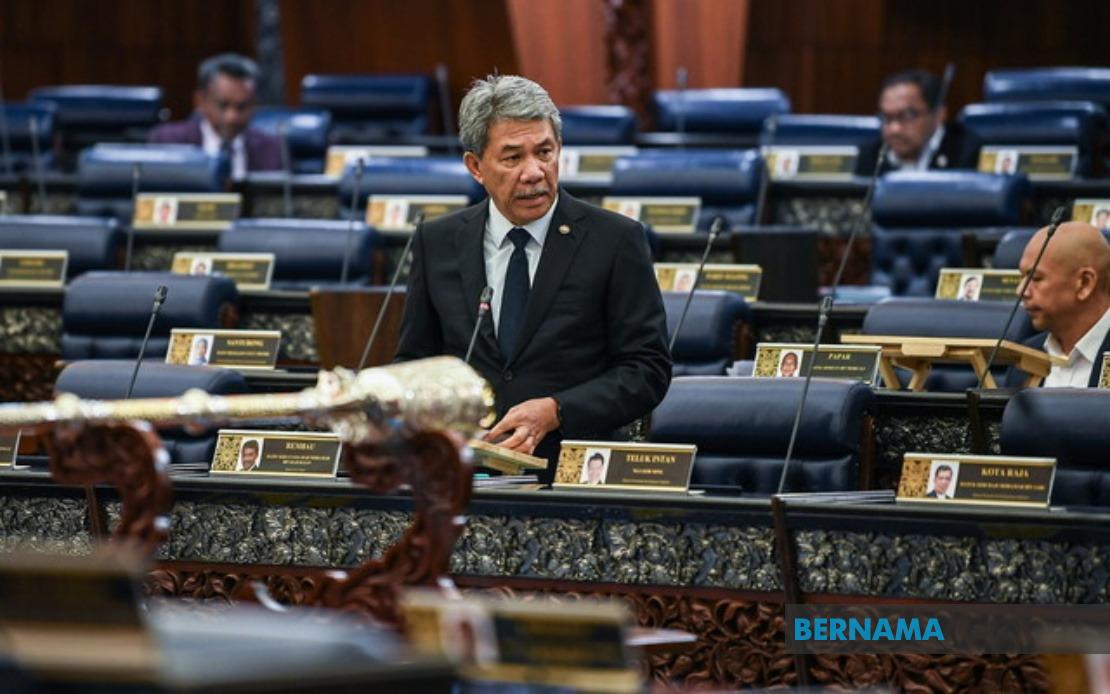
Foreign Minister Datuk Seri Mohamad Hasan has signalled Malaysia's determination to harness its seats at multiple international tables to advance resolution of the escalating West Asia conflict. Speaking during parliamentary questioning, Mohamad outlined a comprehensive diplomatic strategy that positions Malaysia not as a bystander but as an active broker, ready to deploy the full weight of its multilateral memberships—spanning the United Nations, UN Security Council, the Organisation of Islamic Cooperation, BRICS, and the Non-Aligned Movement—to foster lasting regional stability.
The catalyst for Malaysia's renewed diplomatic push is last week's memorandum of understanding between the United States and Iran, which Mohamad stressed represents a critical opening after years of entrenched hostility. Malaysia moved swiftly to endorse the accord, underscoring its commitment to seizing momentum for de-escalation. The 60-day negotiating window established under the MoU creates what Mohamad framed as a pivotal moment for the international community to consolidate gains and push toward comprehensive settlement. Within that window lie negotiations intended to address 14 substantive provisions, ranging from the reconstruction of Iranian infrastructure valued at USD300 billion to the reopening of the strategically vital Strait of Hormuz and the withdrawal of Israeli military deployments from occupied territories, including Lebanon.
For Malaysian policymakers and observers of regional affairs, the significance of the US-Iran breakthrough extends beyond diplomatic symbolism. The closure of the Strait of Hormuz has reverberated through global supply chains, creating price pressures and logistical disruptions felt acutely across Southeast Asia and its trade-dependent economies. Malaysia, as a major trading nation and energy consumer, has a tangible material interest in normalizing passage through this chokepoint. Mohamad's emphasis on monitoring subsequent negotiations reflects recognition that the MoU is merely a foundation; the real work of translating agreement into sustained compliance lies ahead, and Malaysia intends to be present at every juncture to reinforce the diplomatic architecture supporting stability.
Beyond its formal institutional roles, Malaysia is employing what Mohamad termed indirect approaches to amplify its influence. The Foreign Minister has personally engaged counterparts in Pakistan, the United Arab Emirates, and Saudi Arabia—countries with varying degrees of leverage over all parties to the conflict. Pakistan's role as host to the US-Iran talks positions it as a trusted interlocutor; the Gulf states occupy a more complex position as both neighbours and stakeholders in the balance of power. By cultivating these bilateral channels, Malaysia seeks to reinforce consistent messaging about the international community's preference for negotiated settlement and to identify additional pressure points for compelling compliance with any agreed framework.
Particularly noteworthy is Mohamad's outreach to the President-elect of the UN General Assembly, a procedural move that suggests Malaysia is thinking strategically about how to layer institutional support for conflict resolution. The General Assembly, though lacking the Security Council's binding powers, commands the legitimacy of near-universal representation and can mobilize political pressure through resolutions and moral authority. By engaging this office early, Malaysia appears to be preparing the ground for coordinated advocacy once the US-Iran negotiations advance to implementation phases.
Yet Mohamad's parliamentary response also laid bare the structural obstacles to achieving comprehensive settlement. His assertion that the Israeli regime remains opposed to successful peace efforts reflects the underlying complexity: the conflict is not simply a two-party dispute between the US and Iran but encompasses a broader regional struggle with Israel as a pivotal actor. Israeli military operations across Gaza, the West Bank, Lebanon, and other territories continue to generate casualties and displacement, perpetuating cycles of grievance and retaliation that undermine diplomatic initiatives focused solely on US-Iran rapprochement.
The Foreign Minister's criticism of American vetoes in the UN Security Council—noting that the United States has exercised its veto 31 times to shield Israel from censure—strikes at the heart of a perennial frustration for countries like Malaysia that seek principled international action on Palestinian rights and regional security. This asymmetry exposes the limits of multilateral forums when permanent Security Council members use their privileges to protect strategic allies. For Malaysia, which has long championed the interests of the Global South and non-aligned states, this reality underscores why leveraging platforms like BRICS and the NAM remains essential; these forums offer spaces for consensus-building among countries without Security Council vetoes, generating political pressure through sheer numerical and ideological weight.
The Malaysian government's emphasis on moral support—a phrase Mohamad repeated multiple times—deserves scrutiny as well. Malaysia's leverage as a middle power lies not in military or economic coercion but in legitimacy, diplomatic credibility, and the ability to convene. By positioning itself as a principled advocate for negotiation and regional stability, Malaysia appeals to both Western powers and the broader Muslim world, a positioning that reflects the country's own hybrid identity and strategic interests. This moral authority is particularly valuable in conflict zones where external actors are viewed with suspicion; Malaysia's lack of direct military involvement in West Asia and its standing within the Organisation of Islamic Cooperation grant it credibility that, say, permanent Security Council members may lack.
Looking forward, Malaysia's strategy rests on several assumptions that merit examination. The first is that the US-Iran MoU represents a durable shift in American policy rather than a tactical pause; domestic political shifts in Washington could reverse this calculus. Second, the approach assumes that isolating or pressuring Israel through international mechanisms remains viable even as that state has demonstrated resistance to such efforts. Third, it presumes that sustained Malaysian diplomatic engagement will measurably influence outcomes in conflicts where regional and global powers have far greater material stakes. These assumptions are not necessarily flawed, but they reflect optimism about the efficacy of multilateral diplomacy in an increasingly polarized international environment.
The immediate focus for Malaysia will be monitoring the US-Iran negotiations over the coming two months. Beyond that, Mohamad's framework suggests Malaysia will advocate for sequencing further diplomatic breakthroughs—using successful US-Iran implementation as a foundation for broader regional dialogue involving Israel, the Palestinian Authority, and neighbouring states. Whether such an ambitious agenda can proceed depends partly on Malaysian persistence but largely on whether the deeper geopolitical interests of major powers align with sustainable peace. For now, Malaysia has staked its position clearly: as an active, principled participant in the international quest for West Asian stability, armed with multiple institutional platforms and a commitment to using them.