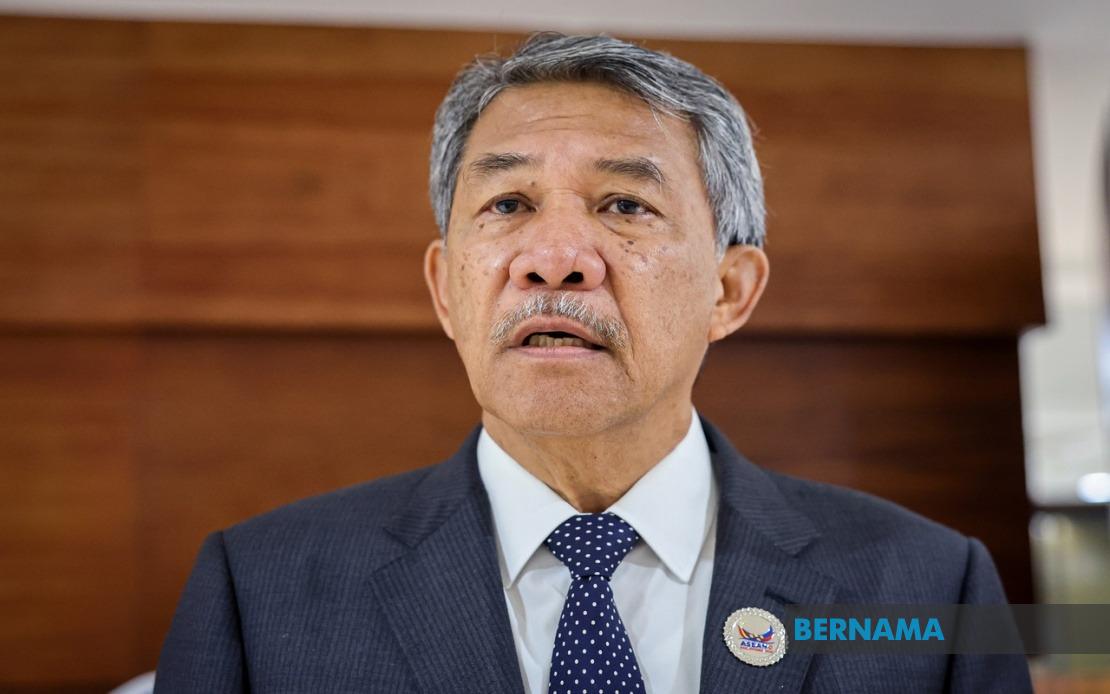
ASEAN member states have designated Malaysia as the country coordinator for relations with Türkiye, marking a significant diplomatic milestone as the regional grouping formally admitted the Turkish nation as a new Dialogue Partner. Foreign Minister Datuk Seri Mohamad Hasan announced the dual decisions on July 21 following the plenary session of the 59th ASEAN Foreign Ministers' Meeting (AMM) and Post-Ministerial Conference (PMC) in Manila, alongside various related ministerial gatherings.
The coordinating role represents a crucial responsibility within ASEAN's diplomatic framework, entrusting Malaysia with facilitating engagement and dialogue mechanisms between the ten-member bloc and Ankara. This appointment underscores the strategic importance that Southeast Asian nations place on deepening ties with Türkiye, a transcontinental power positioned at the intersection of Europe and Asia with significant geopolitical influence across multiple regions. The decision reflects Malaysia's standing within ASEAN and its ability to manage complex bilateral and multilateral relationships.
Malaysia's position as ASEAN Chair during 2025 provided the platform for proposing Türkiye's admission as a Dialogue Partner. Mohamad explained that the bloc had subjected the application to rigorous examination across multiple institutional levels—including the ASEAN secretariat, foreign ministers' forums, and official working groups—to ensure alignment with established criteria. ASEAN maintains a deliberate moratorium on expanding its dialogue partnerships, requiring prospective nations to meet exacting standards before acceptance into the framework.
The acceptance of Türkiye represents a carefully considered expansion of ASEAN's external engagement architecture. Mohamad emphasized that all member states had unanimously endorsed the criteria applied to this particular application, demonstrating consensus across the bloc regarding the standards necessary for new dialogue partnerships. This collective agreement signals confidence that Türkiye's admission serves the region's broader strategic interests and diplomatic objectives.
Beyond the Türkiye decision, ASEAN also approved the United Kingdom's admission as a new member of the ASEAN Regional Forum (ARF), further broadening the bloc's engagement with major powers. The ARF serves as a crucial platform for security dialogue encompassing member states, dialogue partners, and other stakeholders across the Indo-Pacific region. Britain's addition to this mechanism reflects ASEAN's commitment to inclusive regional security conversations and acknowledgment of London's enduring interests in Southeast Asian stability and prosperity.
The plenary session, chaired by Philippine Foreign Affairs Secretary Ma. Theresa P. Lazaro, also devoted considerable attention to advancing the ASEAN Community Vision 2045. This long-term strategic framework guides the bloc's trajectory across political-security, economic, and socio-cultural pillars, establishing ambitious targets for regional integration, development, and cooperation. Member states engaged in substantive discussions regarding their respective contributions to realizing this comprehensive vision across the coming two decades.
ASEAN Secretary-General Dr Kao Kim Hourn briefed the assembled foreign ministers on the latest developments and progress related to the Vision 2045 implementation roadmap. This update provided member states with current assessments of achievement across various sectoral initiatives and allowed for recalibration of efforts where necessary. Regular reporting on vision implementation ensures that ASEAN maintains strategic focus and accountability in pursuing its long-term objectives amid shifting regional circumstances.
A dominant theme throughout the ministerial discussions centered on ASEAN's role in navigating an increasingly uncertain geopolitical and geo-economic landscape. The region confronts mounting pressures from great power competition, supply chain volatility, climate-related disruptions, and transnational challenges that demand coordinated regional responses. Foreign ministers emphasized that ASEAN's centrality—its capacity to shape regional agendas and maintain strategic autonomy—constitutes the bloc's core strength and fundamental source of influence.
Modhad warned against external efforts to undermine ASEAN centrality, cautioning that competing powers might attempt to fragmentize the bloc or impose hierarchies that privilege certain members over others. Preserving ASEAN's centrality requires sustained commitment to consensus-based decision-making, respect for the ASEAN Way principles emphasizing non-interference and respect for sovereignty, and deliberate cultivation of balanced relationships across major powers. The foreign minister stressed that protecting this institutional autonomy remained paramount to ASEAN's continued relevance and effectiveness in regional affairs.
The appointment of Malaysia as ASEAN-Türkiye coordinator carries implications for Malaysia's diplomatic profile and influence within regional mechanisms. The coordinating role demands active engagement in facilitating dialogue, organizing ministerial and official exchanges, and ensuring that the bilateral relationship aligns with broader ASEAN strategies. For Türkiye, the dialogue partnership opens pathways for deeper engagement with Southeast Asia on trade, investment, security cooperation, and cultural exchange, while granting Turkish representatives voice in ASEAN-led regional forums.
From a Southeast Asian perspective, closer engagement with Türkiye offers potential benefits across multiple dimensions. Turkey possesses significant expertise in defense manufacturing, technology sectors, and infrastructure development that could complement ASEAN nations' development aspirations. Additionally, Türkiye's position bridging Europe and Asia makes it a valuable partner for facilitating broader international linkages and dialogue platforms. The relationship also reflects ASEAN's commitment to engaging powers beyond the traditional Western and Chinese spheres of influence.
The outcomes of the Manila ministerial gathering demonstrate ASEAN's capacity to expand its institutional relationships while maintaining internal cohesion around strategic principles. The emphasis on preserving ASEAN centrality amidst geopolitical turbulence signals the bloc's determination to remain a consequential actor capable of shaping regional outcomes. Malaysia's designation as ASEAN-Türkiye coordinator reinforces Southeast Asia's ambitions to deepen partnerships with diverse international actors while safeguarding the collective interests and unity that underpin ASEAN's regional significance.

