Malaysia has been confirmed as host for the 23rd ASEAN Ministerial Meeting on Science, Technology and Innovation (AMMSTI-23) in June 2027, cementing the country's commitment to advancing the region's scientific and technological landscape. The decision was formalised at the 22nd AMMSTI in Vientiane, Laos, on June 26, positioning Malaysia to lead important discussions on innovation policy across Southeast Asia during a critical period of digital transformation.
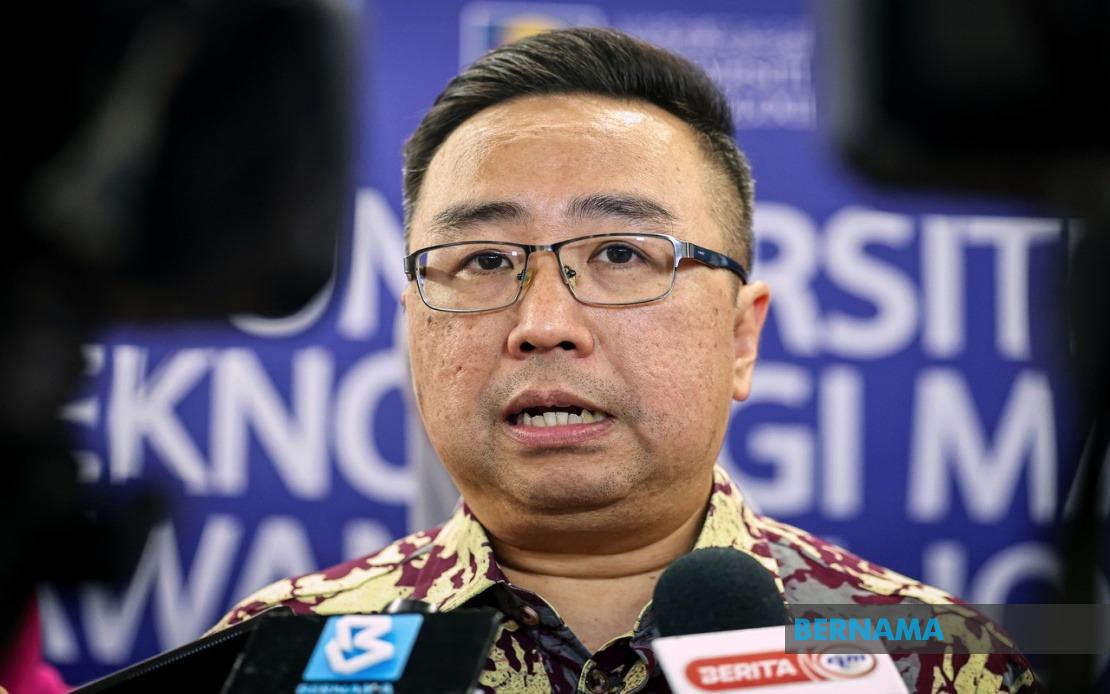
Minister Datuk Chang Lih Kang outlined how the Ministry of Science, Technology and Innovation (MOSTI) intends to leverage this hosting opportunity to accelerate the nation's development in priority technology sectors. Speaking after the MOSTI TechTalks Series 2/2026 programme in Johor Bahru, Chang emphasised that cultivating human capital remains fundamental to Malaysia's ability to compete globally and attract the high-tech manufacturing and research investments that underpin economic growth.
Talent development sits at the intersection of Malaysia's immediate economic needs and long-term competitiveness goals. Without a sufficiently skilled workforce versed in cutting-edge technologies, multinational corporations and research institutions are unlikely to establish major operations in the country, regardless of incentives offered. By positioning talent development as a primary focus, MOSTI acknowledges that infrastructure and funding alone cannot secure Malaysia's technological future—people with expertise in emerging fields represent the true competitive advantage.
Beyond talent development, MOSTI has identified several strategic technology pillars that will guide the ministry's work leading up to AMMSTI-23. Energy transition tops the agenda, reflecting global urgency around decarbonisation and Malaysia's own sustainability commitments. Artificial intelligence, digitalisation, advanced materials, nanotechnology, hydrogen technology, and biotechnology round out the focus areas, collectively representing the frontier sectors likely to generate economic value and solve pressing societal challenges over the coming decades.
This breadth of focus demonstrates recognition that Malaysia cannot build expertise in isolation. The technology landscape is interconnected; advances in AI accelerate progress in materials science, while hydrogen and battery technologies depend on breakthroughs in chemistry and materials engineering. Similarly, biotechnology increasingly overlaps with computational tools and artificial intelligence. MOSTI's multi-pronged approach suggests a strategic understanding that sustainable competitive advantage requires capability across complementary domains.
Technical and Vocational Education and Training (TVET) programmes represent a crucial leverage point for talent development, yet historically Malaysia has struggled to attract high-calibre students to vocational pathways. Recognising this challenge, MOSTI has committed to supporting fellow ministries in reimagining TVET curricula despite the programmes falling outside its direct purview. This cross-ministry collaboration involving 12 agencies, including the Ministries of Education, Higher Education, Rural and Regional Development, and Human Resources, suggests a whole-of-government acknowledgement that TVET reform requires coordinated effort across education, employment, and regional development.
Integrating emerging technologies such as robotics, artificial intelligence, and coding into TVET programmes represents a fundamental departure from conventional approaches centred solely on traditional technical competencies. Such modernisation matters because industry demand has shifted dramatically. Contemporary manufacturing facilities operate increasingly through automation and data analytics; construction increasingly employs drone surveying and digital project management; agricultural sectors increasingly rely on precision farming technologies. TVET graduates unable to engage with these tools find themselves unprepared for actual industry conditions, leading to skills mismatches and underemployment despite apparent labour shortages.
The MOSTI TechTalks Series serves as a bridge between national policy aspirations and grassroots understanding among young Malaysians. By conducting regular engagement programmes at university campuses, MOSTI creates space for dialogue between policymakers, industry leaders, and the next generation of knowledge workers. Such conversations prove invaluable for calibrating educational pathways and identifying emerging skill gaps before they become systemic problems across the workforce.
These campus-based initiatives also address a persistent information asymmetry affecting Malaysian students. Many young people complete tertiary education with limited exposure to Malaysia's actual innovation ecosystem, emerging opportunities in frontier technology sectors, or the practical skills valued by employers. By bringing the national STI agenda directly to universities, MOSTI helps students make more informed decisions about specialisation and career direction, potentially redirecting talent toward high-priority sectors experiencing persistent shortages.
For Southeast Asia more broadly, Malaysia's hosting of AMMSTI-23 carries strategic significance. The region faces common challenges in talent development and technology adoption, yet differing levels of capability and resources across member states. A successful AMMSTI-23 hosted by Malaysia could catalyse regional cooperation in TVET standards harmonisation, joint research initiatives in priority sectors, and knowledge exchange programmes that elevate capability across the bloc. Such cooperation becomes increasingly important as ASEAN nations compete collectively against larger economic powers in attracting global technology investment.
The timeframe to AMMSTI-23 provides Malaysia approximately 18 months to demonstrate tangible progress in its stated priorities. This window remains tight for achieving transformative shifts in talent development or TVET reform, suggesting that successful execution will require sustained political commitment and resource allocation beyond rhetorical support. The hosting responsibility itself may prove motivating, as international scrutiny typically encourages domestic policy implementation.
Ultimately, MOSTI's emphasis on talent development and technology sector modernisation reflects mature understanding that Malaysia's economic future depends increasingly on knowledge-intensive activities rather than commodity production or labour-intensive manufacturing. By systematically building human capital in frontier technologies and preparing educational systems to support this transition, Malaysia positions itself not merely to host AMMSTI-23 but to benefit substantively from the frameworks and partnerships developed through such regional engagement.

