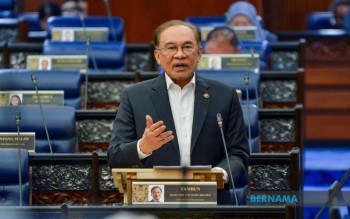
Malaysia's government is preparing to investigate the feasibility of building a strategic national petroleum reserve, signalling heightened concern about the country's vulnerability to international energy market disruptions and geopolitical tensions. Prime Minister Datuk Seri Anwar Ibrahim disclosed the decision following the first National Energy Council Meeting of 2026, held in Kuala Lumpur, emphasising that such a reserve would serve as a critical safeguard for long-term energy security at a time of unprecedented global uncertainty.
The initiative reflects the administration's broadening focus on energy independence as geopolitical risks intensify worldwide and supply chain vulnerabilities become increasingly apparent. By establishing a buffer stock of petroleum products, Malaysia would be better positioned to withstand sudden shocks to international energy markets, whether triggered by regional conflicts, sanctions regimes, or logistical breakdowns. This defensive strategy complements the country's existing renewable energy expansion plans and represents pragmatic acknowledgment that the transition away from fossil fuels will take decades, requiring simultaneous investment in both clean energy and traditional fuel security infrastructure.
According to Anwar, renewable energy capacity has surged to 31 per cent of the country's installed generation base as of December last year, demonstrating measurable progress in reducing Malaysia's reliance on coal-fired electricity. This advancement aligns with targets established in the National Energy Transition Roadmap and reflects successful execution of multiple competing priorities. The Corporate Renewable Energy Supply Scheme has emerged as a key enabler, particularly since the integration of Battery Energy Storage System technology now allows renewable installations to store excess power and release it during peak demand periods, addressing one of renewable energy's most significant limitations.
In parallel, the transport sector is undergoing substantial transformation through multiple channels. The nationwide rollout of B15 biodiesel—a fuel blend containing 15 per cent palm oil-based biodiesel—represents an intermediate step toward decarbonising Malaysia's vehicle fleet while supporting domestic agricultural interests. Petronas's construction of a biofuel production hub in Pengerang, Johor, will substantially increase local capacity for sustainable transport fuels and reduce import dependency. This investment signals confidence in biofuels' role within Malaysia's energy future, even as the government simultaneously pursues electrification pathways through other initiatives.
Public transport electrification has gained considerable momentum, with 250 electric buses now operating across Malaysian cities and rail infrastructure spanning 800 kilometres transitioning toward electric operation. These figures, while modest relative to total transport networks, represent tangible demonstration of committed investment and establish the foundation for accelerated rollout as battery technology costs decline further. The visibility of electric buses on Malaysian roads also serves an important psychological function, normalising zero-emission transport among urban commuters and building political support for continued infrastructure spending.
Sarawak is positioned to become a hydrogen energy hub, with the government directing considerable resources toward hydrogen development for the Autonomous Rapid Transit system planned for the state. Phase 1 completion is targeted for the end of 2026, transforming Sarawak into a testbed for hydrogen fuel cell applications in public transport. This regional focus reflects both Sarawak's energy resources and the federal government's strategy to distribute energy transition investments across Malaysia rather than concentrating them in peninsular locations.
The proposed petroleum reserve study arrives amid structural shifts in global energy markets and Malaysia's particular exposure to supply volatility. As a net petroleum exporter historically insulated from price spikes, Malaysia must now confront the reality that export-dependent economies remain vulnerable to international disruptions regardless of productive capacity. A strategic reserve would provide emergency supply capacity during crises while potentially generating economic returns during periods of stable markets through careful buying and selling operations.
Designing such a reserve presents significant technical and financial challenges. The government must determine optimal reserve size relative to consumption patterns, identify suitable storage locations (which require geological suitability and geographic distribution), secure adequate capital for construction and initial filling, and establish management frameworks balancing commercial considerations with strategic necessity. Peer experiences merit examination: the United States maintains the Strategic Petroleum Reserve containing roughly 400 million barrels, while India has developed considerably smaller reserves given fiscal constraints.
For Southeast Asian readers, Malaysia's strategic petroleum reserve initiative carries broader regional significance. Energy security preoccupies all regional governments confronting rapid electrification requirements, but Malaysia's approach combining reserve establishment with aggressive renewable investment and biofuel development offers a diversified model. Should the reserve prove effective at buffering market shocks while supporting transition goals, neighbouring countries may adopt similar strategies, collectively strengthening regional energy resilience against external pressures.
The energy transition roadmap now encompasses traditional security concerns alongside climate objectives, representing maturation of policy thinking that recognises decarbonisation cannot proceed at the expense of supply reliability. Malaysia's simultaneous pursuit of renewable expansion, alternative fuels, public transport electrification, and petroleum security reserves demonstrates sophisticated acknowledgment that energy policy must manage multiple competing imperatives across different timeframes. The petroleum reserve study will determine whether this approach withstands practical scrutiny and financial assessment.

