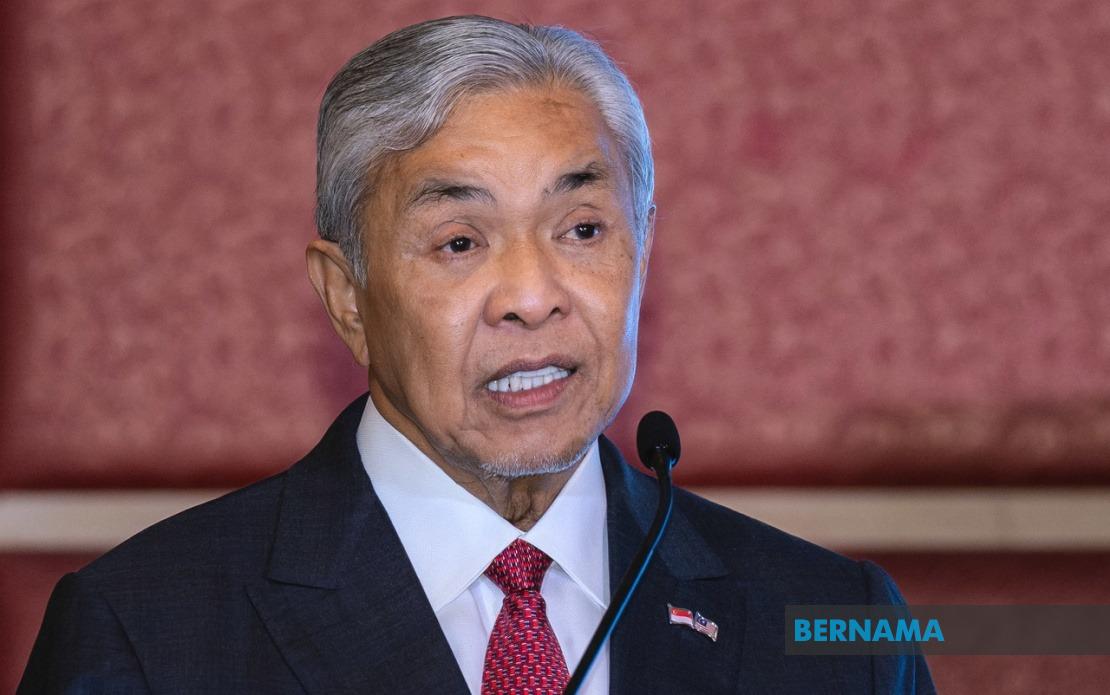
Malaysia is moving toward establishing an autonomous framework for administering refugees and asylum seekers, rejecting dependence on external organizations and international bodies. This shift reflects a deliberate policy decision enshrined in National Security Council Directive No. 23, which was formalized by Prime Minister Datuk Seri Anwar Ibrahim on June 14, 2023. Deputy Prime Minister Datuk Seri Dr Ahmad Zahid Hamidi outlined the government's vision during parliamentary proceedings, emphasizing that Malaysia's approach would be tailored to domestic circumstances while maintaining strict adherence to national sovereignty and security protocols.
The newly articulated mechanism represents a comprehensive overhaul of how Malaysia approaches one of Southeast Asia's most pressing humanitarian challenges. Rather than outsourcing responsibility to international organizations or relying on foreign entities, the framework positions the NSC as the central coordinating body, working under the Prime Minister's Department to orchestrate efforts across multiple government agencies and ministries. This vertical integration aims to eliminate jurisdictional ambiguities and ensure coherent policy implementation across different administrative levels. The directive establishes clear functional boundaries and responsibilities for each institution involved, from health and education authorities to law enforcement and social welfare agencies.
At the operational level, the Malaysian system prioritizes achieving equilibrium between law enforcement and humanitarian obligations. Ahmad Zahid stressed that effective refugee management cannot focus exclusively on security considerations at the expense of human welfare. The framework explicitly commits to extending eligible refugees access to essential services including healthcare, formal education opportunities, and controlled employment pathways. This inclusive approach acknowledges that vulnerable populations, when denied basic necessities, often resort to informal economy participation, human trafficking networks, or other illicit arrangements that ultimately compromise security objectives. By providing structured alternatives, the government aims to facilitate better integration and reduce the security risks associated with marginalized communities.
The policy framework also grapples with a persistent challenge facing Malaysian authorities: the enabling networks that facilitate irregular refugee movements and undocumented population growth. Ahmad Zahid identified local actors—landlords seeking rental income, employers exploiting cheap labour, and others profiting from informal arrangements—as significant obstacles to enforcement effectiveness. These enablers operate within Malaysian society and benefit from grey-zone activities that authorities struggle to regulate. The NSC Directive attempts to address this through strengthened coordination, though success will ultimately depend on sustained inter-agency cooperation and community awareness about the consequences of facilitating irregular population flows.
Malaysia's situation carries particular weight within the Southeast Asian context. The country currently hosts more than 126,000 registered Rohingya refugees, the largest displaced Muslim population in the region seeking protection from persecution in Myanmar. This substantial population represents both humanitarian responsibility and administrative complexity. The Refugee Registration Document system, recently implemented, provides a mechanism for identifying and tracking registered individuals, though the government acknowledges that unregistered populations likely exceed official figures. The NSC Directive builds upon this documentation infrastructure, seeking to transform registration from a static database into an active management tool.
The emphasis on policy coordination across multiple agencies reflects lessons learned from previous fragmented approaches. Healthcare provision, educational access, employment regulation, and security screening require simultaneous attention, yet different government departments historically operated with limited information-sharing or strategic alignment. The new framework mandates that welfare and social services access decisions incorporate security assessments, while enforcement operations account for humanitarian implications. This integrated approach should theoretically reduce contradictions where one agency's actions undermine another's objectives, though implementation will test institutional capacity for collaborative governance.
From a regional perspective, Malaysia's independent framework signals a recalibration of responsibility and autonomy. Rather than defaulting to UNHCR or other international mechanisms, the country is asserting sovereign capacity to manage its own refugee populations according to domestically determined standards. This approach carries both advantages and risks. Domestically controlled systems offer flexibility and cultural sensitivity but may lack international oversight or technical expertise. Malaysia's choice reflects confidence in institutional capacity while also indicating desire for greater control over immigration and security agendas that international frameworks sometimes challenge or complicate.
The policy coordination mechanism embedded in NSC Directive 23 attempts to balance competing interests within Malaysian society. Rural and regional development concerns, acknowledged through Ahmad Zahid's portfolio, intersect with refugee management as displaced populations concentrate in specific geographic areas, affecting local infrastructure and community dynamics. Economic concerns about labour market impacts and property values must coexist with recognition of refugees' humanitarian needs and contribution potential. The directive acknowledges these tensions explicitly rather than assuming they can be resolved through technical efficiency alone.
Looking forward, the success of Malaysia's independent mechanism will depend significantly on sustained political commitment and resource allocation. Establishing institutional capacity for comprehensive refugee management—from biometric registration to employment placement, from healthcare provision to security vetting—requires substantial investment and coordinated effort. The framework's effectiveness will ultimately be measured not merely by registration numbers or enforcement statistics, but by whether it genuinely improves outcomes for vulnerable populations while strengthening rather than compromising national security and social cohesion. For Malaysia and neighbouring countries wrestling with similar refugee populations, this independent approach represents a significant test of whether developing nations can effectively manage complex humanitarian responsibilities through domestic institutional innovation.

