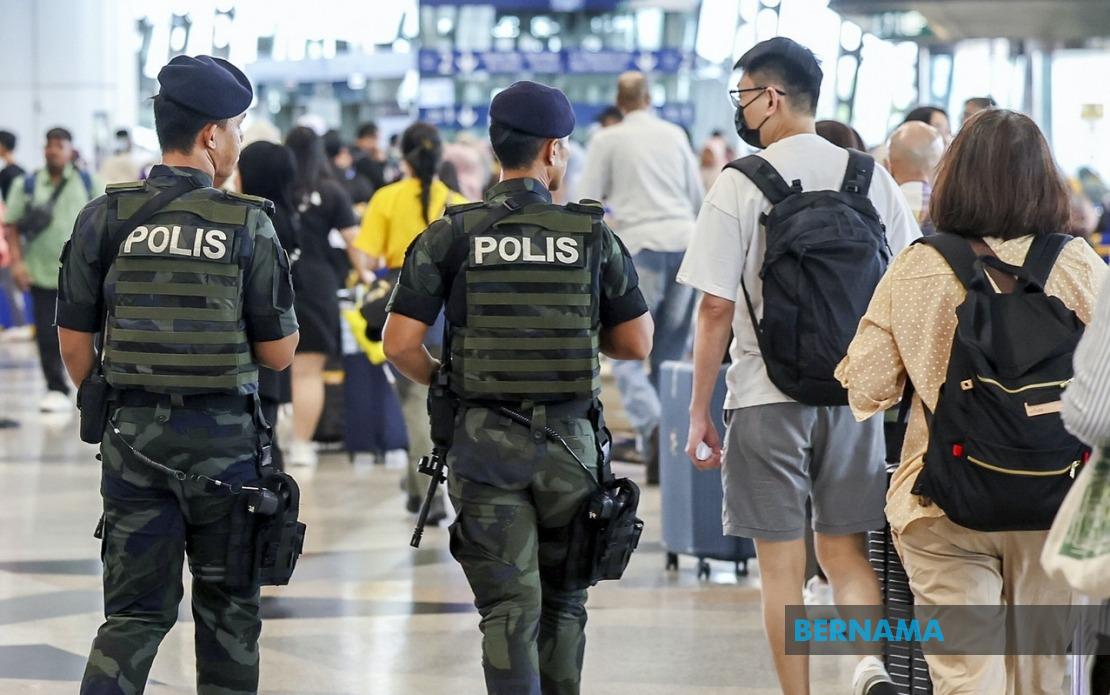
Malaysia's government will assign personnel from the Royal Malaysia Police to work directly within airport Aviation Security units, marking a significant shift in how the country manages aviation safety at its international terminals. Communications Minister Datuk Seri Fahmi Fadzil outlined the security enhancement during a weekly briefing in Putrajaya, revealing that both the Home Ministry and Transport Ministry presented the proposal to Cabinet following a high-profile incident that has raised concerns about potential gaps in existing protocols.
The decision stems from the recent arrest of a 39-year-old Malaysian pilot at Jakarta's Soekarno-Hatta International Airport, where Indonesian authorities apprehended him on suspicion of attempting to smuggle drugs through the facility. Indonesian National Police discovered 15 packages during the inspection, containing approximately 70,114 capsules of ecstasy and methamphetamine with an estimated street value of RM45 million based on local market rates. The incident has prompted Malaysia to conduct a comprehensive review of its airport security framework and the vetting processes used for aviation personnel.
Currently, Malaysia's AVSEC units are staffed primarily by auxiliary police personnel rather than full-fledged Royal Malaysia Police officers. This staffing arrangement has come under scrutiny following the pilot's arrest, with authorities now recognising that deploying trained PDRM personnel could provide enhanced oversight and stronger enforcement capabilities. The transition represents an immediate corrective action that Malaysia's security agencies believe will create a more robust first line of defence against potential security threats at the nation's airports.
Beyond the deployment initiative, Malaysia Aviation Group has been instructed to conduct a thorough evaluation of its recruitment screening and health assessment procedures for both pilots and co-pilots. These protocols will be tightened to identify any potential risks earlier in the employment cycle. The aviation sector is particularly sensitive to security concerns, as pilots occupy positions of considerable responsibility and access to critical infrastructure, making their background verification essential to maintaining public confidence in aviation safety.
The Royal Malaysia Police and the Malaysian Border Control and Protection Agency have received separate directives to conduct systematic examinations of the security infrastructure at airports. These reviews aim to identify weaknesses, potential loopholes, or procedural gaps that could be exploited by individuals seeking to bypass existing safeguards. Once identified, authorities are expected to implement corrective measures swiftly to prevent similar incidents from occurring in Malaysian territory.
Fahmi indicated that while Cabinet has approved these immediate measures, the government is still evaluating whether to establish a dedicated special investigation team to probe the details of the Indonesian case. He noted that authorities have only received preliminary oral briefings from ministerial officials, and the ongoing investigation in Indonesia necessitates a cautious approach until comprehensive documentation is available. Understanding the full scope of the incident, including identification of potential collaborators or networks involved, will inform the government's subsequent policy decisions.
The investigation phase will focus on determining who may have been complicit in the attempted smuggling operation and ensuring that all responsible parties face appropriate legal consequences. Malaysian authorities recognise that addressing the immediate security vulnerability is only one component of a broader response; understanding the motivations, networks, and operational methods behind such attempts will help prevent future occurrences. The government has committed to implementing comprehensive measures that address not just the symptom but the underlying systemic weaknesses that allowed such an attempt to progress.
For Malaysia's aviation sector, the pilot's arrest raises important questions about how well current protocols can detect individuals who may have been compromised or coerced into participating in illegal activities. The fact that a licensed pilot was allegedly involved suggests that existing character assessments and periodic monitoring systems may require enhancement. By strengthening AVSEC with full police personnel and mandating more rigorous screening protocols, Malaysia aims to create multiple layers of verification that catch potential security threats before they materialise into incidents.
The timing of this security review reflects broader regional concerns about transnational drug trafficking and the use of commercial aviation infrastructure by smuggling networks. Southeast Asia remains a strategic corridor for narcotics distribution, with criminal organisations constantly adapting their methods to evade detection. Malaysia's response signals to both its citizens and international partners that the country takes these threats seriously and is willing to invest resources in upgraded security measures.
Regionally, Malaysia's actions may influence how other ASEAN nations approach aviation security, particularly regarding the staffing and authority levels of airport security personnel. The incident demonstrates that auxiliary personnel may lack the training, authority, or investigative capabilities needed to respond effectively to complex security situations. By transitioning to full police deployment, Malaysia is establishing a precedent that may prompt neighbouring countries to reassess their own security frameworks.
The government's measured approach to the investigation—waiting for comprehensive reports before making sweeping decisions—reflects institutional caution but also recognition that premature conclusions could obscure important details. However, the immediate deployment of police personnel to AVSEC units and the mandated security reviews signal that Malaysia is taking preventive action while the investigation proceeds. This balanced response aims to restore public confidence in airport security while ensuring that longer-term systemic improvements are evidence-based and comprehensively targeted.
For Malaysian travellers and the aviation industry, these measures should provide reassurance that the government is responding constructively to security vulnerabilities. The involvement of both the police and specialised border agencies in the review process ensures that improvements will be grounded in operational expertise. As the Indonesian investigation continues, Malaysia's authorities will likely gather additional insights that could inform further refinements to screening protocols, staff training requirements, and technological capabilities at airports nationwide.

