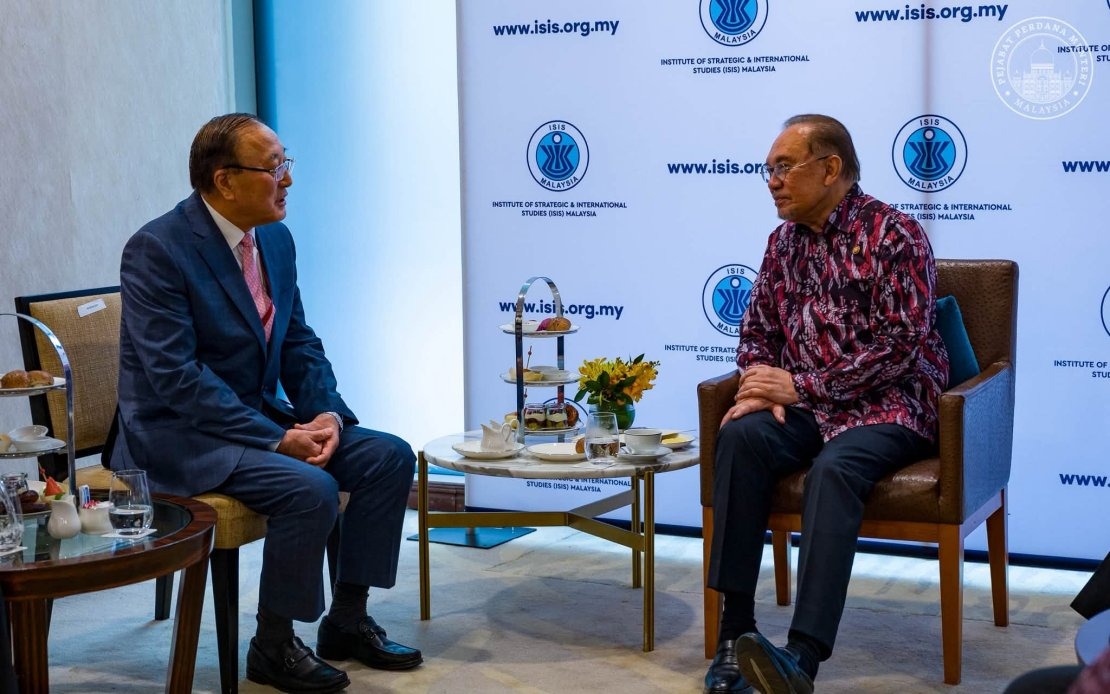
Prime Minister Datuk Seri Anwar Ibrahim has committed Malaysia to a comprehensive deepening of engagement with the Boao Forum for Asia (BFA), signalling the country's intention to leverage the regional platform for addressing shared economic and technological challenges. During a recent meeting with BFA secretary-general Zhang Jun, Anwar outlined a broad agenda encompassing trade and investment facilitation, digital transformation initiatives, artificial intelligence development, energy transition programmes, food security measures, and education and talent development schemes. The announcement reflects Malaysia's strategic positioning within Asia's evolving economic architecture at a time of mounting geopolitical complexity and technological disruption across the region.
The Boao Forum for Asia, established in 2001 and often referred to as Asia's equivalent to the World Economic Forum, serves as a crucial platform for high-level dialogue among political leaders, business executives, and academic thinkers across the continent. Malaysia's strengthened commitment to the organisation comes against the backdrop of unprecedented regional tensions, trade friction between major powers, and the urgent need for collective action on interconnected challenges ranging from climate change to pandemic preparedness. Anwar's emphasis on partnership with BFA underscores how Kuala Lumpur views multilateral engagement as essential to navigating these turbulent conditions.
Among the priority areas flagged by the Prime Minister, digital transformation and artificial intelligence merit particular attention for Malaysia's development trajectory. The country has positioned itself as a Southeast Asian hub for technology and innovation, with significant investments in digital infrastructure and AI research initiatives across both public and private sectors. Enhanced cooperation with BFA could facilitate knowledge transfer, attract foreign direct investment in high-tech industries, and enable Malaysian companies and researchers to participate in cutting-edge regional projects. The BFA's convening power allows Malaysia to benchmark its progress against other Asian economies and learn from best practices in rapidly evolving fields where competitive advantage is ephemeral.
Energy transition emerged as another critical pillar in the cooperation framework. Malaysia, as a hydrocarbon producer with substantial oil and gas reserves, faces the dual challenge of managing a legitimate transition away from fossil fuel dependence while leveraging existing infrastructure and expertise. Collaborative platforms like BFA enable policymakers and industry leaders to explore renewable energy solutions, carbon pricing mechanisms, and investment frameworks that balance economic imperatives with environmental sustainability. For a region heavily dependent on energy imports and increasingly vulnerable to supply shocks, coordinated regional approaches to energy security are strategically vital.
Food security represents an underappreciated dimension of Malaysia's regional strategy, particularly given Southeast Asia's exposure to climate volatility and global agricultural market fluctuations. The region's growing middle class and rising living standards are driving food demand at a time when traditional suppliers face production challenges. Through BFA collaboration, Malaysia can participate in discussions about sustainable agricultural practices, supply chain resilience, and regional food systems that reduce vulnerability to international price shocks. This is especially relevant for a country that imports substantial portions of its staple foods despite possessing agricultural capacity.
The emphasis on education and talent development reflects Malaysia's recognition that human capital represents the most durable competitive advantage in an increasingly knowledge-intensive regional economy. BFA provides a venue for Malaysia to engage with regional counterparts on curriculum design, vocational training standards, and labour market alignment. Youth unemployment and skills mismatches remain persistent concerns across Southeast Asia, and coordinated regional approaches to talent development could address structural economic challenges while creating pathways for young Malaysians to access opportunities across the broader Asian market.
Anwar's statement that regional cooperation must be "inclusive" and "dialogue-based" carries particular significance given current geopolitical fault lines. By emphasising these principles, the Prime Minister is positioning Malaysia as an advocate for multilateralism and pluralistic engagement at a time when bilateral tensions and great-power competition threaten to fragment regional coherence. This stance aligns with Malaysia's historical commitment to non-aligned principles and its membership in various regional organisations spanning ASEAN, the Regional Comprehensive Economic Partnership, and the East Asia Summit framework.
The timing of the BFA visit and Anwar's subsequent announcement reflects Malaysia's proactive approach to international engagement. Rather than passively responding to external pressures, the government is actively shaping regional narratives and participating in agenda-setting forums that influence Asian development trajectories. For Malaysian businesses and policymakers, access to BFA networks creates opportunities for market intelligence, investment partnerships, and policy coordination that can enhance competitive positioning.
As Finance Minister in addition to his Prime Ministerial role, Anwar's involvement in BFA engagement underscores the economic dimensions of these partnerships. Trade and investment facilitation remain fundamental to regional prosperity, and Malaysia's participation in BFA discussions on financial cooperation, digital payments, and infrastructure investment directly impacts the country's ability to attract capital and expand market access. The forum's emphasis on solving practical economic problems through regional solutions resonates with Malaysia's own development priorities.
The stated objective to strengthen regional resilience through this cooperation framework speaks to a fundamental reorientation of how Asian nations view collective action. Resilience implies not merely weathering external shocks but building adaptive capacity to respond to unforeseen challenges. For Malaysia, embedded in one of the world's most dynamic yet fragile regions, participation in BFA initiatives on crisis prevention, pandemic preparedness, and economic stabilisation mechanisms represents prudent strategic insurance.
Looking ahead, the effectiveness of Malaysia's BFA engagement will depend on translating high-level commitments into concrete institutional mechanisms and measurable outcomes. The breadth of cooperation areas outlined by Anwar suggests ambition, but implementation requires sustained bureaucratic capacity, adequate resource allocation, and genuine commitment to regional solutions that sometimes constrain national autonomy. Southeast Asian governments often find that multilateral engagement demands difficult trade-offs between national preferences and regional consensus.

