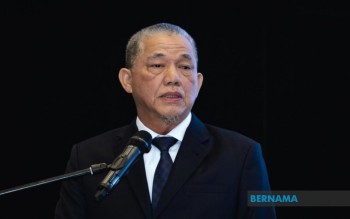
Deputy Prime Minister Datuk Seri Fadillah Yusof has announced Malaysia's intention to transform decommissioned coal power plant locations into renewable energy hubs and battery energy storage facilities through a comprehensive National Coal Site Repurposing Framework. Speaking at the World Economic Forum's "Malaysia's Energy Future: Power Sector Decarbonisation Deep Dive" event in Kuala Lumpur, Fadillah, who also serves as Energy Transition and Water Transformation Minister, outlined how the country's extensive coal infrastructure could be repurposed rather than abandoned as the nation moves away from fossil fuels.
The framework recognises that retiring coal-fired power plants represent far more than aging industrial facilities. These sites encompass substantial physical and strategic assets, including established transmission networks, industrial infrastructure, and land holdings positioned in locations selected for energy production for decades. Rather than allowing these assets to deteriorate into economic liabilities, Malaysia views them as platforms for developing new industries and attracting investment capital during the nation's shift toward cleaner energy sources.
Fadillah emphasised that the repurposing initiative addresses a fundamental challenge of energy transitions: managing stranded assets productively. Several coal plant locations possess inherent advantages for renewable energy development, including existing grid connections, transmission capacity, and workforce expertise. Battery energy storage systems and other clean energy installations could occupy these same sites, enabling them to remain economically productive while eliminating fossil fuel generation. This approach transforms what could be costly brownfield remediation into opportunity for value creation.
The proposed framework, developed in collaboration with the World Economic Forum's recent insight paper titled "Beyond Coal: Building a Flexible, Resilient and Clean Power System for Malaysia", establishes a structured mechanism for ongoing dialogue between government authorities, regulatory bodies, utility companies, investors, and affected communities. This multi-stakeholder engagement model recognises that successful repurposing depends on aligning diverse interests and building confidence across all parties involved in Malaysia's energy transformation.
According to Fadillah, each coal power station closure presents distinct economic opportunities beyond energy generation. Retiring sites can catalyse new industrial clusters, drive investment flows into regions dependent on coal-related employment, and furnish training grounds for workforce development aligned with future economic needs. This localised economic dimension is particularly significant for communities historically reliant on coal industry jobs, providing pathways for economic diversification rather than simple contraction.
Malaysia has committed to several interrelated targets that shape the coal repurposing strategy. The nation will not construct additional coal-fired capacity, plans to phase out coal-based electricity generation by 2044, and targets achieving 70 per cent renewable energy installed capacity by 2050. These commitments represent substantial infrastructure transformation spanning two decades, requiring systematic planning to manage the transition smoothly while maintaining grid stability and energy security.
A critical concern underpinning Fadillah's remarks involves preventing one energy dependency from merely shifting into another. Without sufficiently rapid renewable deployment, Malaysia risks replacing coal reliance with excessive dependence on imported liquefied natural gas, exposing the economy to international price volatility and geopolitical supply risks. This consideration shapes the timing and sequencing of coal retirement and renewable expansion—renewable capacity must grow faster than coal capacity shrinks to avoid creating temporary vulnerability to external energy market disruptions.
The government is pursuing multiple complementary strategies to ensure renewable deployment outpaces coal retirement. Large-scale solar projects, the Corporate Renewable Energy Supply Scheme, battery energy storage systems, and smart grid modernisation initiatives collectively strengthen renewable capacity while improving grid flexibility and reliability. These measures work synergistically, with battery storage addressing intermittency challenges and smart grid technology enabling efficient distribution of variable renewable generation across Malaysia's transmission network.
Beyond national initiatives, Fadillah reaffirmed Malaysia's commitment to advancing regional energy cooperation through the ASEAN Power Grid and expanding cross-border electricity trade. These mechanisms strengthen the entire Southeast Asian region's energy security by facilitating renewable energy integration across borders and enabling load balancing across larger geographic areas. Greater regional electricity trading also supports smaller nations' renewable transitions by permitting them to leverage neighbouring countries' renewable resources and capacity reserves.
Alongside renewable energy development, Malaysia remains open to exploring advanced low-carbon energy technologies, including next-generation nuclear systems and small modular reactors. Fadillah stressed that any consideration of nuclear energy must prioritise rigorous safety standards, sophisticated governance frameworks, regulatory readiness, and sustained public engagement. This measured approach acknowledges nuclear technology's potential climate benefits while respecting legitimate public concerns about safety and waste management.
The coal repurposing framework represents a pragmatic policy response to the intersection of climate objectives, economic development, and energy security. By transforming retiring coal plants into renewable energy infrastructure nodes, Malaysia can manage its energy transition without abandoning communities and regions dependent on coal sector employment. The approach recognises that successful decarbonisation requires not just eliminating fossil fuels but actively constructing alternative economic foundations in affected areas, ensuring the transition generates rather than destroys opportunity.

