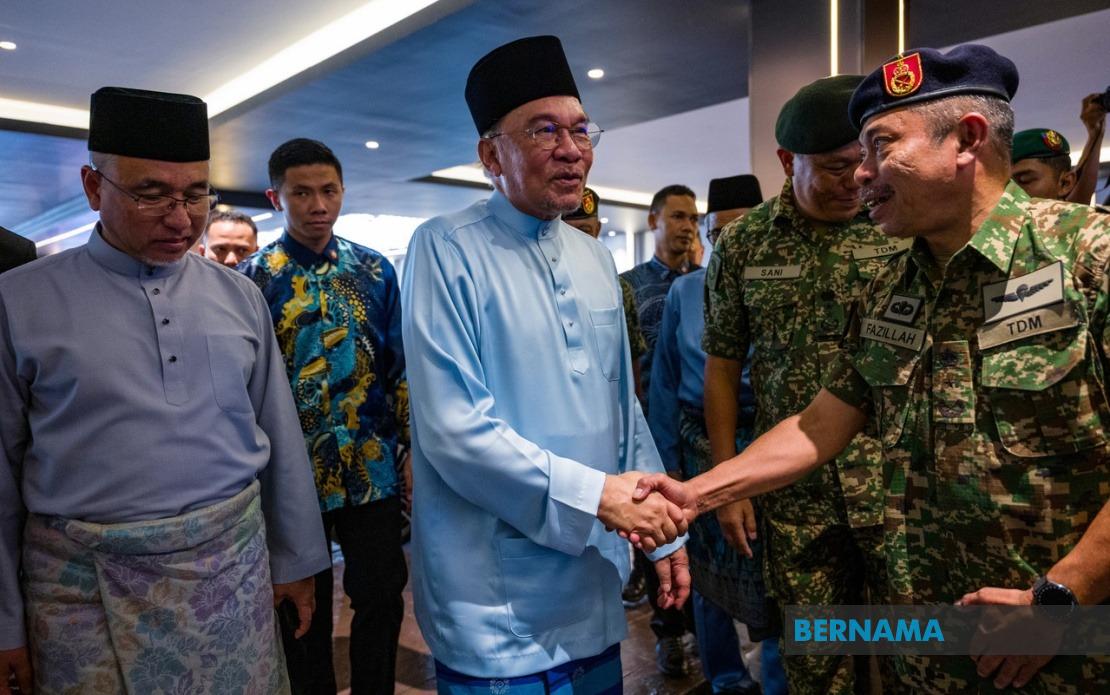
The Malaysian government is preparing to inject additional resources into the defence sector through the 2027 budget cycle, with Prime Minister Datuk Seri Anwar Ibrahim committing to expanded military spending that reflects Kuala Lumpur's determination to maintain and upgrade its armed capabilities. The initiative, announced during a Semarak Kenegaraan Programme event at Terendak Camp in Melaka, underscores renewed attention to defence modernisation at a time when regional security dynamics continue to evolve across Southeast Asia. As Finance Minister, Anwar's dual portfolio positions him to advocate directly for increased defence resources within the broader fiscal framework, signalling political backing for the Malaysian Armed Forces at the highest level of government.
Chief of Defence Force General Tan Sri Malek Razak Sulaiman welcomed the budgetary commitment, framing it as evidence of sustained government support for the MAF's strategic development agenda. He emphasized that enhanced funding would facilitate the modernisation of military assets and equipment in accordance with the organisation's Future Force strategic development plan, a multi-year initiative designed to transform the armed forces into a more capable and integrated defence apparatus. The CDF's public endorsement carries weight within military circles and lends institutional credibility to the government's defence priorities, suggesting alignment between civilian leadership and senior defence personnel on modernisation objectives.
Beyond equipment acquisition and technological upgrades, the increased allocation addresses a persistent challenge within Malaysia's defence establishment: personnel retention and morale. The government plans to channel funds toward housing improvements, hospital construction, and maintenance of essential utilities such as water supply at military installations. These quality-of-life enhancements represent an acknowledgment that attracting and retaining skilled service members requires competitive conditions and dignified living standards. For Malaysian servicemen and women, better accommodation and healthcare facilities carry immediate practical significance, while such investments also signal broader governmental respect for military personnel and their families.
The timing of this defence spending initiative reflects Malaysia's strategic position within a region experiencing incremental security challenges. The South China Sea remains contested territory, maritime boundaries remain subject to competing claims, and non-traditional security threats including cybersecurity vulnerabilities and transnational crime persist. A modern, well-equipped armed forces capable of rapid response and coordinated operations enhances Malaysia's ability to protect national interests, support regional stability mechanisms, and participate credibly in multilateral defence arrangements. Neighbouring countries including Singapore, Thailand, and Indonesia have pursued military modernisation programmes in recent years, creating subtle pressure for Malaysia to maintain technological parity within the regional balance.
The announcement also addresses personnel advancement through simplification and acceleration of promotion procedures for MAF and Royal Malaysia Police staff. Streamlining career progression aligns with public service reform efforts and may improve retention of experienced personnel by creating clearer pathways toward senior appointments. Such administrative changes, while less visible than hardware procurement, influence organisational effectiveness significantly by enabling merit-based advancement and reducing bureaucratic delays that can frustrate capable officers. The reform applies across both military and police establishments, indicating whole-of-government commitment to modernising personnel management across security agencies.
Defence spending allocation remains politically sensitive in Malaysia, where demographic diversity and competing development priorities create ongoing debates about resource distribution. Health, education, and infrastructure projects command substantial public attention and electoral significance, potentially generating questions about prioritising defence expenditure. However, framing the defence increase within broader security assurance and personnel welfare creates a more comprehensive narrative than purely military modernisation. The government's emphasis on soldier accommodation and hospital construction attempts to demonstrate that defence investment produces tangible community benefits beyond weapons systems and technology, appealing to constituencies concerned with human welfare dimensions of public spending.
The Future Force strategic development plan mentioned by General Malek Razak represents a multi-year vision that will shape Malaysian defence capabilities well into the 2030s. Adequate budget allocation remains prerequisite for realising this strategic roadmap; without sustained funding commitment, ambitious modernisation objectives risk remaining aspirational rather than achievable. The 2027 budget announcement provides one building block within this longer trajectory, though future governments and fiscal conditions will determine whether momentum continues or procurement plans face delays and scope reduction.
From a regional perspective, Malaysia's defence modernisation efforts contribute to overall Southeast Asian security architecture. The country serves important roles within ASEAN frameworks, participates in multilateral maritime security arrangements, and maintains bilateral defence relationships with major powers. A more capable Malaysian military strengthens the region's collective ability to address transnational security challenges and maintain freedom of navigation principles that underpin regional prosperity. Conversely, Malaysian defence weaknesses create potential vacuums that competing powers might exploit, a consideration influencing regional dynamics from the South China Sea to the Strait of Malacca.
The government's willingness to increase defence spending during a period of fiscal constraints and competing budgetary demands suggests clear prioritisation of security preparedness. Budget 2027 negotiations typically involve intense interagency competition for limited resources; securing additional defence allocation requires effective advocacy and demonstrated necessity. Anwar's personal commitment to this cause, combined with support from defence leadership, created conditions for success. The announcement therefore represents both substantive policy commitment and successful bureaucratic navigation within Malaysia's budgeting process.
Looking forward, implementation execution will determine whether this budgetary commitment delivers intended modernisation outcomes. Procurement processes in defence establishments frequently experience delays and cost escalations; Malaysian defence procurement has historically faced such challenges. Transparency and effective project management will be essential for converting budget allocations into operational capabilities. The government's focus on personnel welfare alongside equipment modernisation positions the initiative holistically, recognising that military effectiveness depends equally on dedicated personnel and advanced technology.

