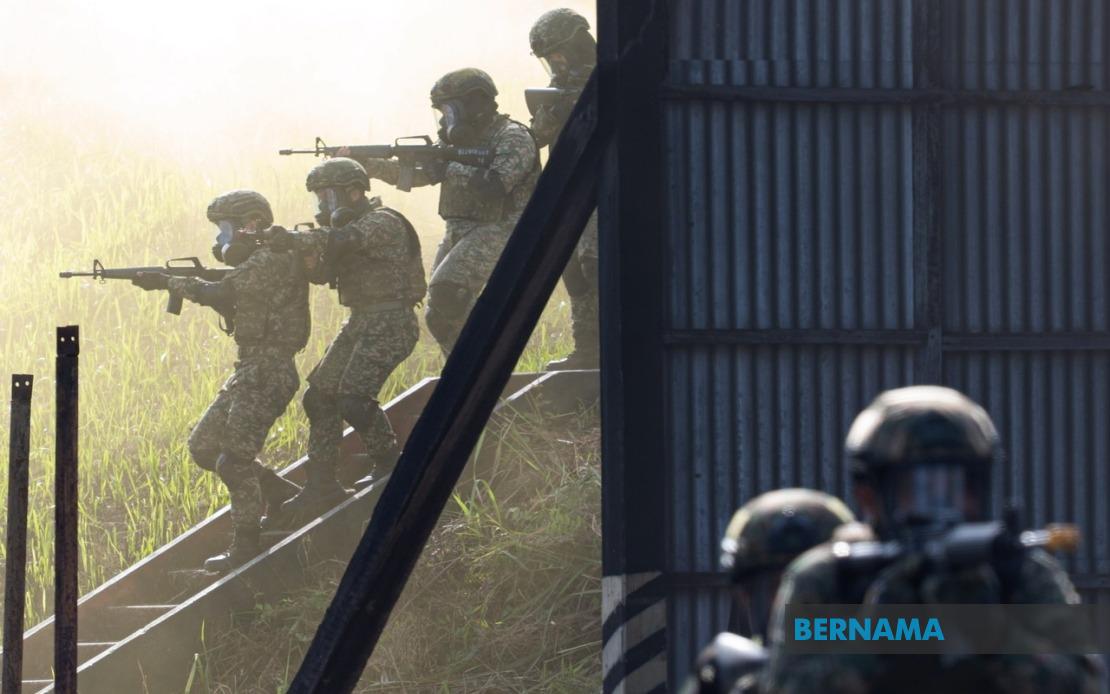
Prime Minister Datuk Seri Anwar Ibrahim has committed to securing a larger defence allocation in the 2027 budget, underscoring the government's determination to sustain the readiness of Malaysia's military establishment and elevate living standards for service personnel. Speaking in Melaka on August 7, the Prime Minister, who also holds the Finance portfolio, framed the budgetary increase as essential to safeguarding the nation's security and prosperity, characterizing national peace as Malaysia's most invaluable resource.
Anwar's pledge arrives against a backdrop of heightened regional security considerations and reflects the administration's strategic calculus regarding defence investments. His emphasis on preparedness resonates with broader Southeast Asian concerns about geopolitical stability, particularly given maritime tensions and evolving power dynamics in the region. The commitment signals that Kuala Lumpur is taking seriously its obligation to maintain military capabilities that can deter potential threats without waiting for crises to materialize.
Crucially, the Prime Minister stressed that procurement decisions must prioritize transparency and accountability, explicitly rejecting practices involving inflated commissions or middlemen profiteering in defence acquisitions. This undertaking carries significant weight in Malaysia's context, where defence spending has historically attracted scrutiny regarding value for money and potential misuse. By publicly stating this principle, Anwar is positioning the government as committed to restoring public confidence in how taxpayer funds are deployed within the security apparatus.
The MADANI administration has already expanded defence spending substantially during its tenure. Over the preceding three years, the Defence Ministry's budget allocation had grown by more than 35 percent, though Anwar acknowledged this achievement remains insufficiently communicated to the public. This informational gap underscores a broader challenge facing the government: translating material improvements in military infrastructure into tangible public awareness and support.
The proposed 2027 allocation encompasses multiple dimensions of military welfare and operational capability. Enhanced accommodation for armed forces personnel, construction of modern medical facilities, and upgrades to critical infrastructure such as water supply systems all figure in the spending roadmap. These improvements reflect recognition that military effectiveness depends not merely on weaponry but equally on personnel morale and retention, factors directly influenced by living conditions and healthcare standards.
Malaysia's improving macroeconomic environment provides the fiscal breathing room for such ambitions. Anwar highlighted that stronger ringgit performance, expanding foreign direct investment flows, and controlled inflationary pressures have created conditions permitting consideration of elevated defence spending without compromising other budgetary priorities. This economic context matters significantly for Southeast Asia, as Malaysia's ability to invest in security infrastructure contributes to regional stability.
The announcement occurred during a ceremonial occasion in Melaka attended by senior government officials and military commanders, including Minister in the Prime Minister's Department (Religious Affairs) Senator Dr Zulkifli Hasan, Deputy Defence Minister Adly Zahari, Chief Secretary to the Government Tan Sri Shamsul Azri Abu Bakar, and Army Chief General Tan Sri Azhan Md Othman. Their collective presence underscored the administration's seriousness regarding defence sector modernization.
Beyond the headline allocation increase, Anwar announced targeted funding commitments addressing immediate welfare concerns. Armed Forces Family Welfare Association would receive RM147,000, while RM1 million was designated for maintaining prayer facilities across four military installations in Melaka—Terendak, Sungai Udang, Masjid Tanah, and Bukit Beruang. These disbursements, though numerically modest relative to overall defence budgets, acknowledge the holistic nature of personnel welfare encompassing spiritual and family dimensions.
The formal presentation of Budget 2027 to the Dewan Rakyat is scheduled for October 9, providing Parliament with the detailed specifications of proposed defence expenditures. This timeline permits public discourse and legislative scrutiny before allocations are finalized, maintaining democratic oversight of security spending. The intervening months will likely generate discussion about whether the budgeted increase adequately addresses evolving security challenges or requires further adjustment.
For Malaysian stakeholders, this commitment carries implications extending beyond pure defence mathematics. A well-equipped, professionally maintained military force contributes to domestic security, supports maritime domain awareness in contested waters, and enhances Malaysia's capacity to participate meaningfully in regional security arrangements. Conversely, underfunded military establishments risk capability degradation that could invite unwanted external attention or undermine confidence in the state's ability to protect citizens and national interests.
The emphasis on transparent procurement represents an attempt to square a difficult circle: increasing defence spending while simultaneously addressing historical concerns about wastage and corruption. Successfully executing this balance would demonstrate that the government can manage large-scale security investments responsibly—a demonstration carrying value beyond the defence sector itself, potentially influencing public confidence in government stewardship broadly.
Regionally, Malaysia's defence posture intersects with broader Southeast Asian security dynamics. Nations across the region are reassessing military capabilities amid great power competition and strategic flux. Malaysia's decision to enhance its armed forces aligns it with neighboring countries pursuing similar modernization trajectories, reflecting shared recognition that maintaining credible deterrent capacity serves long-term stability interests.

