Prime Minister Datuk Seri Anwar Ibrahim has announced that the government intends to amend the Tabung Haji Act 1995 to reinforce confidence among Muslim depositors and address long-standing governance concerns surrounding the institution. Speaking in his capacity as both Prime Minister and Finance Minister, Anwar framed the legislative revision as part of a broader commitment by the MADANI Government to fortify institutional oversight and remedy systemic vulnerabilities that have accumulated over time. The proposed amendment signals recognition that Tabung Haji, Malaysia's largest Islamic financial institution serving millions of Muslim pilgrims and savers, requires updated statutory frameworks to maintain public trust in an increasingly complex financial environment.
The Tabung Haji has faced considerable scrutiny in recent years, with stakeholders expressing concerns about fund management practices, investment decisions, and operational transparency. The institution manages savings contributed by Malaysian Muslims preparing for the Hajj pilgrimage to Mecca, making it not merely a financial entity but a repository of religious obligation and personal sacrifice. An amendment to the foundational legislation would enable the government to introduce stricter accountability measures, enhanced auditing protocols, and clearer governance standards that reflect contemporary expectations of institutional management. This move comes as Malaysian society increasingly demands greater transparency from public and quasi-public institutions, a sentiment that crosses demographic and political boundaries.
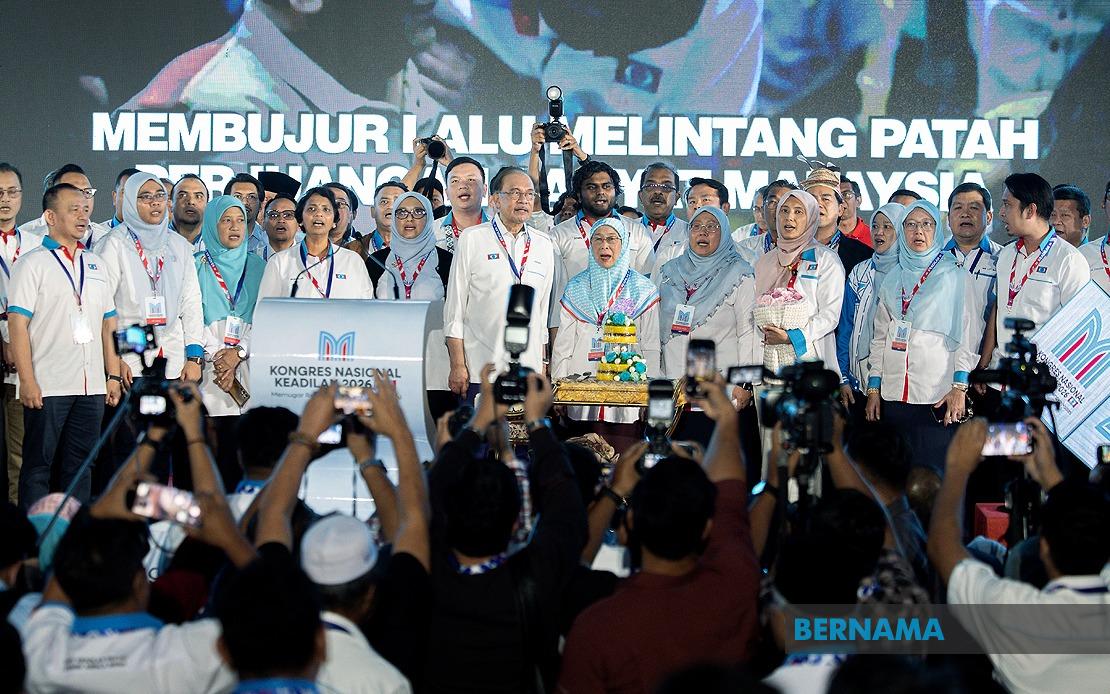
Anwar's statement was delivered during the 2026 Parti Keadilan Rakyat National Congress, where he emphasised that his administration's reform agenda extends beyond individual legislative adjustments to encompass a comprehensive recalibration of how state institutions function. The Prime Minister stressed that governance strengthening must be pursued relentlessly, with institutional weaknesses addressed decisively rather than tolerated. This framing suggests that amendments to Tabung Haji form part of a wider programme of institutional housekeeping under the MADANI framework, which has positioned itself as a governance-focused administration distinct from its predecessors.
In parallel with the Tabung Haji announcement, Anwar called for the complete repeal of the Universities and University Colleges Act (AUKU) 1971 without replacement by alternative legislation that would maintain restrictions on student freedom of expression and political participation. This dual legislative agenda—reforming financial institutions whilst liberalising restrictions on university students—reflects a coherent philosophy emphasising institutional accountability combined with expanded civic freedoms. The AUKU repeal would represent a significant shift in Malaysian higher education policy, potentially allowing student unions and organisations to operate with greater autonomy and enabling campus political discourse previously constrained by the statute.
For Malaysian Muslims and savers with funds in Tabung Haji, the proposed amendment carries tangible implications. Enhanced legislative safeguards could translate into more robust mechanisms for protecting accumulated savings, clearer investment policies, and improved dispute resolution pathways for members with grievances. Given that Tabung Haji holds billions of ringgit in deposits from millions of Malaysians, the institutional reforms would affect a substantial cross-section of the Muslim population across all income and educational strata. The amendment also addresses concerns that previous governance structures did not adequately reflect the fiduciary obligations owed to ordinary savers whose contributions represent significant portions of household savings.
Anwar's emphasis on safeguarding Muslim trust through legislative amendment also carries symbolic weight within Malaysian politics. By positioning the Tabung Haji reforms as a matter of principle rather than routine administrative adjustment, the Prime Minister signals that protecting religious and community institutions from mismanagement constitutes a core government responsibility. This approach acknowledges that trust in Islamic financial institutions cannot be taken for granted and must be actively cultivated through demonstrable governance improvements and transparent institutional practice.
The timing of these announcements during the PKR National Congress underscores Anwar's attempt to consolidate his party's ideological positioning around themes of institutional reform, anti-corruption, and expanded freedoms. Anwar reiterated that PKR remains committed to principles rather than expediency, and that political power constitutes a trust to serve citizens rather than an instrument for enrichment. He stressed that party discipline and organisational cohesion must serve the cause of public interest rather than factional advantage, positioning the party as ideologically distinct from approaches that weaponise institutions for partisan benefit.
From a Southeast Asian perspective, Malaysia's legislative overhauls reflect broader regional trends concerning governance quality and institutional legitimacy. Countries across the region have increasingly recognised that public confidence in state institutions depends upon demonstrable reforms addressing documented weaknesses. The proposed amendments to Tabung Haji and AUKU reflect Malaysian policymakers' understanding that institutional credibility cannot be merely declared but must be actively built through legislative reform and operational improvement.
Anwar further articulated a vision of national governance transcending political divisions, asserting that government responsibility extends equally to opposition-controlled states and populations that did not vote for the ruling coalition. This rhetoric, whilst familiar in democratic systems, carries particular significance in Malaysia's polarised political environment. By framing institutional reform as a benefit to all Malaysians regardless of political affiliation or geographical location, Anwar positions the MADANI Government as pursuing a genuinely national rather than factional agenda.
The amendment process for both the Tabung Haji Act and AUKU will require parliamentary approval, providing an opportunity for opposition scrutiny and public debate. The legislative journey ahead will reveal whether institutional reform rhetoric translates into substantive statutory change and whether subsequent operational practice aligns with reformed institutional mandates. For Malaysian Muslims dependent on Tabung Haji savings and for university students whose freedoms would expand under AUKU repeal, the coming months will determine whether these announced reforms materialise into tangible protections and expanded rights.
Ultimately, Anwar's announcements reflect an administration attempting to consolidate legitimacy through institutional reform and perceived commitment to principles over expediency. Whether these reforms achieve their stated objectives of strengthening public trust and improving governance will depend upon sustained political commitment, adequate resource allocation, and rigorous monitoring of implementation. The amendments represent one test case of whether the MADANI Government can translate governance rhetoric into demonstrable institutional improvement, a challenge that will shape public confidence in Malaysian institutions for years ahead.

