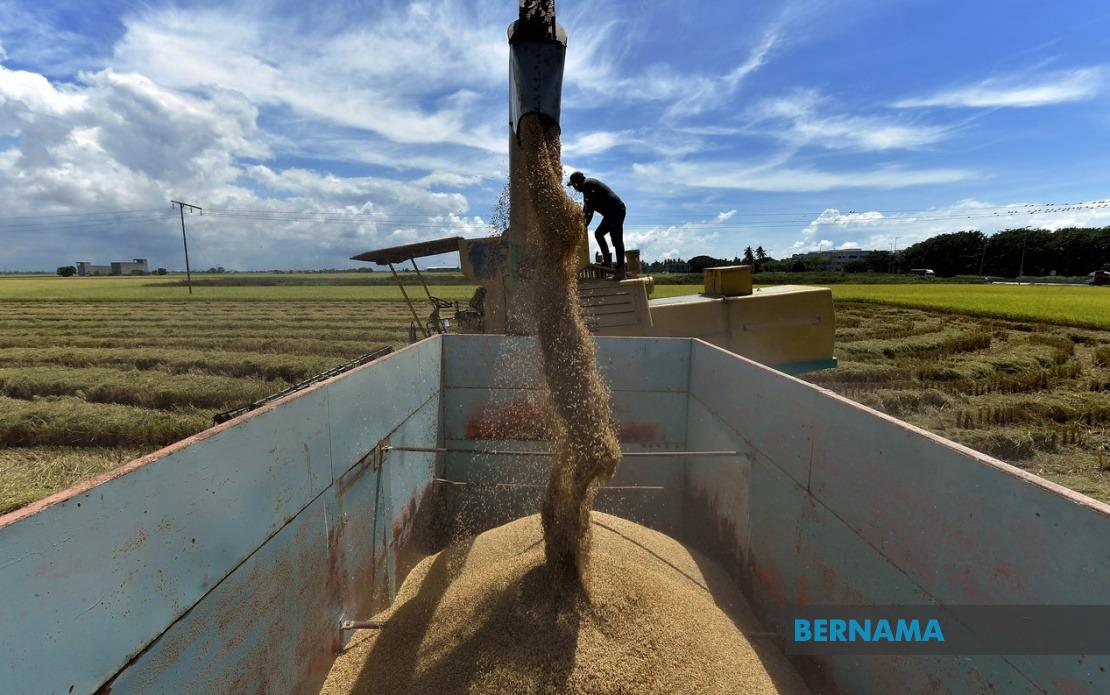
The Malaysian government has moved swiftly to expand its regulatory grip over the domestic rice market by tabling the Control of Padi and Rice Act (Amendment) Bill 2026 for its first reading in Parliament on July 7. Agriculture and Food Security Minister Datuk Seri Mohamad Sabu signalled that the government intends to expedite the legislative process, with both second and third readings scheduled for the current parliamentary sitting. This accelerated timeline reflects the administration's determination to modernise a statute that has governed Malaysia's rice sector since its original enactment as Act 522.
The amendment package comprises five substantive clauses designed to recalibrate enforcement mechanisms and administrative authority within the rice supply chain. The most visibly dramatic changes affect the penalty regime, which appears calibrated to deter significant market infractions and corporate misconduct. The architects of the bill have elevated financial consequences to levels that would meaningfully impact both individual operators and large corporate entities involved in padi purchasing, milling, trading, or distribution.
For individuals—encompassing proprietors, managers, and officers of corporations—the maximum fine for breaching the act or its subsidiary regulations is proposed to jump from RM15,000 to RM250,000 on a first conviction. Repeat offences would carry an even steeper ceiling of RM500,000, representing a twentyfold increase from the previous RM25,000 threshold. These adjustments signal legislative intent to transform compliance from a minor operational consideration into a material financial risk that cannot be absorbed as routine business expense.
Corporate entities face even more stringent consequences under the revised framework. The maximum fine for companies is to escalate from RM25,000 to RM500,000 for initial violations, with subsequent breaches attracting penalties reaching RM1 million. The magnitude of these increases—twentyfold for first offences and twenty times for repeat violations—suggests lawmakers view corporate circumvention of rice regulations as warranting punitive rather than merely corrective responses. This escalation particularly affects large-scale millers and traders whose operations significantly influence market prices and consumer access.
Beyond penalties, Clause 2 represents the substantive expansion of state authority over price determination mechanisms. The amendment would authorise the director general of the relevant ministry to establish maximum or minimum prices for both padi and processed rice, subject to ministerial approval. This provision effectively formalises a price-control apparatus that can operate with greater precision and responsiveness to market conditions. Previously, such authority existed in more limited form; the amendment consolidates and clarifies this regulatory capability at a time when global rice volatility creates pressure on domestic food security.
Clause 4 further extends ministerial powers by permitting the formulation of regulations governing padi purchaser licensing, rice grading standards, price controls applicable to specific rice grades, and restrictions on padi and rice movement across regions or market nodes. These provisions transform the Minister into a near-comprehensive regulator of the commodity chain from farm gate through to consumer markets. The clause also authorises the prescription of fresh offences and penalties—up to RM15,000 or six months' imprisonment—without requiring future amendment to the principal statute, allowing administrative flexibility in responding to emerging compliance challenges.
For Malaysian consumers and the broader Southeast Asian food security conversation, these amendments carry significant implications. Rice remains a dietary staple across the region, and price volatility directly affects household budgets, particularly among lower-income groups. By expanding price-control and licensing mechanisms, Malaysia aims to stabilise the domestic market against international commodity price shocks and domestic supply disruptions. The legislative framework now enables authorities to intervene more decisively should padi farmers face exploitative purchasing practices or should retailers attempt to capitalise on supply constraints through disproportionate markup behaviour.
The specificity of the amendments also addresses a persistent challenge in agricultural commodity regulation: the gap between statutory intent and enforcement reality. Vague penalties that fail to match the severity of infraction often result in calculated violations, where operators weigh modest fines against substantial profit opportunities. The dramatically enhanced penalty structure, particularly for corporate entities, eliminates this calculus by ensuring regulatory breach becomes prohibitively expensive. Larger millers and traders, which handle the bulk of Malaysia's rice supply, cannot simply treat violations as operational friction.
Clause 5 contains standard transitional provisions ensuring that investigations or legal proceedings commenced before the amendments take effect will continue under the original statutory framework, protecting both authorities and defendants from retroactive application complications. This reflects legislative care in avoiding disputes over the temporal scope of the new regime and provides administrative certainty during what will likely be a transition period as industry participants adapt compliance procedures to the expanded regulatory environment.
The tabling of this bill also contextualises Malaysia's approach to food security governance more broadly. Unlike countries that rely primarily on market mechanisms or import-dependent strategies, Malaysia has chosen to strengthen direct state involvement in price-setting and supply-chain oversight. This reflects both strategic food security concerns—rice remains fundamental to national dietary security—and political sensitivity around consumer prices. For Malaysian business operators, particularly those in agricultural processing and distribution, the amendments will require substantial compliance infrastructure investments, from documentation systems to pricing approval protocols.
The accelerated parliamentary passage planned for the current sitting indicates this legislation enjoys cross-party support or at minimum faces no organised parliamentary resistance. This consensus likely stems from shared recognition that the rice sector's regulation requires modernisation to address contemporary supply-chain complexities that the original 1972 statute could not anticipate. The amendment represents legislative pragmatism: retaining the foundational statute while recalibrating enforcement tools and administrative powers to contemporary realities.
Industry observers should note that the licensing provisions in Clause 4 create potential gatekeeping opportunities—only approved padi purchasers can legally acquire fresh padi from farmers, concentrating middleman functions among regulated entities. This can theoretically improve transparency and reduce exploitation along the supply chain, though effective implementation depends on regulators' capacity to monitor approved licensees and prevent collusive behaviour among permitted participants. The coming months will reveal how thoroughly the government intends to pursue licensing approval processes and whether the regulatory framework truly functions as a supply-chain safeguard or becomes a barrier behind which established operators consolidate market position.
For investors and multinational food companies considering Malaysian rice sector participation, the amended legal framework presents both constraints and opportunities. Compliance costs and regulatory scrutiny will increase substantially, but the formalised price-control apparatus removes one category of uncertainty—commodity price volatility within domestic markets. Companies willing to navigate the enhanced regulatory environment and invest in compliance infrastructure may find a relatively stable, protected market less prone to the destabilisation risks that characterise less-regulated regional rice sectors.

