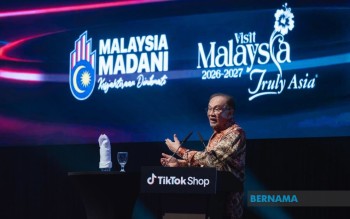
Malaysia is moving to implement stricter vetting procedures for new foreign investment applications to ensure that incoming capital translates into tangible benefits for the domestic economy, Prime Minister Datuk Seri Anwar Ibrahim announced on Tuesday. The shift reflects growing concerns within government circles about investment activity that generates minimal employment or contributes little to local economic development, with the Ministry of Investment, Trade and Industry (MITI) having flagged several cases of companies operating warehouses and transit facilities that add negligible value to the Malaysian workforce or supply chains.
Anwar's comments, made following his official opening of the TikTok Shop Summit 2026 in Kuala Lumpur, underscore a recalibration in Malaysia's approach to foreign direct investment. While the country remains fundamentally committed to free-trade principles and an open-economy model, the Prime Minister signalled that the government will no longer passively accept investment that amounts to little more than logistical infrastructure without substantive local engagement. This balancing act—maintaining Malaysia's appeal to international capital while protecting domestic stakeholders—has become increasingly delicate as digital commerce and cross-border platforms reshape the retail landscape.
The impetus for this review emerged from a question posed during the TikTok Shop Summit by a participant concerned about the proliferation of cheap imported goods flooding Malaysian markets through platforms such as Temu and Pinduoduo. These e-commerce channels have disrupted traditional retail by enabling direct shipments of low-cost products from overseas suppliers, undercutting local merchants and creating structural challenges for domestic businesses attempting to compete on price. Anwar acknowledged that digitalisation and online commerce have dramatically lowered entry barriers for foreign sellers, allowing them to capture market share through aggressive pricing strategies that some observers characterise as dumping—a practice designed to establish market dominance before local competitors can respond.
One particularly problematic pattern identified by Anwar involves what amounts to regulatory arbitrage: foreign operators registering local shell companies under the names of traditional Malaysian businesses—coffee shops, tea traders, biscuit manufacturers—while importing entirely foreign-sourced inventory. This sleight of hand allows them to present themselves as local enterprises while funnelling none of the economic benefits to genuine domestic operators. The Prime Minister stressed that such arrangements provide no advantage to Malaysian communities or small businesses, instead merely creating the appearance of local economic activity whilst profits and supply chains remain firmly rooted overseas.
Anwar also highlighted a second category of concern: large multinational investors who lease warehouse space at strategic locations such as Port Klang without any corresponding commitment to hiring local workers or sourcing Malaysian products. Port Klang, as Malaysia's primary container port and a crucial node in Southeast Asian logistics networks, has become a natural hub for companies seeking to establish regional distribution centres or transshipment operations. However, these facilities often operate with minimal local labour requirements, relying instead on centralised management structures and automated systems that generate neither employment opportunities nor demand for Malaysian goods. In essence, such operations extract value from Malaysia's geographic position and infrastructure without reciprocating through job creation or supply-chain integration.
The government has already begun enforcement action against some of these practices, with regulatory officers taking steps to curtail what Anwar described as economically hollow activities. However, the announcement of a more comprehensive review of new investment applications signals intent to shift from reactive enforcement to proactive screening. This preventive approach would allow MITI and related agencies to assess incoming applications against explicit criteria: Does the investment create employment for Malaysian citizens? Does it stimulate demand for local products or services? Does it contribute to technology transfer, skills development, or supply-chain integration with the domestic economy?
This pivot carries particular significance for Southeast Asia's broader economic trajectory. Malaysia has long positioned itself as the region's most sophisticated investment destination after Singapore, competing aggressively for foreign capital in manufacturing, technology, and services. However, as digital commerce and logistics become increasingly important components of global investment flows, the nature of "valuable" investment has shifted. A warehousing operation that employs ten workers but processes hundreds of millions in goods transit may generate substantial tax revenue, yet delivers minimal downstream benefit to local entrepreneurs or workers. Conversely, a manufacturing facility that directly employs hundreds and sources intermediate goods from local suppliers creates far deeper economic multiplier effects.
Anwar's framing of the issue also reflects sensitivity to small and medium-sized enterprise (SME) concerns. Malaysian SMEs, particularly in retail and consumer goods, have expressed mounting anxiety about their ability to compete against digital platforms backed by international capital and permitting them to bypass traditional wholesale and distribution networks. By tightening investment screening, the government seeks to rebalance the playing field, ensuring that foreign investors cannot simply establish low-friction logistics operations designed to undercut domestic merchants without contributing to local employment or economic development.
The policy adjustment also touches on broader questions about the relationship between free trade and local economic development. Malaysia's openness to international commerce remains a foundational principle, and the government is not proposing import restrictions or protectionist measures in the conventional sense. Instead, the emphasis falls on ensuring that foreign investors operating within Malaysia accept corresponding obligations to contribute meaningfully to the domestic economy. This represents a middle path between unfettered liberalisation and defensive protectionism—what might be termed "qualified openness," where foreign capital remains welcome provided it generates discernible local benefits.
Implementing this revised framework will require coordination across multiple agencies and clear articulation of the criteria against which new applications will be assessed. MITI will likely need to develop explicit thresholds for employment generation, local supply-chain integration, and technology transfer that distinguish between investments genuinely beneficial to Malaysia and those that merely exploit the country's location or regulatory environment. The challenge lies in establishing standards rigorous enough to protect domestic interests whilst remaining transparent and predictable enough not to deter legitimate foreign investors who do intend to embed themselves within Malaysian supply chains and labour markets.
For regional investors and multinational corporations considering expansion into Malaysia, this announcement serves as notice that the investment landscape is shifting. The days of establishing low-impact warehousing operations or shell companies without meaningful local engagement appear to be ending. Companies contemplating entry into the Malaysian market would be prudent to consider how their proposed activities might be perceived through the lens of employment generation, local supply-chain engagement, and genuine economic contribution. Those whose business models depend primarily on logistics arbitrage and market capture through price competition may face increased regulatory friction.
Anwar's emphasis on monitoring and enforcement suggests that tightened investment screening will be accompanied by heightened scrutiny of existing operations. Companies already operating in Malaysia under the problematic models identified—hollow shell structures, pure warehousing operations, import-reliant businesses masquerading as local enterprises—should expect greater regulatory attention. The government appears committed to ensuring that Malaysia's role in regional and global commerce yields sustainable benefits for its own citizens and businesses, not merely serves as a frictionless transit point for foreign capital seeking to extract value from Southeast Asian markets.

