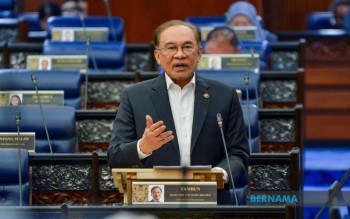
Prime Minister Datuk Seri Anwar Ibrahim has outlined an ambitious plan to reshape cross-border trade dynamics between Malaysia and Thailand, positioning the newly launched Malaysia-Thailand Border Economic Zone as a strategic gateway to the broader Indochinese peninsula. In remarks to parliament this week, Anwar highlighted how the initiative will fundamentally alter the export landscape for Malaysian companies seeking to reach consumer markets in Laos, Cambodia and Vietnam—territories where Malaysian goods have historically encountered significant friction at Thai border checkpoints.
The core challenge the zone addresses reflects a longstanding frustration among Malaysian exporters. For years, shipments of Malaysian fisheries and agricultural products transiting through Thailand to reach Indochinese markets have faced cumbersome customs requirements that slow movement and increase costs. Bangkok's recent agreement to streamline these procedures marks a watershed moment in bilateral economic relations, removing a non-tariff barrier that has constrained Malaysian competitiveness in regional supply chains. By facilitating smoother passage through standardised customs protocols, the zone creates operational efficiencies that translate directly into cost savings and faster delivery times for Malaysian producers.
The zone itself encompasses multiple strategic locations along the Malaysia-Thailand frontier. The initial launch involved facilities at Sadao and Bukit Kayu Hitam, jointly inaugurated alongside Thailand's Prime Minister Anutin Charnvirakul. However, the framework extends further to encompass Rantau Panjang, a lesser-developed border town in Kelantan that represents an untapped commercial frontier. By expanding the zone's geographical reach, Malaysian planners have moved beyond a narrow bilateral arrangement to construct a multi-nodal trade infrastructure capable of handling diverse product flows and seasonal fluctuations in commerce.
For Malaysian fisheries and agricultural sectors specifically, the implications prove substantial. These industries form the backbone of rural economies across the country, employing hundreds of thousands in production, processing and distribution. Better market access to Cambodia, Laos and Vietnam expands the addressable market for Malaysian producers significantly. Vietnam alone, with its 98 million population and rising middle class, represents considerable demand for quality protein and specialty agricultural goods. The zone effectively removes artificial geographical barriers that have disadvantaged Malaysian suppliers against regional competitors from other Southeast Asian nations already enjoying favourable trade relationships with Indochinese buyers.
Anwar's emphasis on inclusive growth within the zone framework reflects awareness of potential criticism that border development often concentrates benefits among large corporations while marginalising small traders and community members inhabiting frontier regions. The government has committed to prioritising small and medium-sized enterprises, ensuring that expanded trade corridors translate into employment opportunities and skills development for border communities. This commitment addresses a legitimate concern: without deliberate policy intervention, border zones can become enclaves of large capital investment with minimal benefit trickling to surrounding populations.
The integration of the East Coast Rail Link into the border zone strategy demonstrates sophisticated infrastructure thinking. The ECRL, already under construction as a transformative transportation project for Malaysia's east coast, will be extended to Rantau Panjang, fundamentally improving logistics capacity for goods movement. More ambitiously, Anwar indicates discussions with Anutin about extending the railway into Thailand along the same corridor, creating a unified transportation spine that could eventually link Malaysian production centres directly to Thai and Indochinese markets without unnecessary transshipment delays. This continental-scale perspective elevates the border zone from a localised customs arrangement to a component of broader regional infrastructure integration.
The strategic context underlying these developments reflects Malaysia's calculated positioning within an increasingly multipolar Southeast Asian economy. As regional powers vie for influence and as supply chains globally undergo reconfiguration, control over key trade corridors becomes geopolitically significant. By establishing efficient channels to Indochinese markets, Malaysia enhances its relevance as a transit hub and trading partner, potentially attracting foreign investment in logistics, processing and distribution facilities along the border zone. Thai cooperation, meanwhile, suggests both countries recognise mutual benefits from formalised border commerce rather than ad-hoc arrangements.
Implementing the zone's ambitious agenda will require sustained coordination across Malaysian federal and state governments, particularly involving Kelantan authorities regarding Rantau Panjang's development. State-level cooperation proves essential since border towns often fall within state jurisdictions, and state governments control aspects of infrastructure development. Bureaucratic alignment across multiple institutions—customs agencies, transport authorities, local administrations—will determine whether policy intentions translate into operational reality. International experience with border zones demonstrates that procedural coordination often proves more challenging than initial announcements suggest.
The broader regional implications deserve consideration. As ASEAN members pursue the ASEAN Comprehensive Investment Agreement and deepening regional economic integration, bilateral border initiatives like the Malaysia-Thailand zone represent practical expression of these commitments. Other border pairings—such as Malaysia-Brunei and Malaysia-Singapore—may face pressure to develop comparable arrangements to remain competitive. This microeconomic dynamism around border zones reflects macro trends toward regionalisation of supply chains and production networks that transcend traditional nation-state boundaries.
For Malaysian exporters, the zone opens a calculated path toward Indochinese market penetration without requiring each company to independently navigate Thai customs bureaucracy. The efficiency gains prove particularly valuable for small and medium enterprises lacking resources to maintain liaison offices or hire customs specialists. By creating simplified transit procedures, the zone effectively democratises access to larger markets, allowing businesses of varying scales to participate in cross-border commerce. This democratisation of market access constitutes perhaps the most consequential aspect of the initiative beyond headline statistics.
Successful execution will establish Malaysia as a preferred partner for regional trade integration and position the border zones as nodes in a functioning Southeast Asian economic network. The initiative also signals to investors considering facilities in Malaysia that the government remains committed to enhancing competitiveness through infrastructure and regulatory improvements rather than merely competing on labour costs. As Anwar has frequently emphasised, Malaysia's future prosperity depends on graduating toward higher-value activities within integrated regional ecosystems, and the border zone framework creates material conditions enabling that transition.

