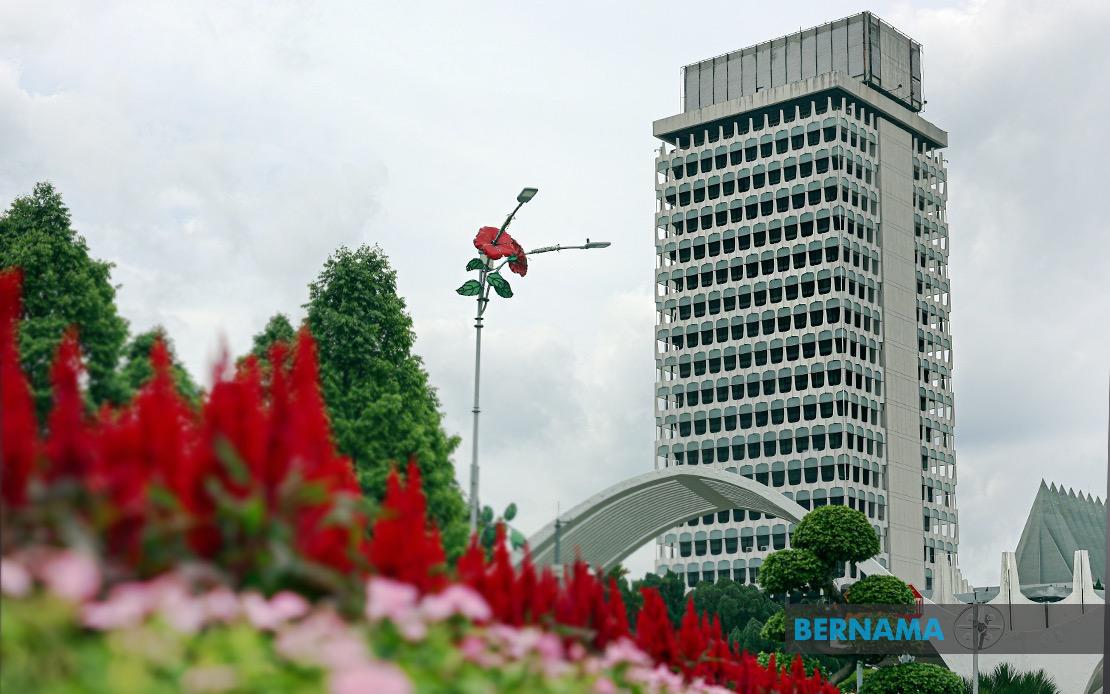
The Dewan Rakyat convened today to examine two pressing matters affecting Malaysia's regional economic interests and strategic stability: the emerging Malaysia-Thailand Border Economic Zone and the escalating geopolitical tensions in one of the world's most critical shipping corridors. The parliamentary agenda underscores growing concern among legislators about whether development initiatives in the northern frontier adequately benefit smaller enterprises and rural communities, whilst external shocks continue to threaten the nation's economic resilience.
Datuk Adnan Abu Hassan, representing the Kuala Pilah constituency for Barisan Nasional, raised questions about the anticipated economic returns Malaysia stands to realise from the bilateral border zone initiative with Thailand. His inquiry extends beyond headline figures to address a fundamental concern for rural Malaysia: whether the wealth generated by such cross-border arrangements will meaningfully reach small and medium-sized enterprises and the ordinary residents of bordering districts. This line of questioning reflects persistent parliamentary focus on equitable distribution of benefits from large-scale infrastructure and trade projects, a theme that regularly surfaces in Dewan Rakyat sessions where rural and urban inequality remains contentious.
The Malaysia-Thailand Border Economic Zone represents a strategic economic corridor designed to deepen bilateral trade and investment flows across the Kelantan-Terengganu frontier. Such zones typically create opportunities in manufacturing, logistics, and tourism, but their success hinges on whether local stakeholders can participate meaningfully rather than serving merely as passive beneficiaries of external investment. Adnan's question signals parliamentary awareness that without deliberate mechanisms to include grassroots businesses, border communities risk becoming peripheral to their own development.
Parallel concerns emerged regarding external economic vulnerabilities, particularly the protracted instability in the Strait of Hormuz. Datuk Rosol Wahid of Perikatan Nasional, representing Hulu Terengganu, pressed the Prime Minister to articulate the government's assessment of how the prolonged crisis threatens Malaysia's political and economic stability. The Strait of Hormuz, through which approximately one-third of seaborne traded oil passes globally, sits at the intersection of Iranian and Omani waters, making it a flashpoint for geopolitical tensions that reverberate across Asian economies dependent on stable energy supplies.
For Malaysia, a nation heavily reliant on petroleum imports and positioned along critical regional shipping lanes, disruptions to Hormuz traffic carry tangible consequences. Energy price volatility originating from Middle Eastern tensions directly affects domestic inflation, transport costs, and industrial competitiveness. Beyond immediate economic impacts, prolonged uncertainty in the region risks deterring foreign investment and complicating long-term strategic planning across multiple sectors. Rosol's question demands clarity on government contingency measures, reflecting parliamentary expectation that policymakers maintain forward-facing strategies addressing such vulnerabilities.
The parliamentary agenda also tackled the perennial problem of illegal highway racing, a public safety crisis that has claimed lives and destabilised communities. Datuk Yusuf Abd Wahab, the GPS representative from Tanjong Manis, queried the Transport Ministry about measures to eliminate street racing nationwide, specifically referencing a June 1 incident in Simpang Renggam, Johor. This inquiry bridges parliamentary oversight with lived citizen experience, demonstrating how legislative scrutiny extends to enforcement challenges affecting everyday Malaysians, particularly in areas where illegal racing has become entrenched cultural practice among youth cohorts.
Beyond immediate policy questions, the Dewan Rakyat proceeded to its legislative agenda, commencing first readings of two significant bills: the Statistics Bill 2026, tabled by the Economy Minister, and the National Trust Fund Bill 2026, introduced by the Finance Minister. These bills represent institutional framework adjustments intended to strengthen data governance and fiscal management respectively, both foundational to Malaysia's administrative architecture and long-term economic planning capacity.
A particularly significant matter commanding attention involved Datuk Seri Azalina Othman Said's presentation of the Parliamentary Special Select Committee report on constitutional amendments separating the roles of Attorney General and Public Prosecutor. This institutional reform, developed through seven committee meetings and refined via seven key improvements, targets enhancement of prosecutorial independence, institutional integrity, and accountability mechanisms. The separation of these traditionally combined roles constitutes a substantial constitutional realignment, reflecting broader governance conversations about institutional checks and balances.
Azalina's initiative addresses long-standing concerns about concentrating prosecutorial and legal advisory functions within a single office, a configuration that critics argue can blur lines between political direction and impartial criminal enforcement. By disaggregating these roles, the reform aims to construct a Public Prosecutor's office operating with enhanced operational autonomy whilst maintaining democratic accountability. This restructuring carries implications beyond domestic politics, signalling to international observers Malaysia's commitment to strengthening rule-of-law institutions and prosecutorial independence.
The current parliamentary session, extending across sixteen sitting days from June 22 through the week's conclusion, reflects standard legislative cycling designed to accommodate government business, opposition scrutiny, and private members' motions. Within this timeframe, lawmakers must address interconnected challenges spanning regional economic cooperation, geopolitical risk mitigation, domestic law enforcement, statistical and financial governance, and constitutional institutional design. The convergence of these diverse agenda items within a single session illustrates the complexity governing contemporary Malaysian policymaking, where legislators simultaneously manage border zone development, energy security, criminal justice, administrative reform, and constitutional architecture.
The parliamentary scrutiny applied to the Malaysia-Thailand Border Economic Zone and Strait of Hormuz crisis reflects legislators' recognition that Malaysia's prosperity and stability depend fundamentally on regional integration, external trade corridors, and strategic geopolitical positioning. Whether through ensuring equitable distribution of border-zone benefits or preparing for energy-supply volatility, parliamentary oversight channels public concern into accountability mechanisms that demand governmental responsiveness. These deliberations, occurring within established parliamentary procedure and recorded in the official record, constitute the routine yet essential democratic machinery through which Malaysia addresses its most pressing collective challenges.

