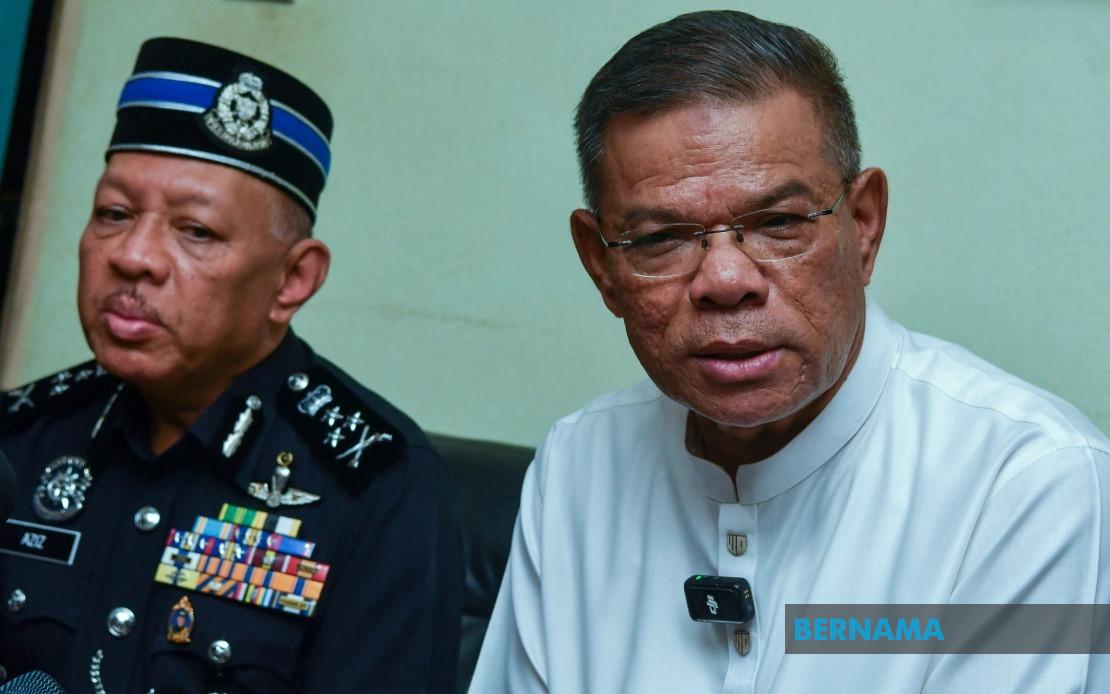
The Malaysian government is treating border management with Thailand as a high-priority security matter, with multiple institutional frameworks now in place to address challenges ranging from criminal activity to people movements. Home Minister Datuk Seri Saifuddin Nasution Ismail made this clear during a visit to Kota Bharu, emphasizing that ongoing cooperation mechanisms have been established to handle the complexities of shared frontier administration between two sovereign nations.
At the governmental level, the Malaysia-Thailand Border Security Management Committee serves as the primary coordination body, convening twice annually to discuss bilateral concerns. This structured approach reflects recognition that the border—which touches Perlis, Kedah, and Kelantan—requires sustained attention and regular dialogue rather than ad-hoc crisis management. The committee allows officials from both countries to align on shared security threats and develop coordinated responses without the friction that can arise from unilateral action.
Beyond diplomatic channels, police-to-police cooperation has been strengthened specifically among the three states that share a frontier with Thailand. This localized engagement proves essential because border communities face distinct security pressures that federal-level discussions may not fully capture. Officers on the ground can identify emerging criminal patterns, trafficking routes, and security vulnerabilities more readily than distant administrators, making state-level police coordination a critical complement to national-level government talks.
The cooperation encompasses three key operational dimensions: intelligence sharing between Malaysian and Thai law enforcement, capacity building to enhance investigative and preventive capabilities on both sides, and coordinated joint operations when circumstances warrant direct action. This multi-layered approach acknowledges that border crime—human trafficking, drug smuggling, weapons movement, and stolen vehicle rings—requires more than dialogue. It demands active operational coordination and real-time information exchange to intercept criminals before they exploit gaps in surveillance or enforcement.
Saifuddin's remarks came during a sympathy visit to the family of the late Corporal Mohamad Nur Hafiz Rahim, who died from an electric shock in Beaufort, Sabah, the previous week. While seemingly separate from border policy discussion, the incident underscores the security challenges facing personnel deployed in remote and difficult conditions, including those stationed along frontier areas. The government's attention to such matters reflects broader concern for operational safety in sensitive zones.
Border security discussions have featured prominently in recent high-level engagements between Malaysian and Thai officials. The recent visit of Thai Prime Minister Anutin Charnvirakul provided occasion for Saifuddin and his counterpart to address bilateral concerns in a comprehensive manner. These face-to-face meetings at the highest levels signal both governments' commitment to preventing border issues from becoming sources of diplomatic friction or becoming fuel for nationalist sentiment on either side.
The Home Minister explicitly rejected a public, media-driven approach to resolving disagreements. Instead, he stressed that border management must proceed through established diplomatic and operational channels, conducted with the discretion and professionalism expected between neighboring states. This stance reflects awareness that inflammatory rhetoric or tit-for-tat statements can escalate minor incidents into major political confrontations, ultimately harming both nations' interests.
Border sovereignty remains inherently sensitive, particularly in Southeast Asia where historical territorial disputes continue to influence national consciousness. Malaysia and Thailand's approach to framing their cooperation—emphasizing orderly procedures and mutual respect—attempts to transcend these sensitivities by focusing on practical, shared challenges. The emphasis on bilateral forums rather than unilateral posturing suggests both countries recognize that border cooperation yields better outcomes than confrontation.
The three northern border states—Perlis, Kedah, and Kelantan—face particular pressures as economic disparities between Malaysia and Thailand can incentivize illegal migration and smuggling. Communities along these borders often have ethnic and linguistic ties to Thai populations, creating complex social dynamics that security frameworks must navigate carefully. Enhanced intelligence sharing and capacity building help ensure that law enforcement responses remain proportionate and effective without alienating local populations or damaging cross-border cultural relationships.
For Malaysia, maintaining stable border relations with Thailand carries broader regional implications. Thailand's stability affects Southeast Asian security dynamics, and bilateral cooperation models can influence approaches to other cross-border challenges within ASEAN. By demonstrating how two countries can manage sensitive frontier issues through structured channels rather than through public pressure, Malaysia and Thailand provide a template that other regional states may emulate.
The government's emphasis on border management reflects recognition that migration, drug trafficking, and organized crime transcend national boundaries. No single country can secure its frontier unilaterally; interdependence in tackling these challenges is inevitable. Malaysia's investment in G2G and P2P frameworks demonstrates pragmatic acceptance of this reality and commitment to protecting citizens through cooperative security architecture rather than isolation.

