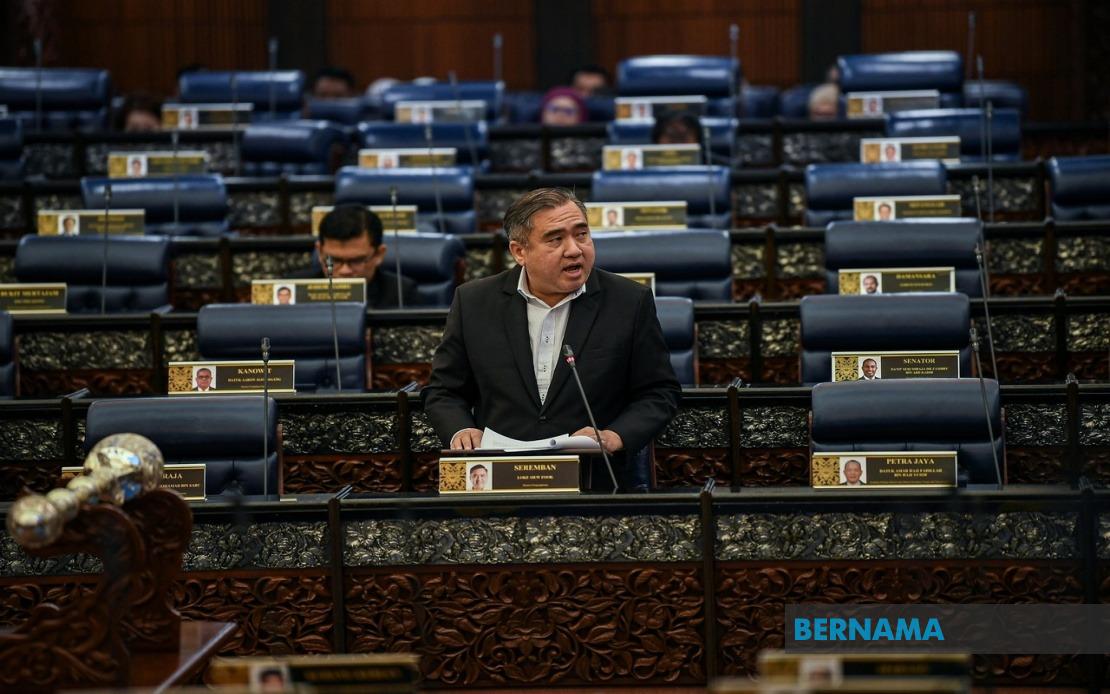
The Malaysian government has moved to establish a dedicated legal framework for prosecuting illegal street racing, addressing what Transport Minister Anthony Loke described as a critical gap in current enforcement capabilities. Under the Road Transport (Amendment) Bill 2025, which was tabled for second reading in Parliament on June 23, racing and speed trials on public roads will become a standalone offence, fundamentally shifting how authorities can tackle the problem of dangerous driving behaviour that has plagued Malaysian cities and highways.
Currently, enforcement agencies rely on charging offenders under general dangerous driving provisions within the Road Transport Act 1987, a legal approach that has proven limiting in practice. The existing framework requires authorities to demonstrate that an accident, injury, or death has occurred as a consequence of the dangerous behaviour, effectively allowing racers and speed enthusiasts to engage in risky conduct repeatedly without formal sanction unless they cause demonstrable harm. This prosecutorial bottleneck has frustrated road safety advocates and enforcement officers alike, as it permits dangerous activity to continue unchecked until tragic consequences materialise.
Under the proposed Section 42A, first-time offenders will face financial penalties ranging from RM2,000 to RM10,000, imprisonment of up to two years, or both. The legislation substantially escalates consequences for repeat offenders, with penalties of RM5,000 to RM20,000 fines or up to five years' imprisonment, or both. This tiered approach reflects recognition that habitual offenders represent a more serious threat to public safety and warrant significantly harsher deterrence. Loke's explanation of the new provision's practical application illustrates its transformative potential: two motorcyclists engaging in speed trials against each other, even without any collision or injury, would now be subject to immediate legal action rather than operating in the enforcement grey zone that previously protected them.
The amendment represents a significant philosophical shift in Malaysian road safety policy, moving from reactive prosecution triggered by accidents to proactive enforcement capable of preventing dangerous behaviour before it results in tragedy. This preventive approach aligns with international best practices in traffic law enforcement, where jurisdictions have found that autonomous enforcement against dangerous driving patterns reduces accidents more effectively than waiting for incidents to occur. For Malaysian motorists and road users, the change signals a tougher stance on a phenomenon that has become increasingly visible in urban centres, particularly late-night street racing scenes in Kuala Lumpur, Johor Bahru, and other major cities.
Complementing the new racing offence, the Bill introduces Section 110B to protect enforcement operations themselves, criminalising interference with road transport officers. The provision covers obstruction, assault, threats, or following enforcement vehicles, as well as sharing information about enforcement operations to help offenders evade detection. Penalties under this section reach RM10,000 to RM50,000 in fines with imprisonment of one to five years, or both, with such offences classified as arrestable. This protective measure acknowledges the hazards faced by enforcement personnel and seeks to prevent the coordination networks that increasingly shield offenders from consequences.
The expansion of enforcement officer protection reflects practical challenges emerging from increased street racing activity. Online communities and social media platforms have enabled racers to warn fellow participants about enforcement checkpoints and operations, effectively neutralising traditional deterrence mechanisms. By making it an offence to share such information, the government aims to disrupt the communication networks that enable repeat offenders to evade detection. The arrestable classification ensures that officers can take immediate action without requiring suspect consent, streamlining enforcement procedures in real-time situations.
Beyond the racing-specific provisions, the Bill modernises the penalty framework more broadly by increasing compound limits for selected traffic offences. The new structure proposes raising minimum fine thresholds from RM300 to RM500, with maximum compound rates scheduled to take effect on January 1, 2029. Importantly, this increase does not automatically impose RM500 fines for all violations; enforcement officers retain discretion to adjust amounts based on offence severity, circumstances, and settlement timing. This nuanced approach balances the need for stronger financial deterrence with flexibility appropriate to individual cases.
The Bill also specifically targets commercial vehicle enforcement, where overloading and non-compliance with vehicle specifications create disproportionate risks to road safety. Heavy vehicles operating with inadequate maintenance or excess cargo can suffer catastrophic failures, causing multi-vehicle collisions with high fatality rates. Enhanced enforcement mechanisms within the amendment are designed to identify and penalise such operations more effectively, reducing the incidence of truck-related accidents that have caused significant road deaths on Malaysian highways.
For Malaysian road users, particularly those commuting on highways and in urban areas, these amendments represent a substantive improvement in the safety environment. The psychological deterrent effect of specific legislation targeting racing behaviour cannot be underestimated; offenders recognising that their conduct is now subject to prosecution without requiring accident consequences will face a sharper incentive to desist. Parents and community groups concerned about the safety risks posed by illegal racing activity will find the enhanced legal framework more responsive to their concerns than previous provisions allowed.
The timeline for full implementation, with compound penalty increases taking effect in 2029, suggests a careful phased approach to enforcement. The ministry will likely use this interim period to train enforcement officers, update prosecution guidelines, and establish case law precedents around the new provisions. This measured rollout reduces risks of legal challenges based on procedural irregularities or inconsistent application of the new offences.
Regionally, Malaysia's legislative approach to street racing parallels similar crackdowns in Singapore and Thailand, reflecting a broader Southeast Asian recognition that illegal racing poses escalating public safety challenges. As urbanisation accelerates and vehicle ownership expands across the region, jurisdictions are increasingly prioritising preventive enforcement measures over retrospective prosecution of accident-causing behaviour. Malaysia's statutory amendments position the country within this regional trend toward more rigorous traffic law frameworks.
The Bill's passage through Parliament is expected given government backing, though road safety advocates will likely monitor implementation carefully to ensure enforcement consistency and effectiveness. The success of these amendments will ultimately depend on deployment of adequate enforcement resources and sustained commitment to prosecuting offences under the new provisions, rather than reverting to conventional dangerous driving charges when convenient or when caseloads become burdensome.