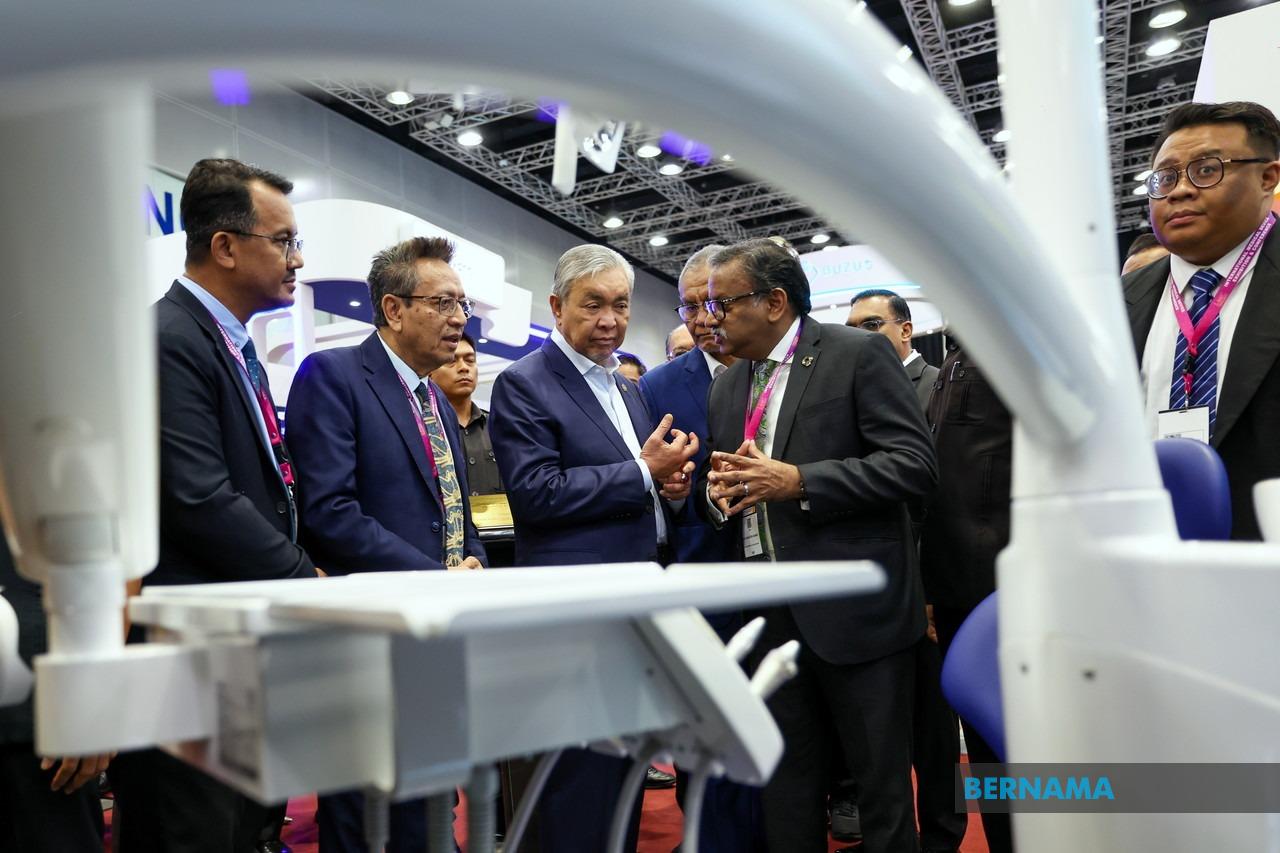
Malaysia has set its sights on nearly doubling its medical device export revenue within the next five years, with Deputy Prime Minister Datuk Seri Dr Ahmad Zahid Hamidi calling for the sector to surpass RM50 billion by 2030. This represents a substantial jump from the RM34.54 billion achieved in 2025, reflecting growing confidence in the country's capacity to capture a larger share of global medical technology trade. Speaking at the closing ceremony of the International Medical Device Exhibition and Conference (IMDEC) 2026, Ahmad Zahid outlined a comprehensive vision for transforming Malaysia from a manufacturing base into a hub for innovation and higher-value production.
The export target forms just one pillar of a three-pronged strategy designed to measure and accelerate Malaysia's progress in the medical technology sector over the remainder of this decade. The roadmap acknowledges that while Malaysia possesses existing manufacturing infrastructure, established market access channels, and strong international reputation, the trajectory of future growth must fundamentally shift towards premium-grade medical devices that command higher margins and greater technological sophistication. This strategic pivot represents a maturation of the sector, moving away from labour-intensive production towards knowledge-intensive innovation.
The second major ambition centres on cultivating at least ten Malaysian-based MedTech enterprises capable of competing effectively at both regional and global levels. Ahmad Zahid emphasised that this objective requires a dual approach: Malaysia will remain open to investments from established international medical device manufacturers, yet simultaneously must nurture homegrown companies that develop proprietary technology, hold intellectual property rights, and establish themselves as independent market competitors. This balanced strategy seeks to avoid over-reliance on foreign direct investment while preventing the exodus of technology and expertise to overseas operations. Building such champions typically requires patient capital, robust research infrastructure, and supportive regulatory frameworks—elements that demand coordinated action across government and industry.
Equally significant is the third ambition targeting employment quality within the sector. Ahmad Zahid expressed concern that medical device investments must generate high-value jobs rather than perpetuating low-skill manufacturing roles. The government aims for at least half of all positions created by new MedTech investments by 2030 to fall into managerial, technical, and supervisory categories. This benchmark matters because it fundamentally determines whether the sector elevates living standards and builds human capital, or simply reproduces employment patterns characteristic of earlier industrialisation phases. Current data reveals the sector's managerial, technical, and supervisory employment index stood at only 33.1 percent in 2025, indicating substantial room for improvement and underscoring the urgency of the target.
Ahmad Zahid's framing of this employment challenge reveals a deeper concern about capability retention and industrial sovereignty. He articulated a principle that while capital investments may flow into Malaysia, the skills, knowledge, and decision-making authority must remain embedded within the country. Without this commitment to high-value employment creation, multinational corporations might establish assembly or distribution operations without transferring technical expertise or developing local engineering talent. This outcome would leave Malaysia vulnerable to sudden relocations should labour costs rise elsewhere or political conditions change. The language—that Malaysia must be a destination for capability, not merely a repository for capital—signals a philosophical shift in how policymakers evaluate foreign investment quality.
Recognising that workforce constraints often arise unexpectedly, Ahmad Zahid, speaking also in his capacity as chairman of the National Technical and Vocational Education and Training Council, called for pharmaceutical and medical device companies to engage with educational institutions and training programmes before acute labour shortages emerge. He urged international investors to collaborate earlier in the planning process, helping design curricula, identify emerging skill requirements, facilitate student exposure to industrial environments, and expand apprenticeship opportunities. This proactive approach differs markedly from reactive recruitment, where firms hire workers only when shortages bite. By building collaborative relationships now, Malaysia can align its education system with evolving industry needs, potentially creating a sustainable talent pipeline that attracts and retains both domestic and international investment.
The strategic framework arrives at a propitious moment. During 2025 alone, Malaysia approved RM4 billion in new medical device sector investments spanning 46 separate projects, generating nearly 3,400 employment opportunities. These figures suggest genuine momentum and investor confidence in Malaysia's regulatory environment, infrastructure, and workforce. The scale of approvals indicates that the sector remains attractive despite global competition from established medical technology hubs in Singapore, South Korea, and developed markets.
Globally, the medical device industry presents an expanding opportunity. The sector was valued at more than USD572 billion in 2025 and projections indicate it will exceed USD1 trillion by 2034, representing sustained double-digit growth. This expansion reflects ageing populations in developed nations, rising healthcare spending across middle-income countries, and technological innovations including digital health solutions and artificial intelligence-enabled diagnostics. Southeast Asia stands to benefit considerably from this expansion, particularly as manufacturing costs in traditional Chinese production centres rise and supply chain vulnerabilities prompt multinational corporations to diversify geographic sourcing.
For Malaysia specifically, capturing a larger share of this growth depends on executing the three-part strategy coherently. The export target of RM50 billion appears achievable given current investment flows and existing manufacturing capacity, yet requires deliberate focus on product mix and competitiveness. Developing ten Malaysian MedTech champions demands policy consistency, intellectual property protections, access to venture funding, and regulatory predictability over many years. Building an employment base rich in technical and managerial roles requires sustained collaboration between government education agencies, private sector employers, and research institutions. None of these objectives will be realised through exhortation alone; they demand structural reforms, resource allocation, and unwavering commitment from political leadership.
The IMDEC 2026 conference itself demonstrated the sector's vitality, drawing more than 160 exhibitors and fifty speakers from regional and international backgrounds to discuss regulation, innovation, and healthcare transformation. Such convening platforms serve multiple purposes: they facilitate networking among investors, manufacturers, and technology providers; they showcase Malaysia's regulatory competence and business environment to international audiences; and they create opportunities for knowledge exchange that can accelerate local capability development. The scale and quality of participation suggest Malaysia has successfully positioned itself as a credible regional hub for medical technology commerce and dialogue.

