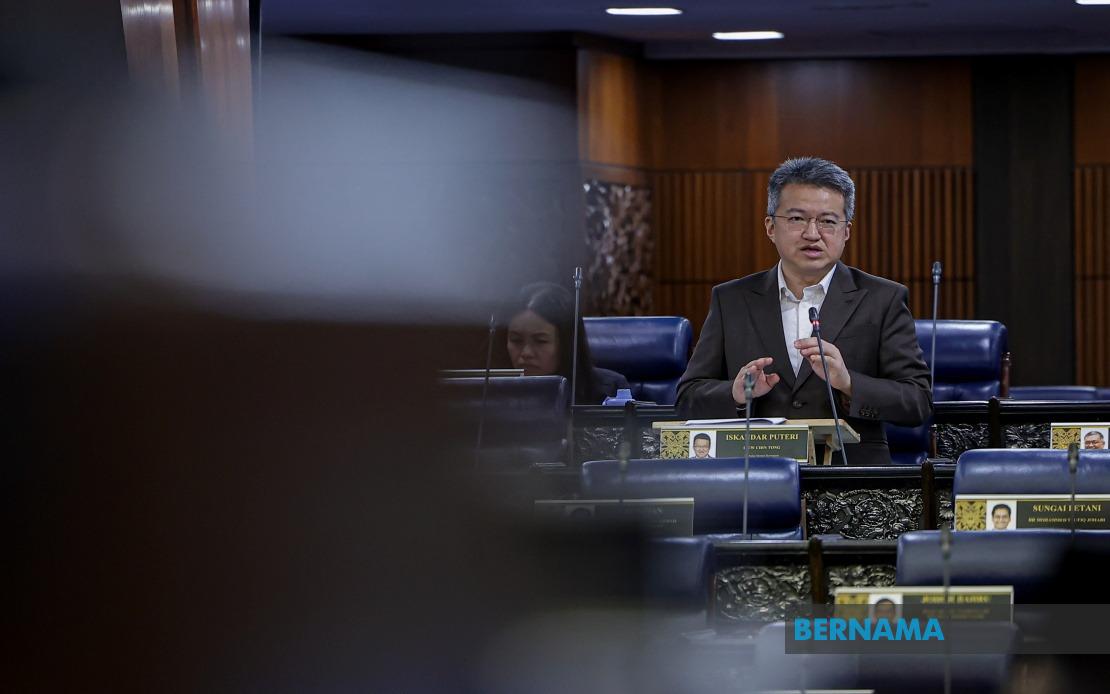
Malaysia's administration is accelerating efforts to overhaul its governance structures and rebuild the nation's tarnished international standing in the aftermath of the 1Malaysia Development Berhad (1MDB) scandal. Deputy Finance Minister Liew Chin Tong has reaffirmed the government's commitment to preventing any recurrence of the financial mismanagement that characterized the controversial state fund, signalling that Prime Minister Datuk Seri Anwar Ibrahim's cabinet views institutional safeguards as essential to economic recovery.
The scale of financial damage from 1MDB has been staggering for the national exchequer. Since 2017, the government has allocated RM18.7 billion from both operating and development budgets to settle obligations inherited from the fund. The burden intensified after the MADANI Government assumed office in March 2023, when policymakers faced the immediate necessity of redeeming USD3 billion in government-guaranteed bonds—a commitment requiring RM13 billion from the development budget, representing approximately 13.1 per cent of that year's allocation to capital projects. These figures underscore how the 1MDB fallout continues consuming significant resources that could otherwise support infrastructure, education, or healthcare expansion.
Beyond the immediate fiscal toll, the scandal inflicted profound reputational damage to Malaysia's standing in global financial and investment communities. The case attracted international media scrutiny, prompted investigations by foreign law enforcement agencies, and spawned complex cross-border legal proceedings that kept Malaysia's governance practices under intense external scrutiny. For a nation aspiring to position itself as a stable, investment-grade economy in Southeast Asia, such negative exposure created substantial headwinds in attracting foreign capital and maintaining confidence among multinational corporations considering regional expansion.
To address these systemic vulnerabilities, the government enacted the Public Finance and Fiscal Responsibility Act 2023, legislation designed to impose stricter discipline on how public money is allocated, spent, and reported. This statute establishes clearer guardrails around executive discretion in financial management, embedding accountability mechanisms that constrain the scope for misuse of public funds. The framework codifies best practices in fiscal governance and signals to international observers that Malaysia has learned from past lapses.
Complementing fiscal reforms, the government amended the Audit Act to substantially broaden the Auditor-General's investigative authority. Previously, auditing practices operated within narrower jurisdictional boundaries that sometimes missed irregular expenditures or opaque fund flows. The revised approach, described as a "follow the public money" methodology, empowers the Auditor-General to trace public expenditures across government agencies and institutions with greater penetration and scope. This enhanced audit capacity serves as a more robust early-warning system for financial irregularities, creating multiple layers of oversight that make large-scale misappropriation significantly more difficult to execute undetected.
Additionally, the government is developing a Government Procurement Bill aimed at introducing greater transparency and competitive discipline into how state institutions acquire goods and services. Procurement processes had represented a vulnerability in the 1MDB case, with controversial contracting decisions lacking adequate oversight. Modernizing procurement rules through comprehensive legislation would establish standardized procedures, enhance transparency in bidding processes, and create institutional checks that reduce opportunities for politically-connected companies to secure contracts through non-competitive mechanisms.
Parallel efforts involve restructuring the legal and regulatory frameworks governing state-owned enterprises (SOEs). Malaysia's landscape includes hundreds of government-linked companies operating across sectors including energy, finance, infrastructure, and telecommunications. The fragmentation of oversight across these entities historically created gaps that enabled unaccountable financial decisions. Consolidating and clarifying governance standards for SOEs would establish consistent accountability standards and reporting requirements, reducing the possibility that any single institution could operate with inadequate external scrutiny.
These institutional reforms have begun yielding measurable results in market confidence and economic performance. The government notes that Malaysia has recorded unprecedented levels of approved foreign and domestic investment, alongside strong trade performance metrics. These achievements suggest that investors increasingly view governance improvements as credible and substantive, rather than merely rhetorical commitments. Simultaneously, Malaysia has improved its ranking in global competitiveness indices, a metric that reflects both improved macroeconomic fundamentals and enhanced perceptions of institutional quality.
For Malaysian businesses and citizens, the governance reformation framework carries several implications. Strengthened fiscal accountability should theoretically reduce wasteful public spending, freeing resources for productive investments in education, healthcare, and infrastructure. Enhanced audit procedures may also improve public contract administration, reducing the scope for rent-seeking behavior and inflated costs in government procurement. However, realizing these benefits depends on consistent implementation and political commitment from successive administrations, requiring sustained vigilance from civil society, media, and parliamentary oversight bodies.
Regionally, Malaysia's governance reforms carry significance for Southeast Asian financial stability and the Association of Southeast Asian Nations' efforts to project institutional credibility. The 1MDB scandal damaged not only Malaysia's image but also raised questions about governance standards across the region in the eyes of international investors and regulatory bodies. Demonstrable improvements in Malaysian institutional frameworks could serve as a positive benchmark for neighboring economies also working to enhance financial system integrity and governance quality.
The government's institutional renovation project remains incomplete. Success ultimately depends on whether these legislative and administrative innovations endure beyond current political cycles and whether implementation matches legislative intent. The public and international community will continue monitoring whether reformed institutions consistently enforce accountability, or whether political pressures and vested interests gradually erode the protections these reforms are designed to provide. For Malaysia's economic trajectory and regional standing, the answer will significantly shape the nation's trajectory in attracting investment and maintaining credibility in global capital markets.

