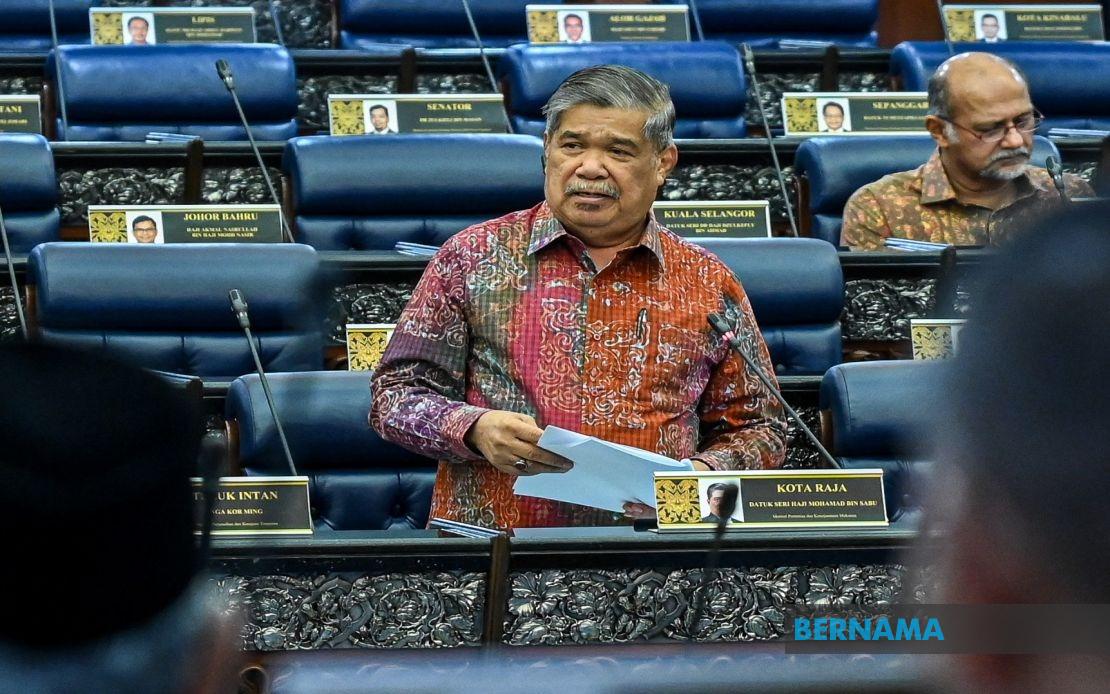
The Malaysian government is adopting a multi-layered approach to shield the agricultural sector from the mounting threats posed by El Niño conditions, combining technological innovation with direct financial support to vulnerable farmers. The strategy encompasses improved water resource management, expanded deployment of smart irrigation infrastructure, and substantial assistance programmes targeting rice cultivators who face the severest risks from drought-like conditions. Agriculture and Food Security Minister Datuk Seri Mohamad Sabu outlined this comprehensive framework during parliamentary proceedings, signalling the administration's commitment to maintaining domestic food production and supply chain stability amid anticipated climatic disruptions.
The centrepiece of Malaysia's water management response involves continuous surveillance of reservoir levels across dam and catchment systems, integrated oversight of aquatic resources, and technological monitoring networks designed to minimise wastage. Officials are systematically deploying smart irrigation observation systems alongside drip irrigation infrastructure to maximise the efficiency of every unit of water allocated to agricultural production. This transition toward precision-based water application represents a significant departure from conventional farming practices prevalent in many parts of the country, where water usage patterns have historically reflected abundance rather than scarcity considerations.
The Malaysian Agricultural Research and Development Institute, or MARDI, has been tasked with accelerating development of new rice cultivars exhibiting superior drought tolerance and resilience to adverse weather patterns. These laboratory-originated varieties form a critical component of the government's long-term food security calculus, as traditional rice strains commonly grown across peninsular states demonstrate vulnerability when moisture availability drops below historical norms. The Prime Minister's Food Security Meeting specifically requested that MARDI intensify its scientific endeavours toward this objective, reflecting Cabinet-level urgency regarding the potential agricultural consequences of prolonged El Niño activity.
Weather modification operations, specifically cloud seeding initiatives, constitute another element of the defensive strategy, though their implementation remains contingent upon prevailing atmospheric conditions. These operations have proven unpredictable in effectiveness but represent additional tools available to agricultural authorities when meteorological circumstances prove favourable. The combination of these various mechanisms reflects recognition that no single intervention suffices to address the multifaceted challenges posed by extended drought periods affecting rainfall patterns across major grain-producing regions.
The financial support framework for affected farmers demonstrates substantial government commitment, with RM45.24 million channelled toward 8,224 rice farmers during the initial assistance phase commencing in 2024. Between that starting point and June 30, 2026, an additional RM38.53 million reached 55,058 rice cultivators across 16,933 hectares experiencing drought impacts, primarily concentrated in the northern and eastern portions of Peninsular Malaysia. These figures indicate both the scale of agricultural distress and the government's willingness to deploy substantial treasury resources toward stabilising rural incomes during periods of climatic stress.
Rice stockpiling remains a cornerstone of Malaysia's food security architecture, with the government maintaining reserve supplies sufficient for approximately six months of domestic consumption. This strategic reserve operates in tandem with continued international procurement, ensuring that temporary domestic production shortfalls do not translate into threatening consumer scarcity. The government's approach thus balances domestic self-sufficiency objectives with pragmatic reliance on global grain markets when weather conditions constrain local output.
Beyond defensive measures, the administration is pursuing supply expansion strategies through encouragement of large-scale rice cultivation developments in Sarawak, Pahang, and other jurisdictions. These initiatives aim to incrementally boost national rice production capacity, reducing structural dependency on foreign imports and enhancing the country's underlying food security position. The geographic diversification of production centres across states with varying climatic and hydrological profiles creates redundancy within the system, decreasing the likelihood that weather events affecting one region simultaneously devastate all major growing areas.
Controlled environment agriculture represents an innovative pathway for reducing crop vulnerability to weather volatility affecting both plant and livestock sectors. These intensive production systems, which employ sheltering infrastructure and precise environmental controls, insulate output from rainfall disruptions and temperature fluctuations that constrain traditional open-field farming. Expansion of such operations promises gradual reduction in weather-driven productivity shocks that currently characterise Malaysia's agricultural profile, though capital-intensive investments required for establishing such facilities present implementation challenges for smallholder producers.
While El Niño concerns dominate agricultural policy discussions, the government simultaneously addresses secondary economic consequences affecting farmers through commodity price instability. Durian oversupply has recently triggered price depression affecting producer incomes, prompting ministerial attention toward export market expansion as a demand-side solution. The government plans to facilitate durian sales through enhanced negotiations with Chinese authorities regarding logistics and customs procedures, enabling Malaysian producers to access larger markets within Chinese municipalities currently underserved by domestic suppliers. This parallel effort recognises that food security encompasses not merely caloric availability but also farmer income viability, as impoverished cultivators unable to sustain production represent a genuine threat to long-term agricultural capacity.
The comprehensive nature of Malaysia's El Niño response strategy reflects acknowledgment that climatic challenges extend beyond temporary weather disturbances, potentially signalling longer-term shifts in precipitation patterns requiring structural agricultural adaptation. By simultaneously implementing immediate farmer support, investing in drought-resistant agricultural genetics, deploying precision water technologies, and diversifying production geographies, policymakers are attempting to address El Niño impacts across multiple timeframes simultaneously. For a nation where agricultural employment remains socially significant and rice farming carries cultural weight extending beyond mere economic considerations, ensuring that farming communities weathered climatic challenges successfully represents both a food security imperative and a political priority.

